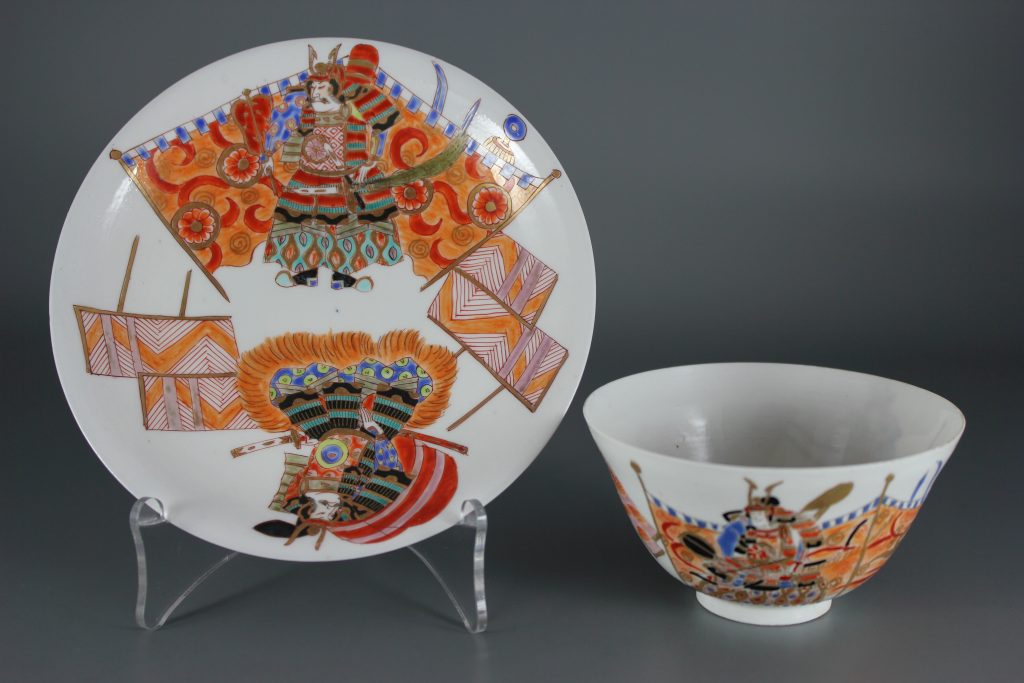
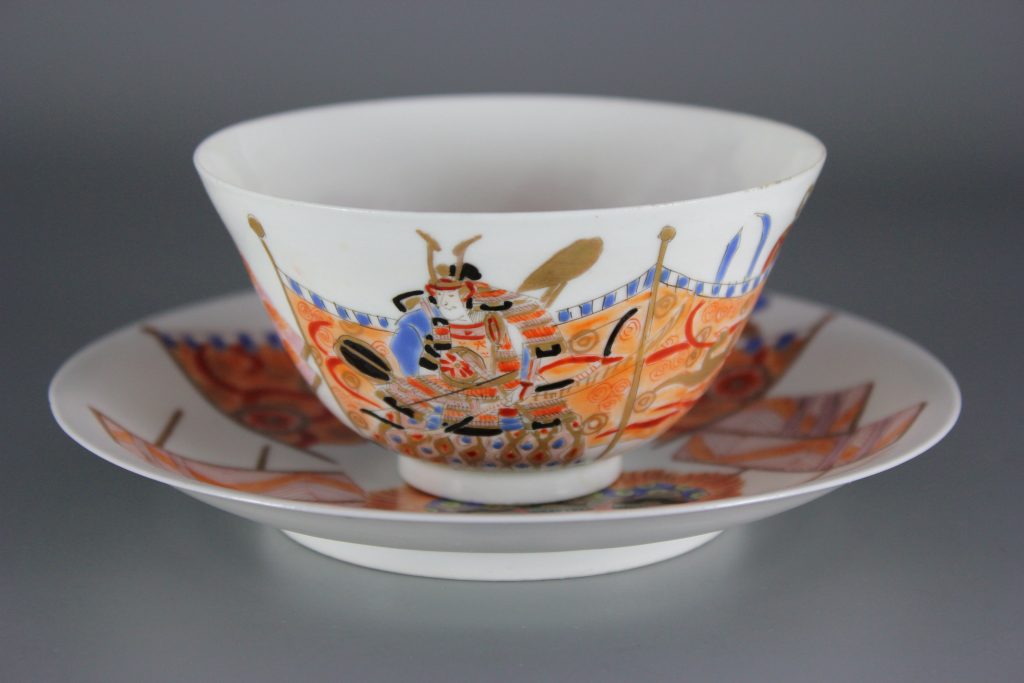
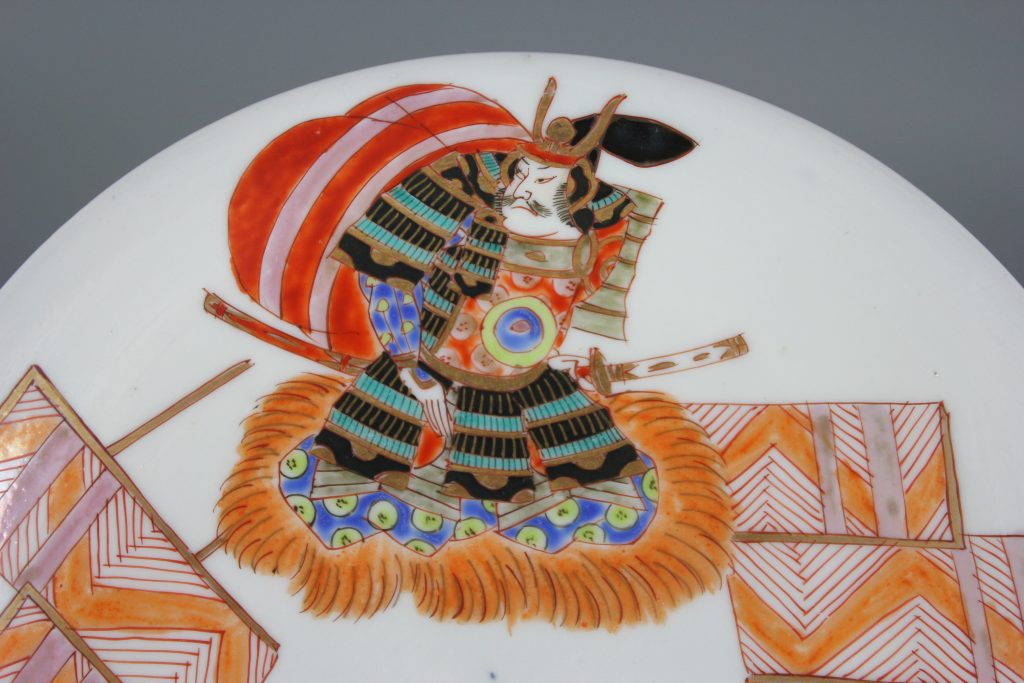
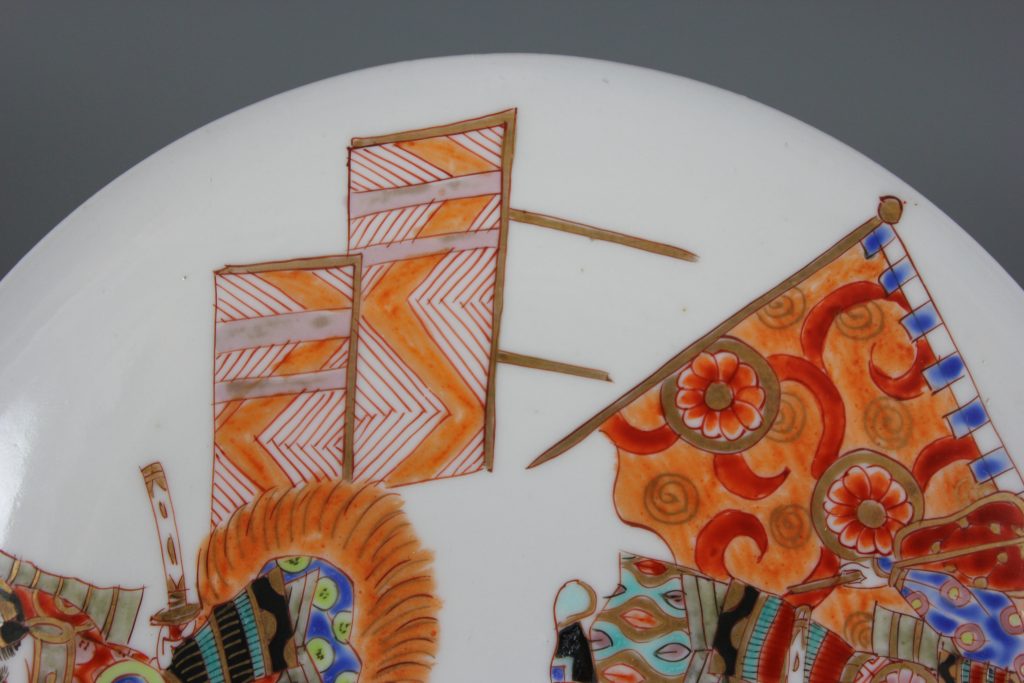
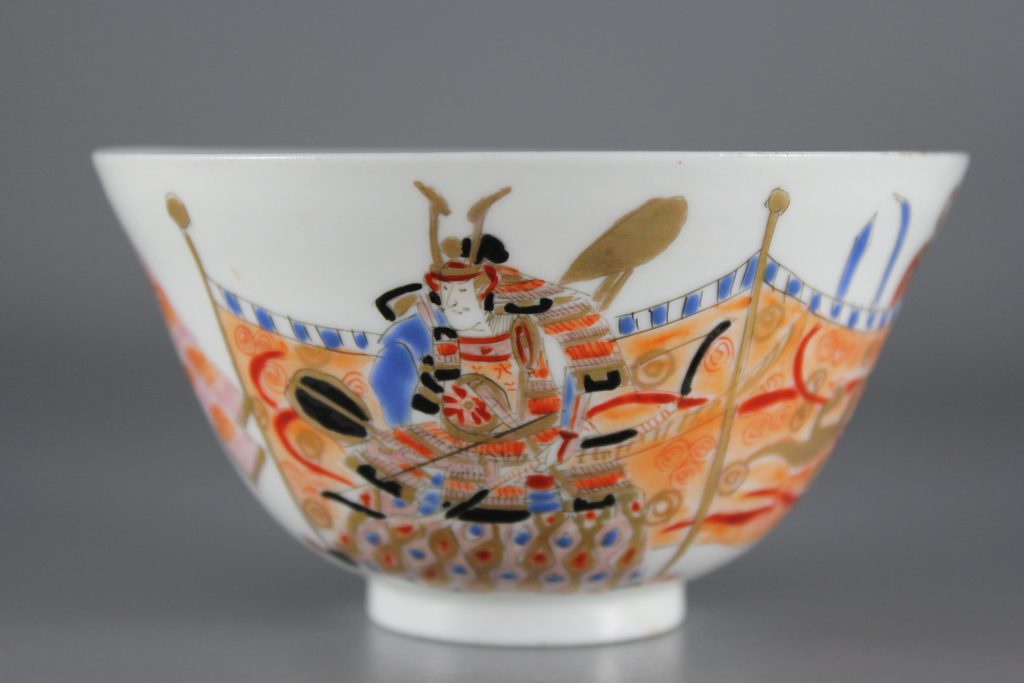
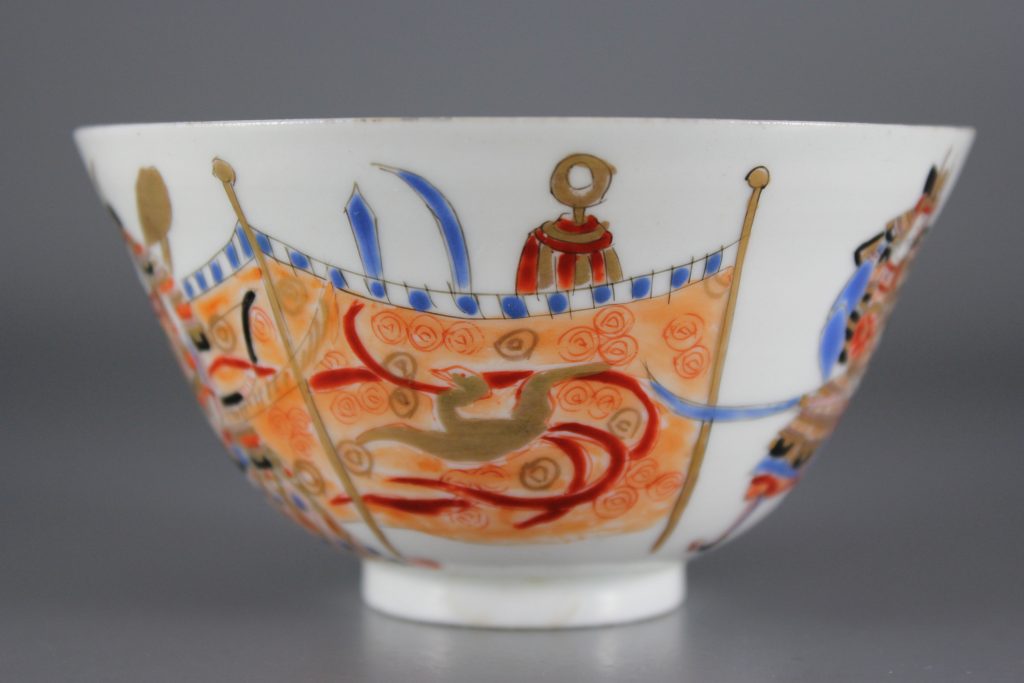
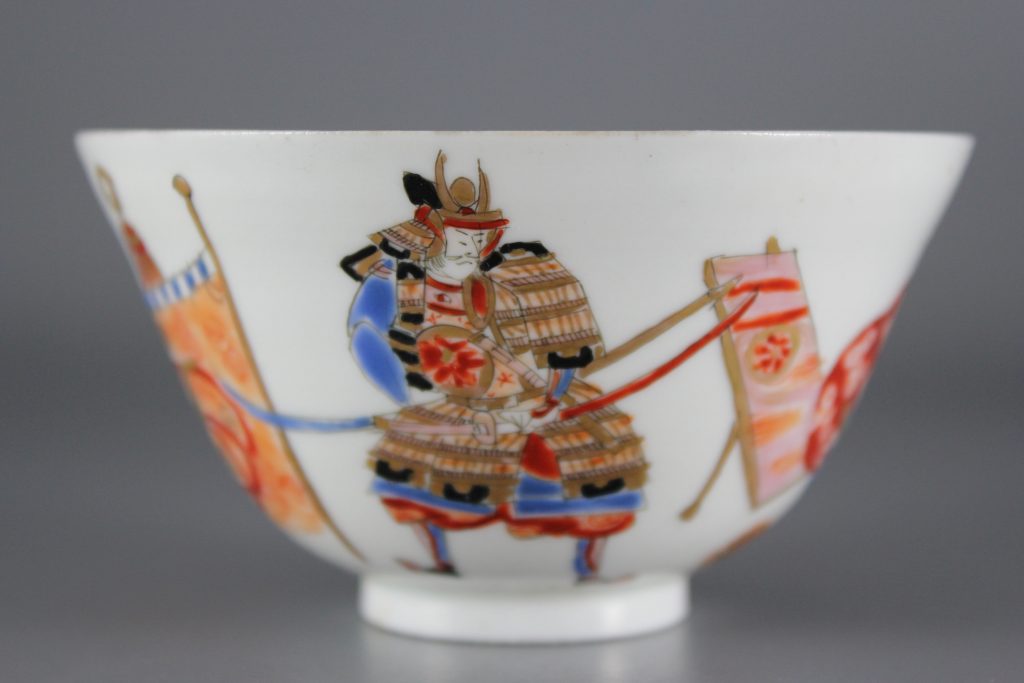
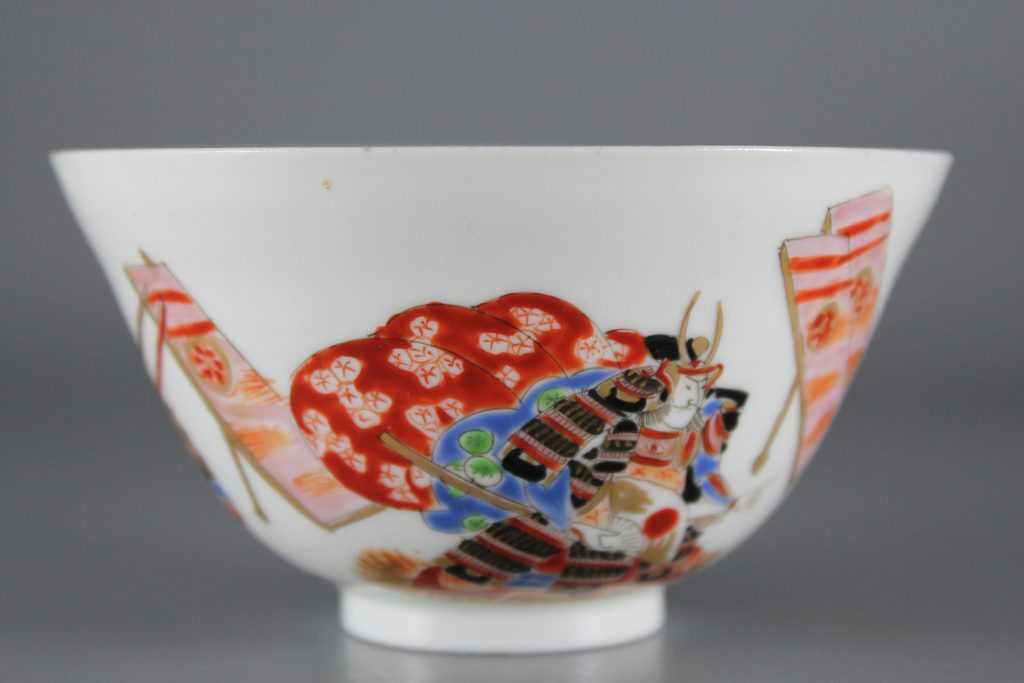
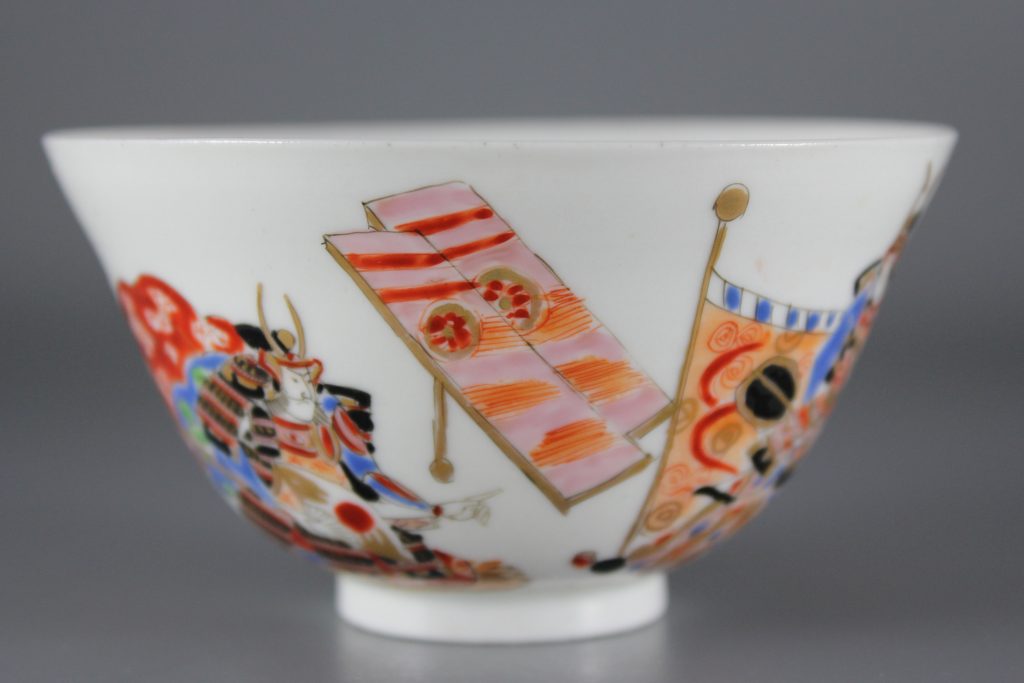
A Japanese Tea Bowl and Saucer, Arita porcelain, late Edo to Meiji period, circa 1850-80
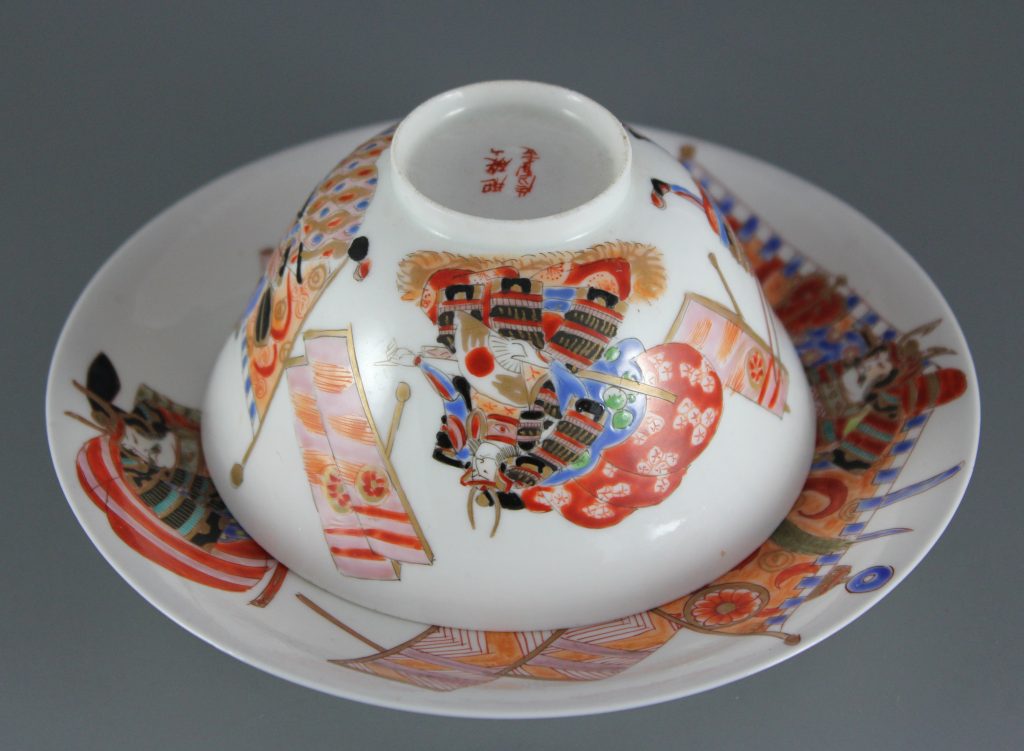
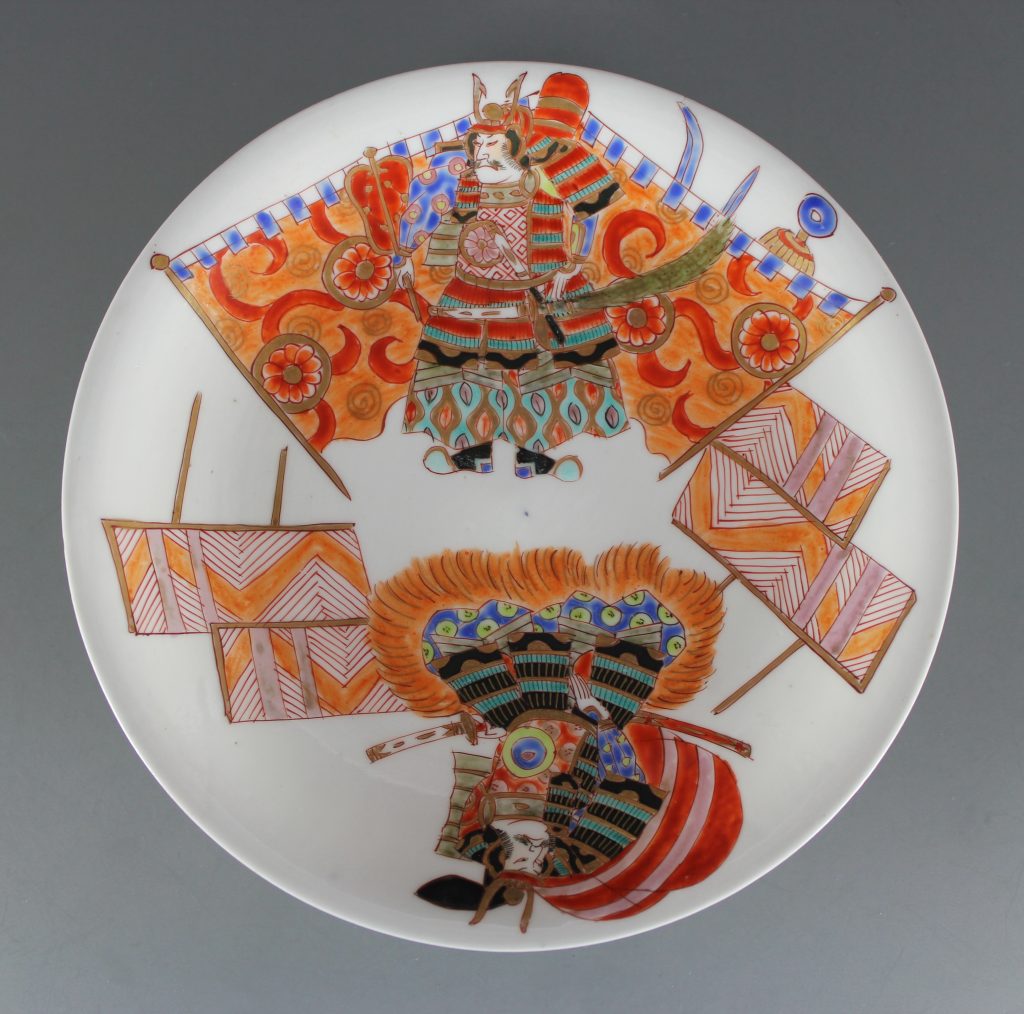
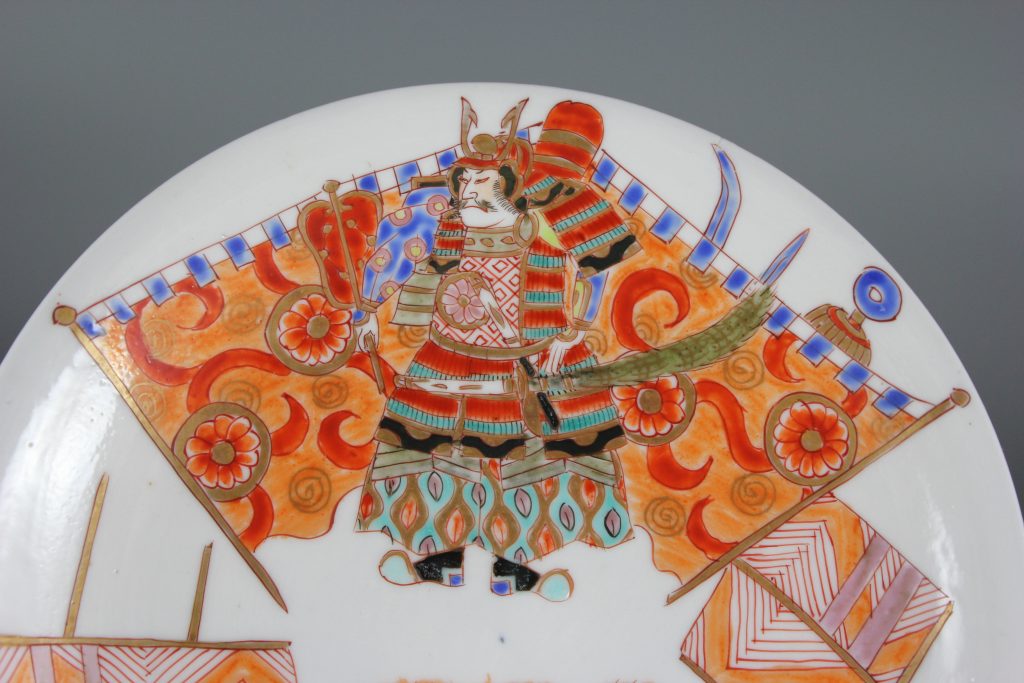
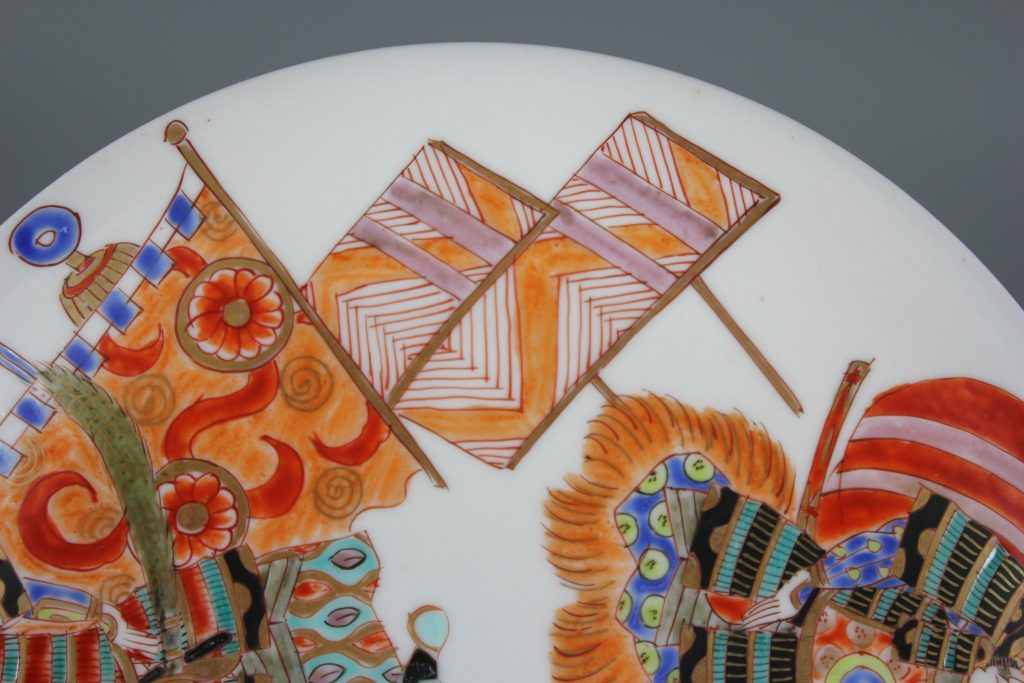
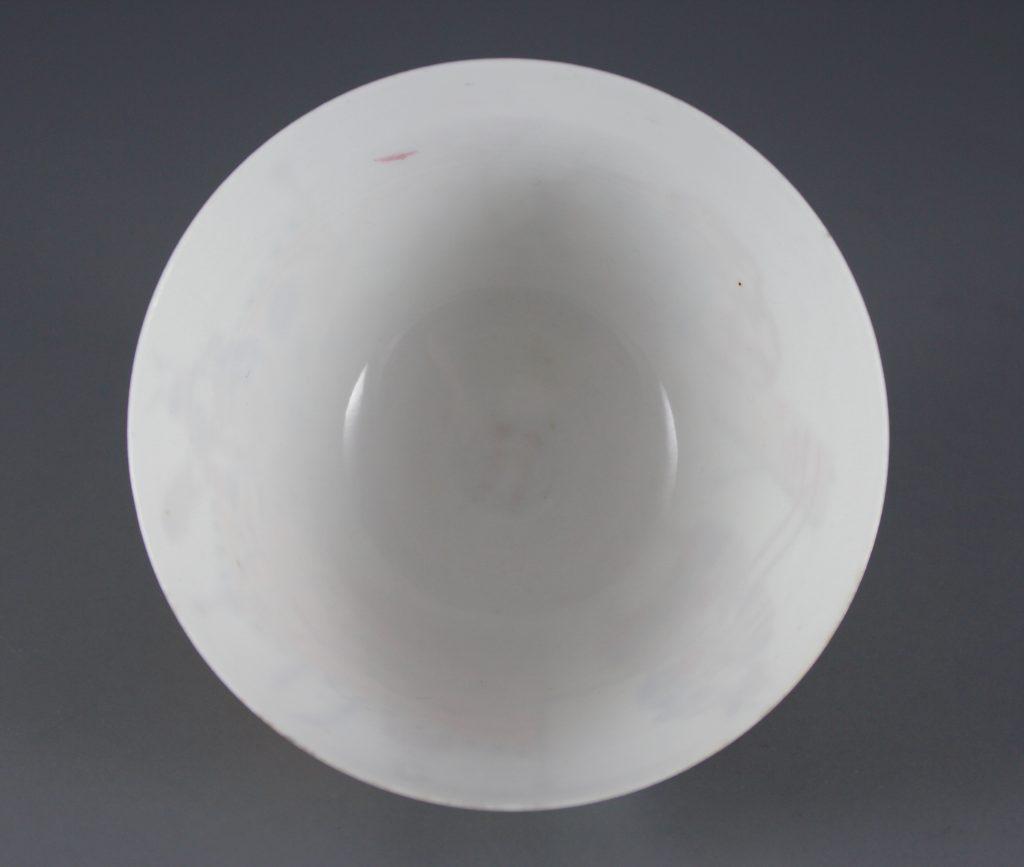
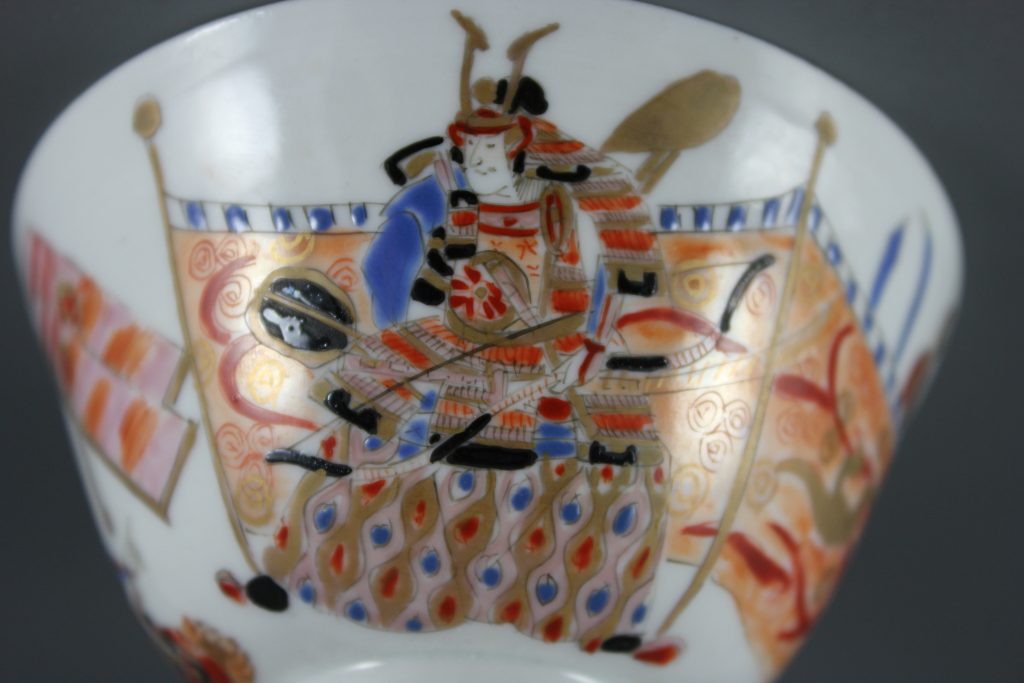
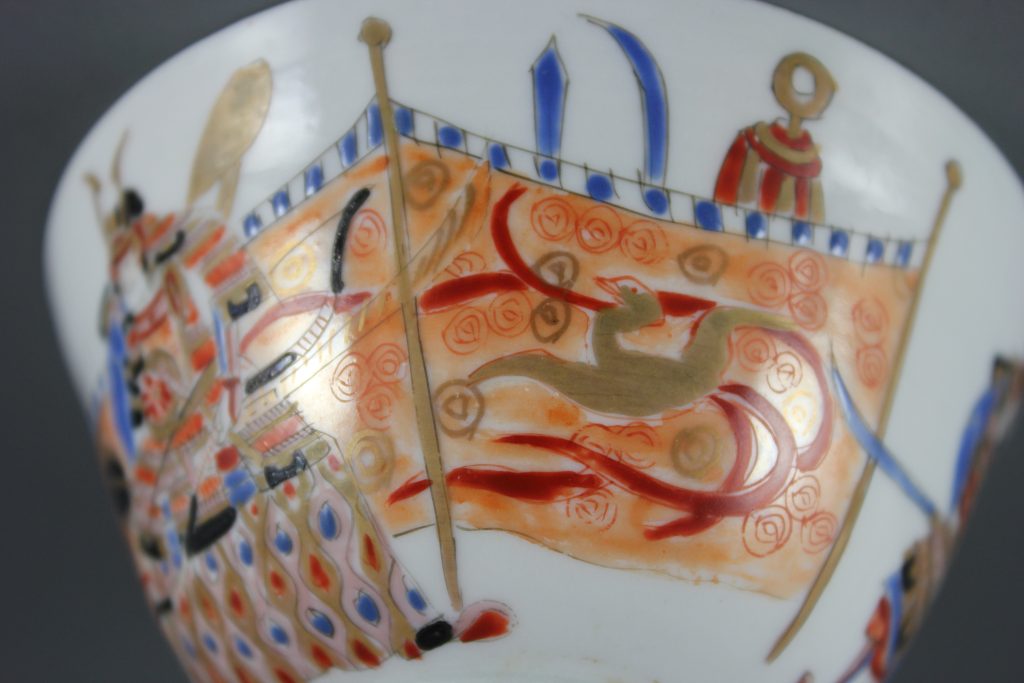
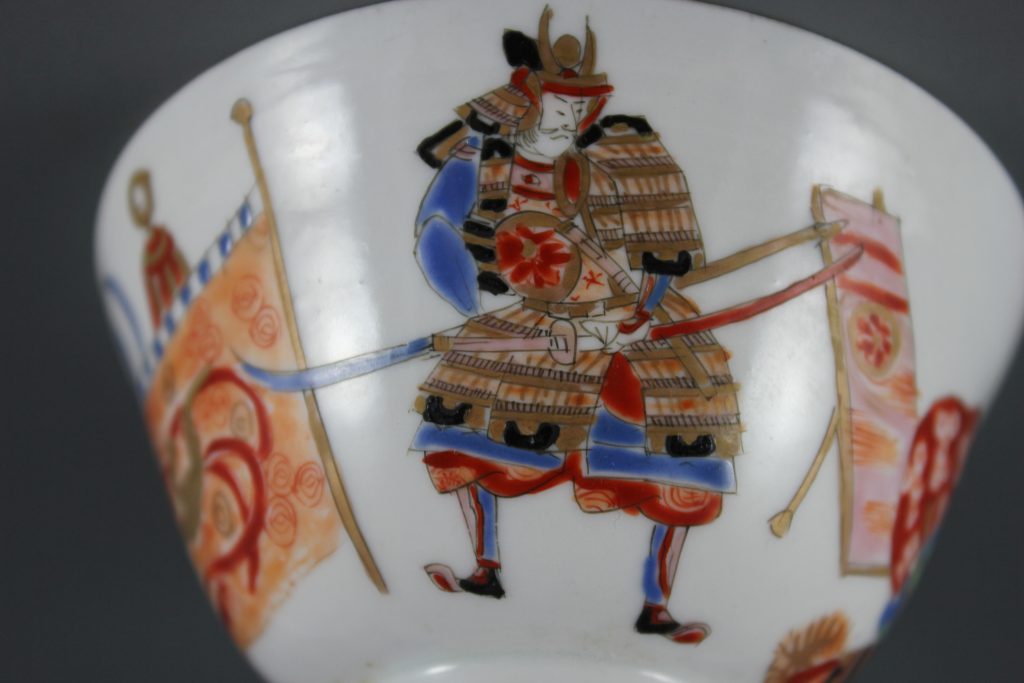
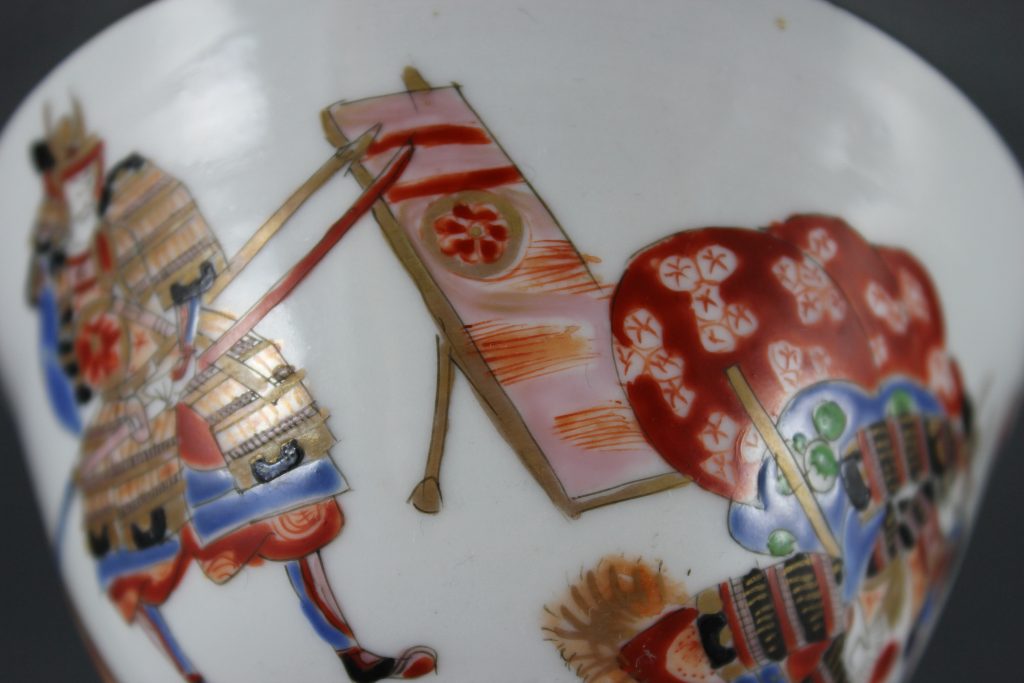
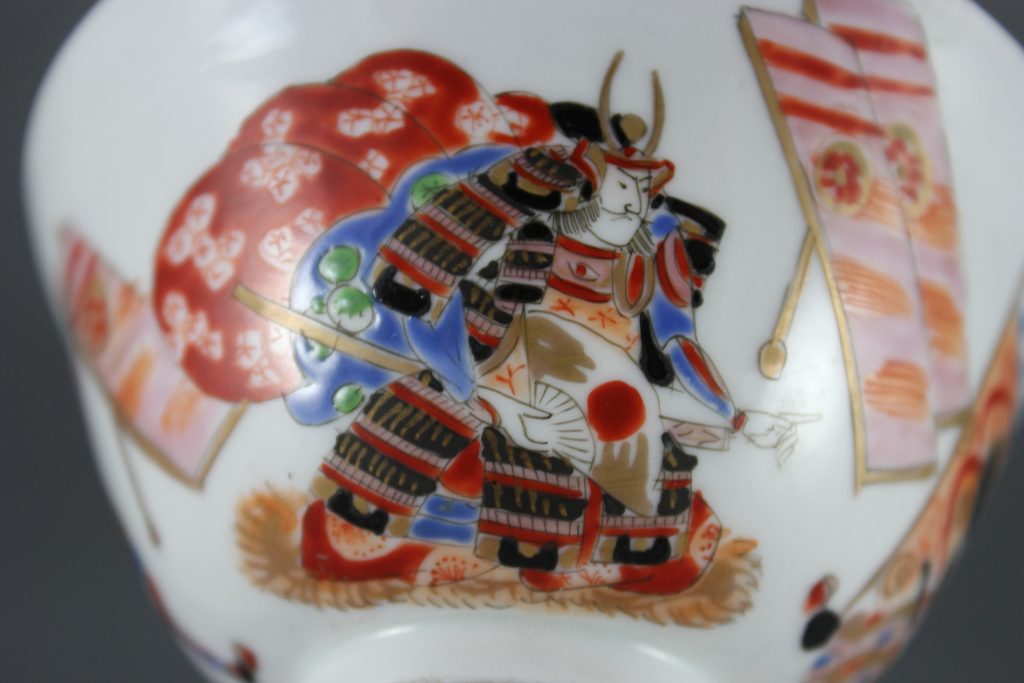
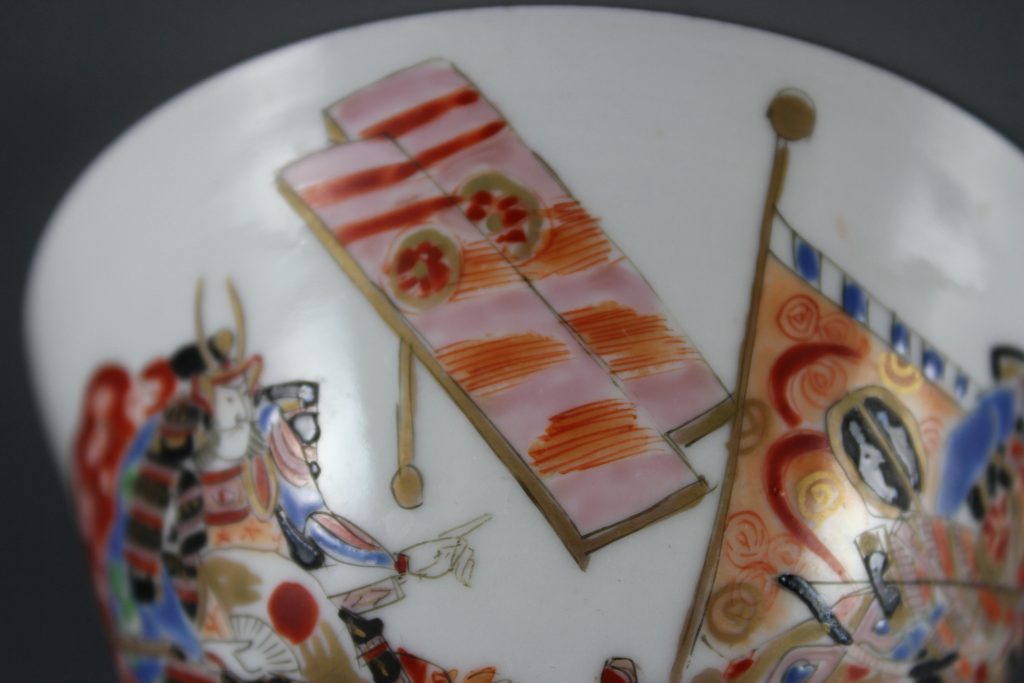
These pieces are exceptionally finely potted to an eggshell thinness. The saucer is decorated with two Samurai warriors, one standing and the other seated, both wearing armour. The tea bowl is similarly decorated with three Samurai, including an archer, and a warrior holding a fan. The ornate decoration is entirely hand painted with the use of rich enamels (orange, red, green, blue, turquoise and black), and fine gilt details. Unusually, the saucer also includes the use of purple lustre. The graphic quality of the decoration mirrors that of Japanese woodblock prints which were being exported to the West during this period.
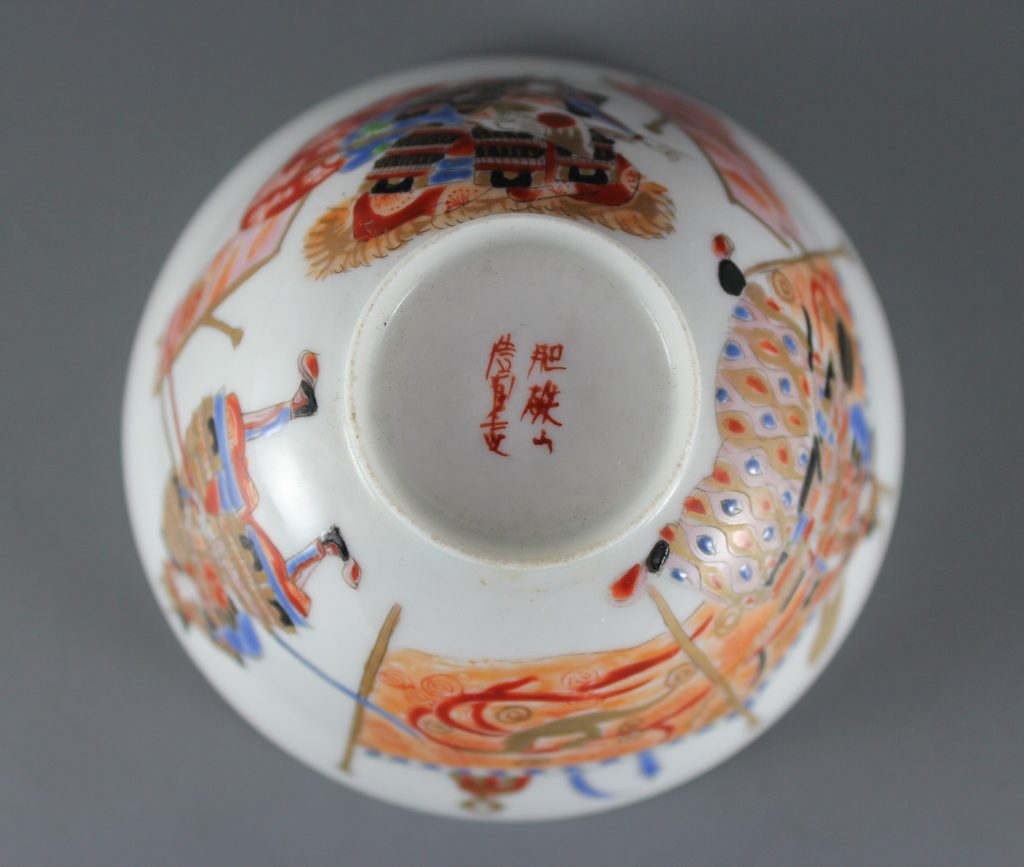
The red six-character merchant mark painted on the underside of the tea bowl reads ‘Made by Hichozan Shinpo’, the merchant mark of Tashiro Monzaemon, dating from circa 1850-80. Monzaemon was a famous Japanese merchant and honorary Samurai, who in 1856 obtained a special license from the Lord of Saga to export porcelain through Nagasaki. In 1873, he led the Arita porcelain display at the Vienna World’s Fair, to great acclaim.
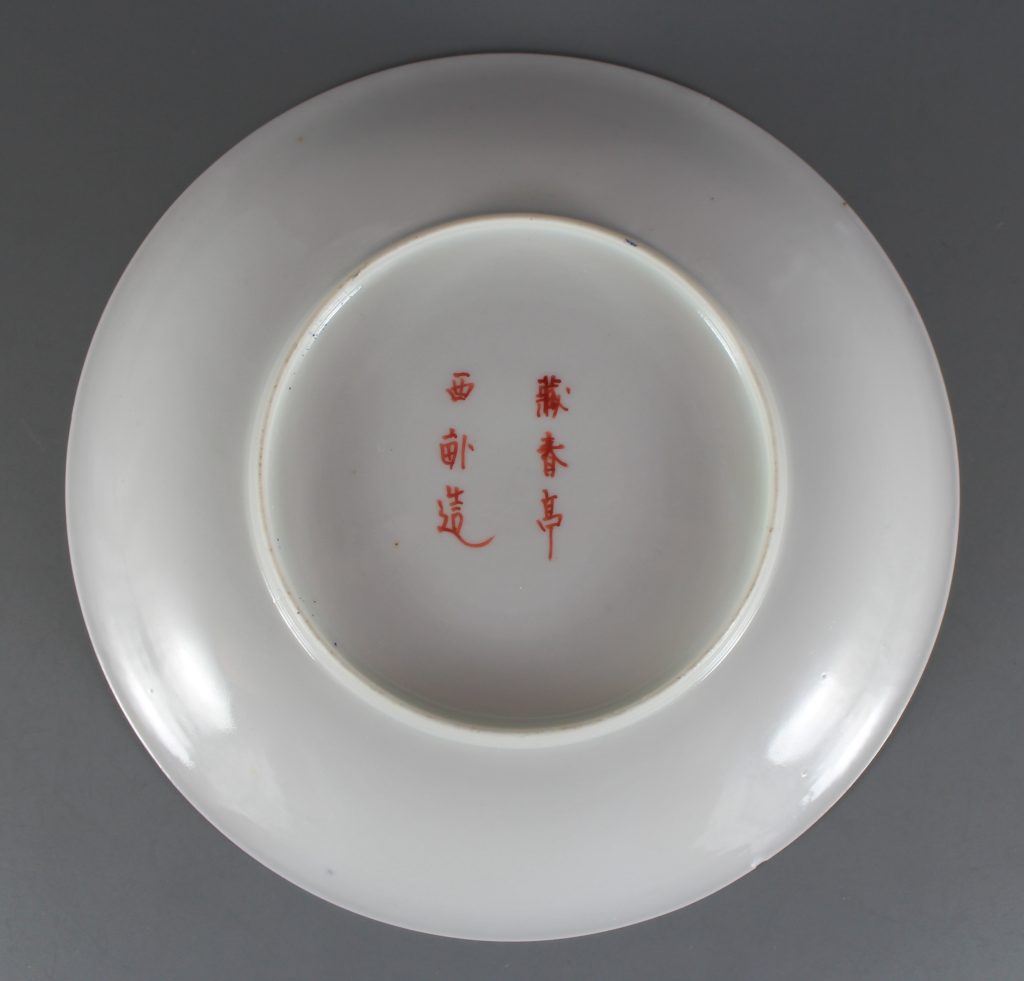
The red six-character merchant mark painted on the underside of the saucer reads ‘Zoshuntei by Seio’, the mark of Hisatomi Yohei Masaoki (born 1832-71). His family had been granted an official export permit by the feudal lord Nabeshima Naomasa (known in the West as ‘Prince Hizen’), enabling them to control major export operations. The Kyushu Ceramics Museum dates the use of this mark to 1862-71.
Dimensions: Saucer – Diameter 14.5 cm; Tea Bowl – Diameter 9.7 cm; Height 5.2 cm.
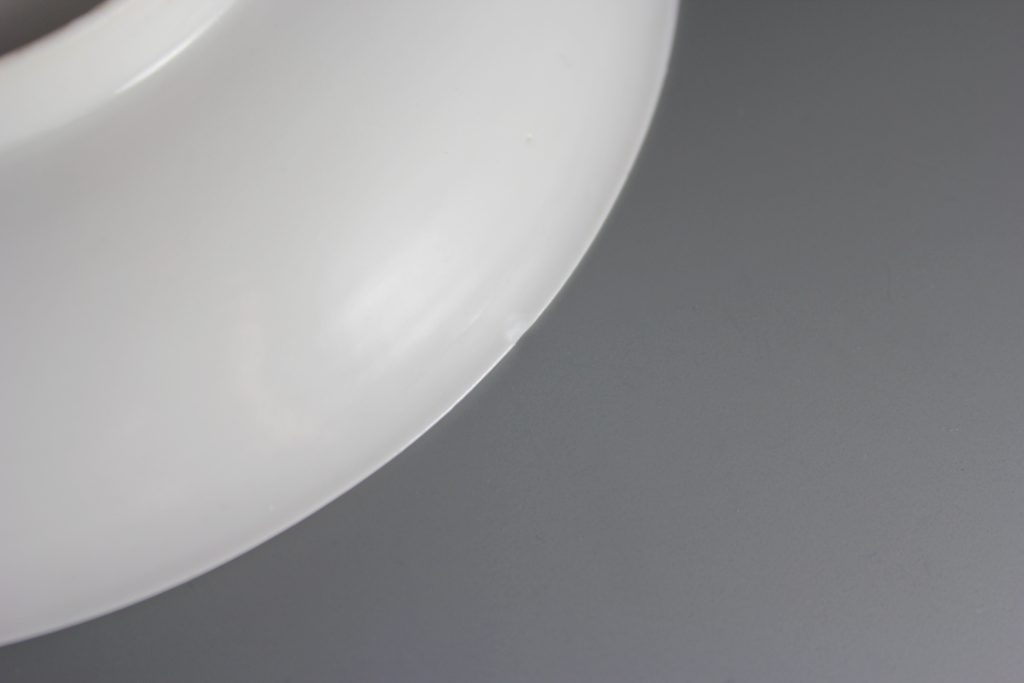
Condition: No cracks or restoration, the saucer with just a tiny flat chip to the underside of the everted rim.
Price: £38.