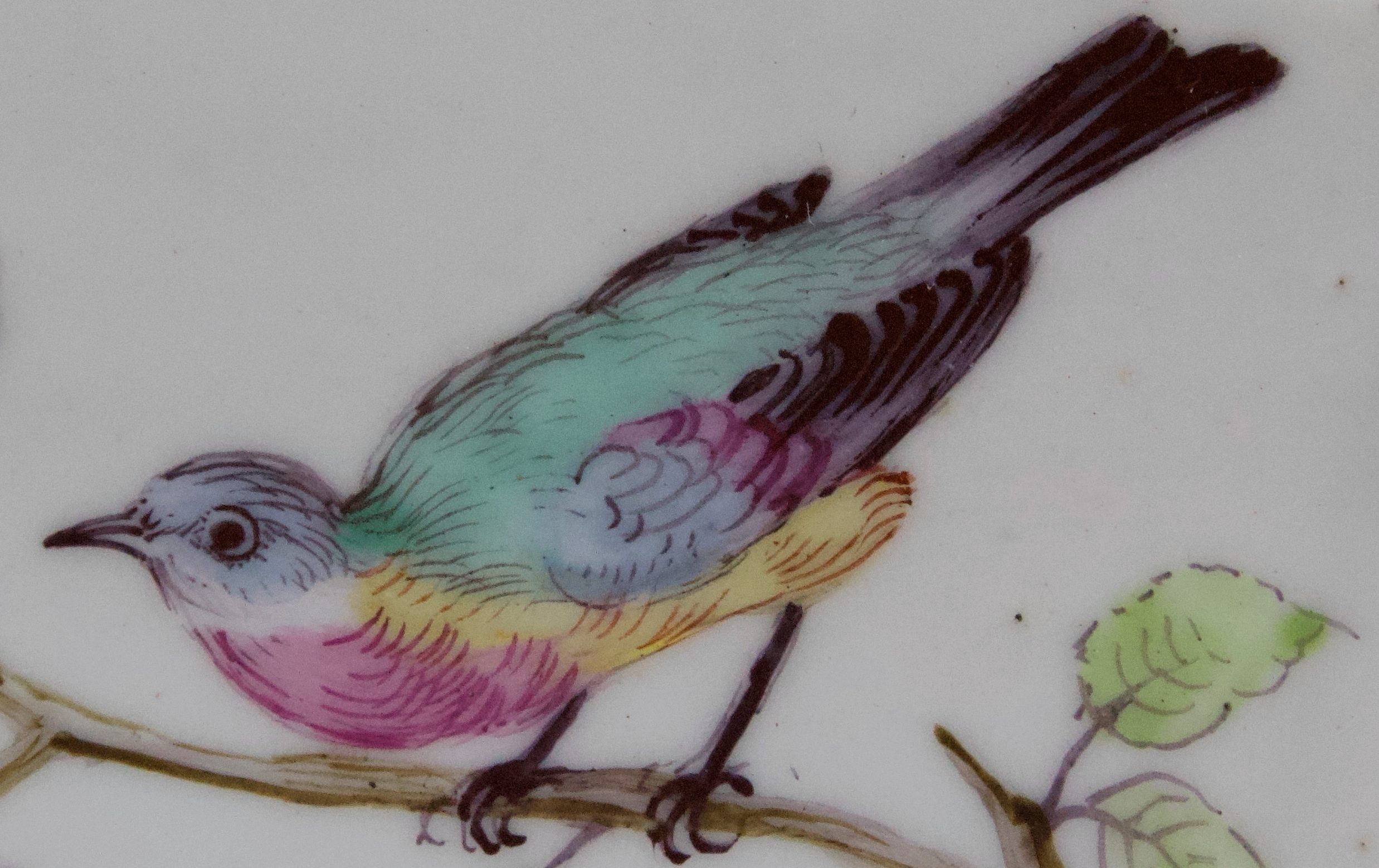
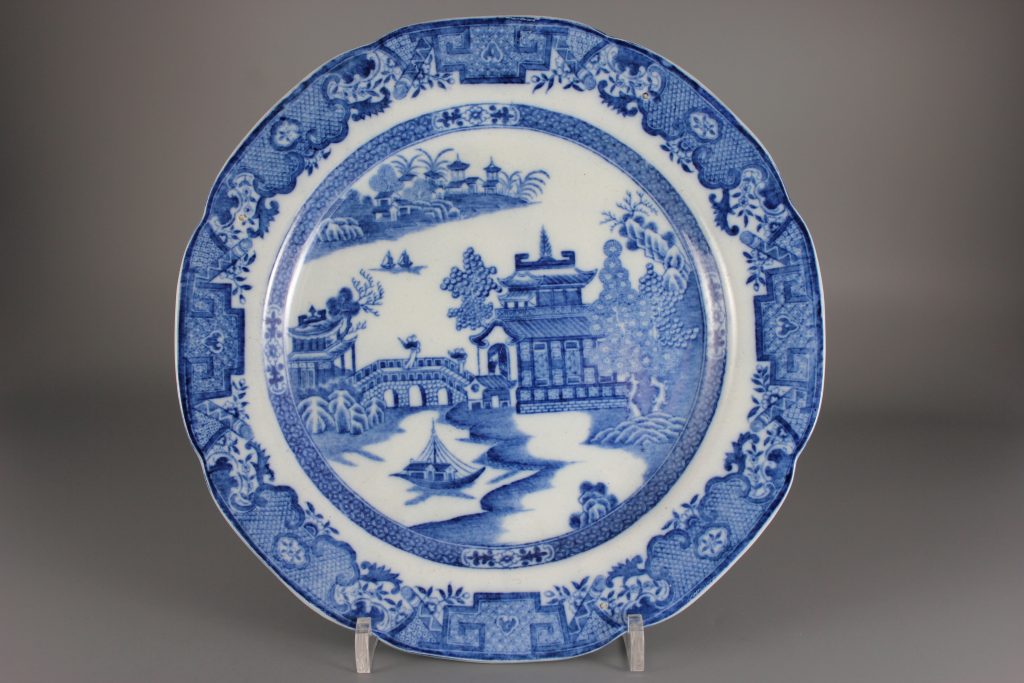
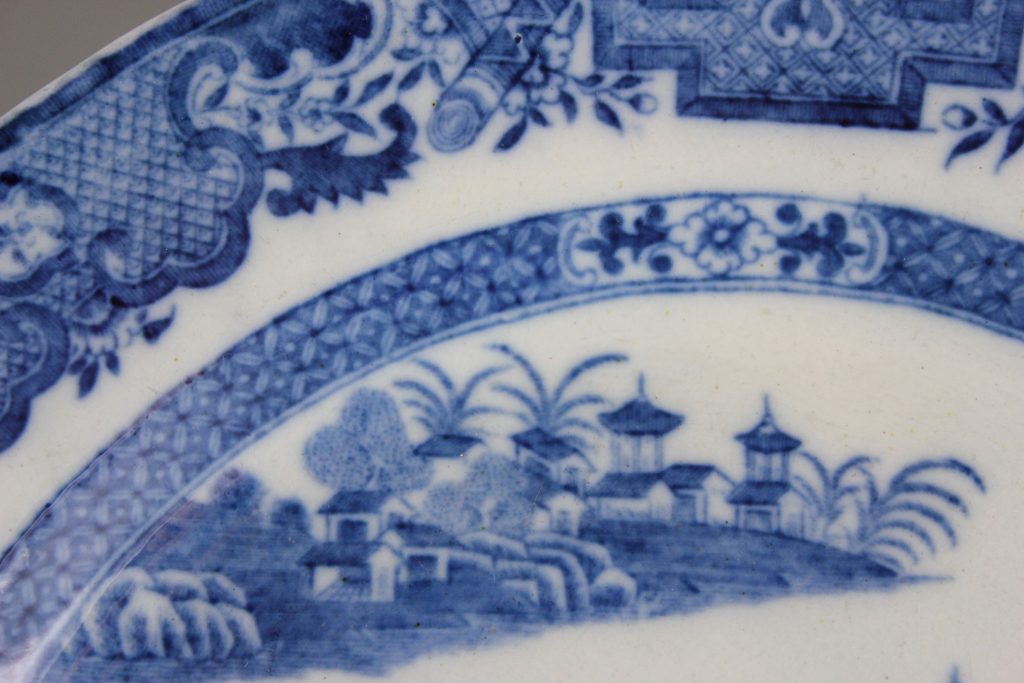
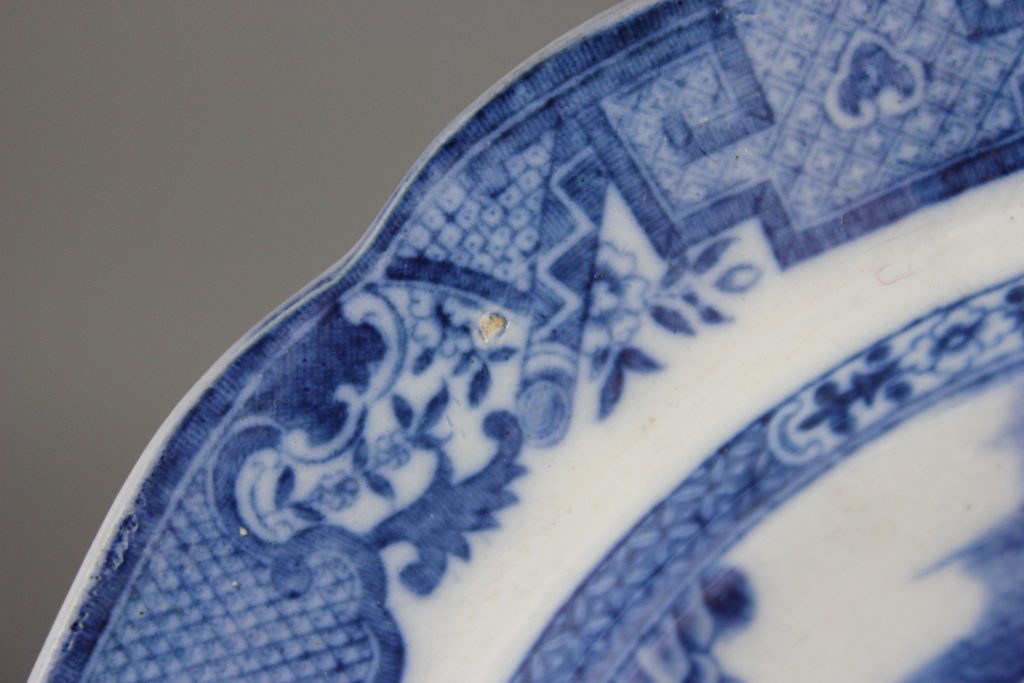
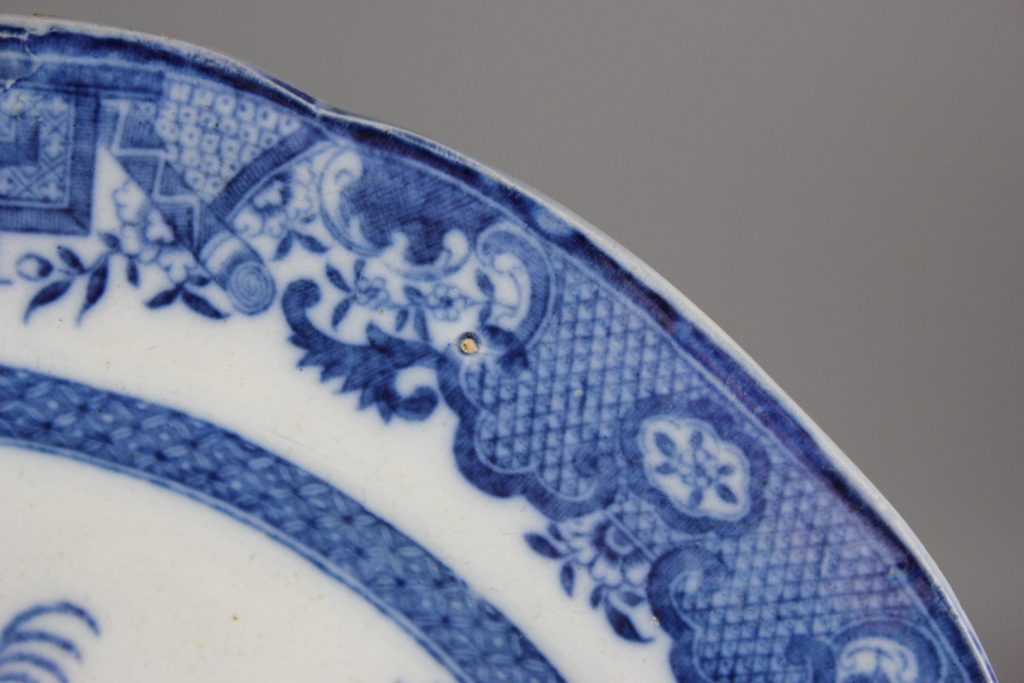
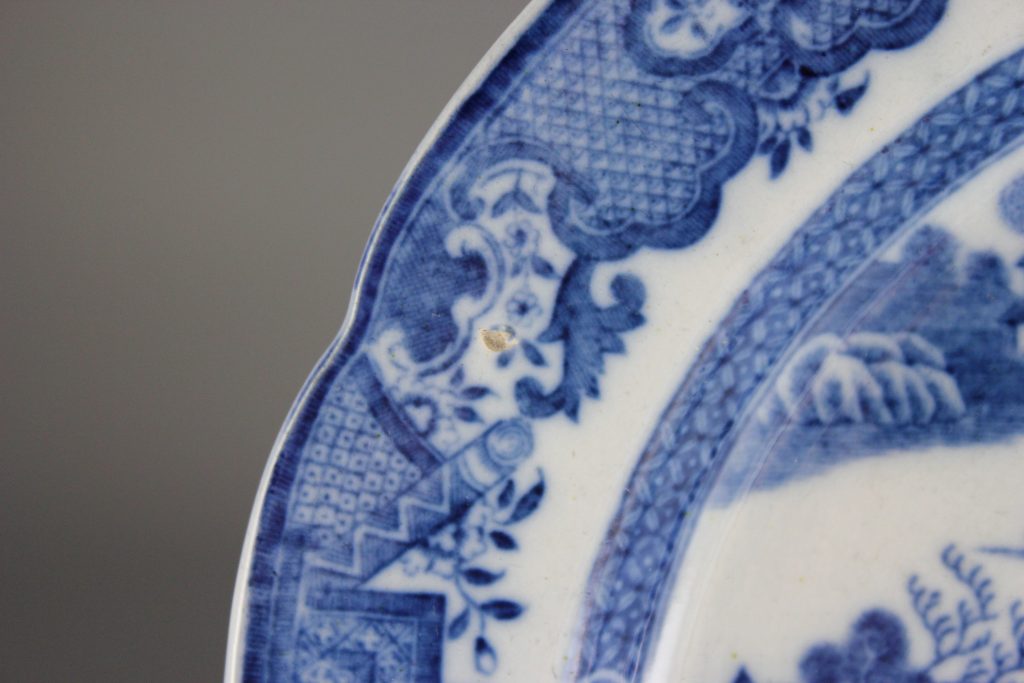
A pearlware pottery Plate with a rare impressed mark, probably Staffordshire, circa 1790
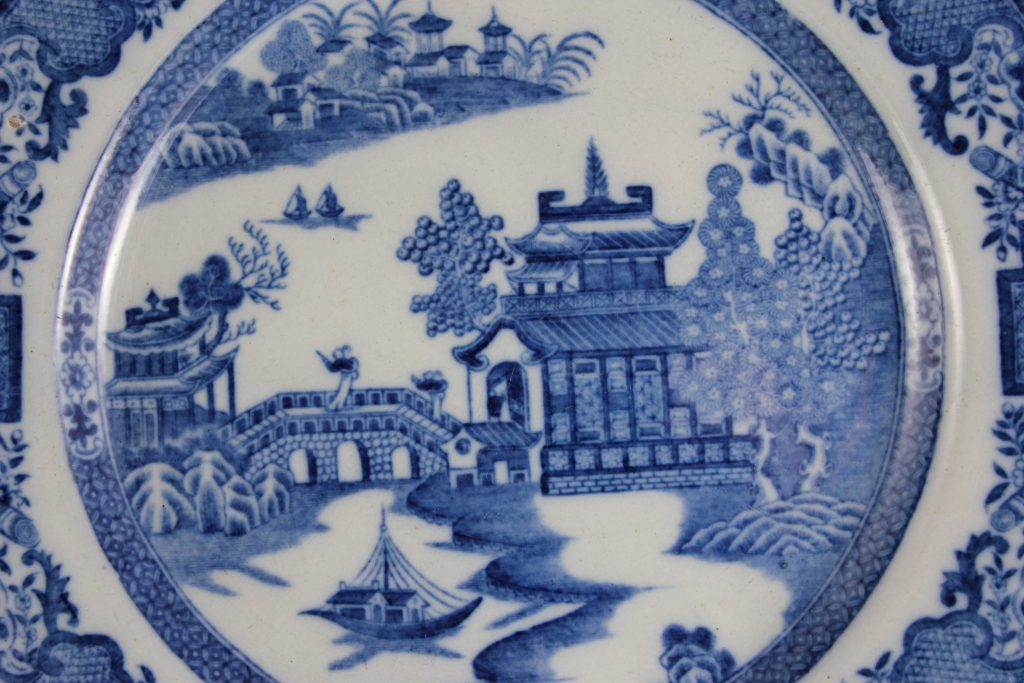
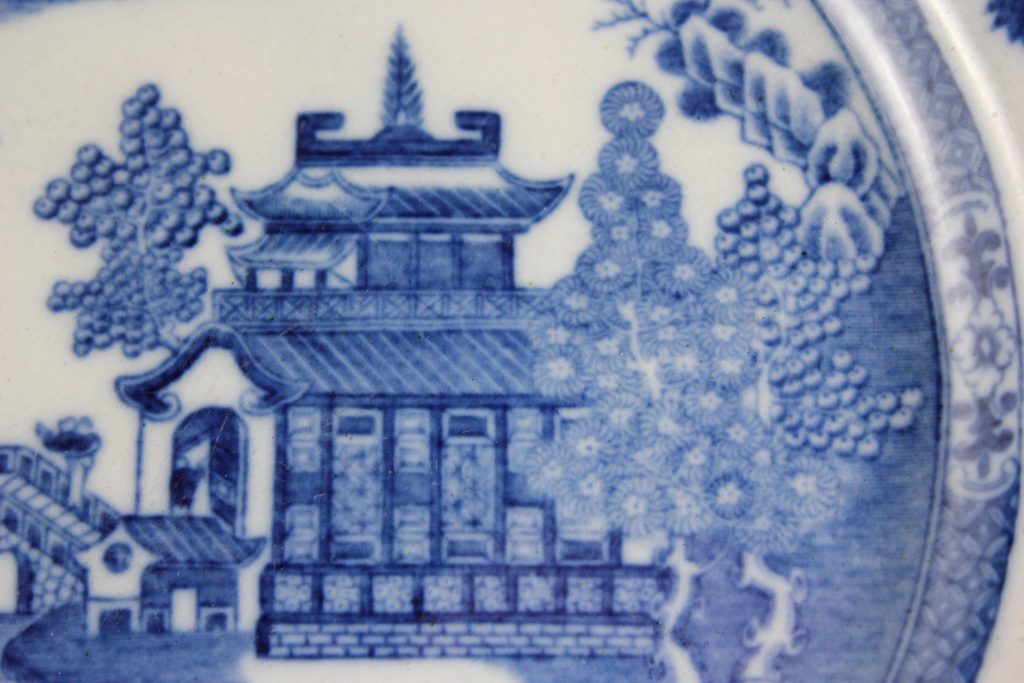
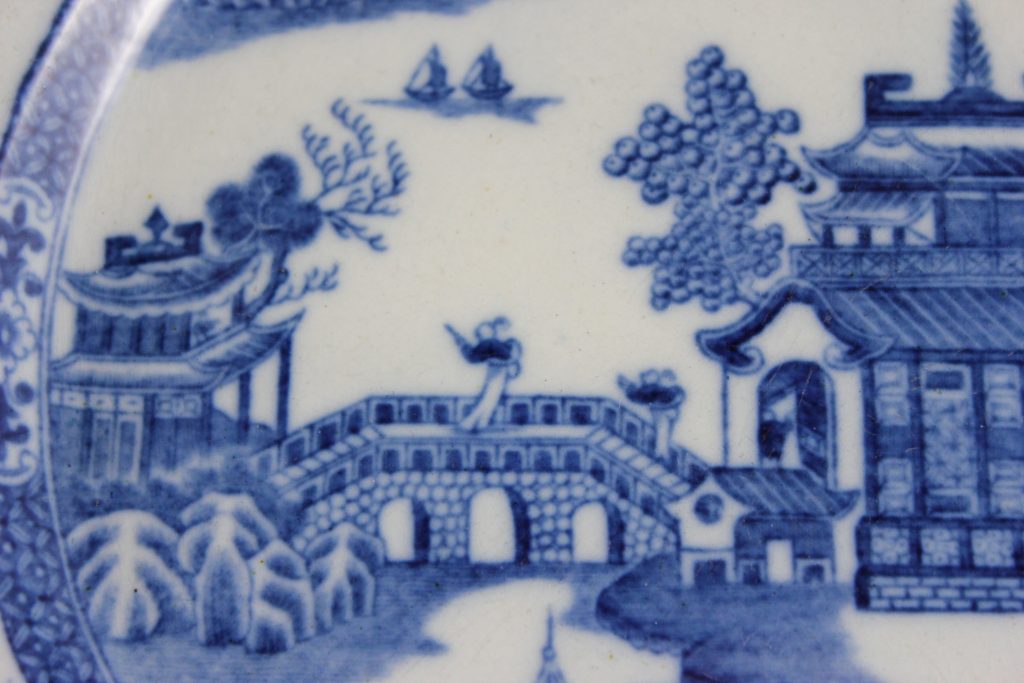
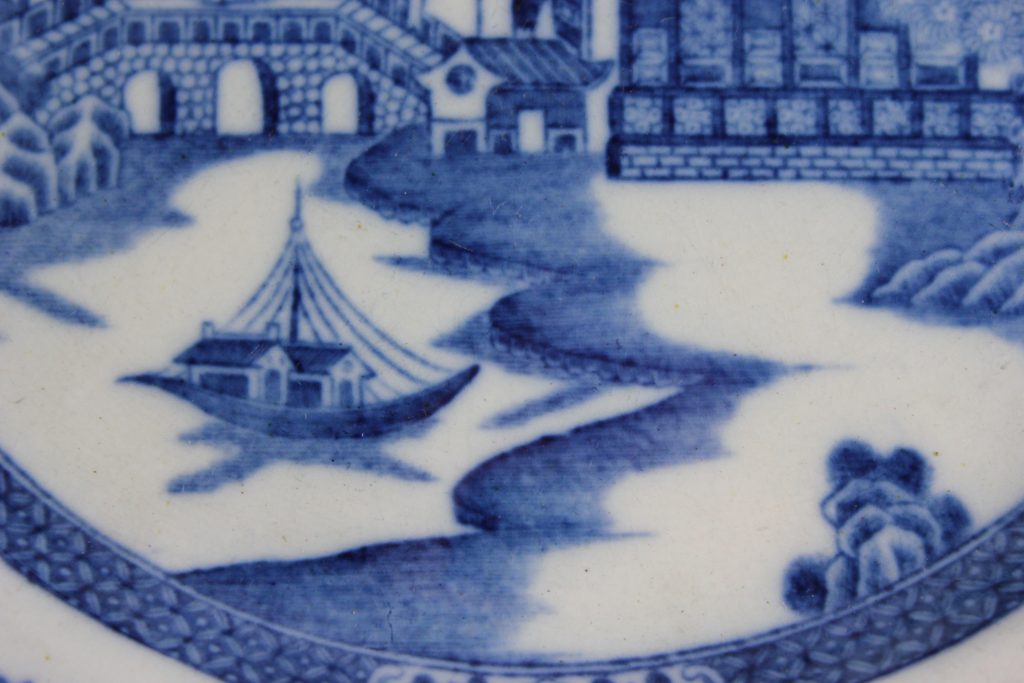
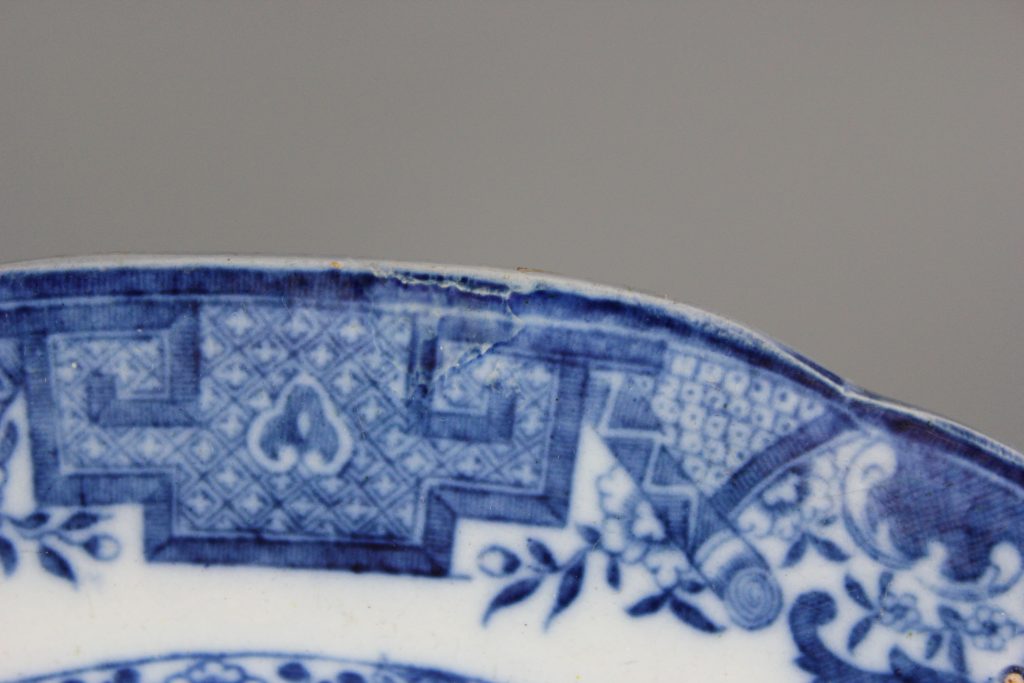
This plate is transfer-printed with the Long Bridge pattern in a very attractive shade of underglaze blue. The central scene depicts a chinoiserie island riverscape, with the eponymous bridge. Two figures are walking across the multi-arched bridge towards a small outbuilding or teahouse; a third figure stands in the doorway of a large pagoda-style pavilion. A traditional sailing junk boat can be seen beneath the bridge, whilst two boats sail into the distance. The Fitzhugh-type border design is composed of stylised floral elements, Chinese scrolls, and cartouches containing trellis patterns.
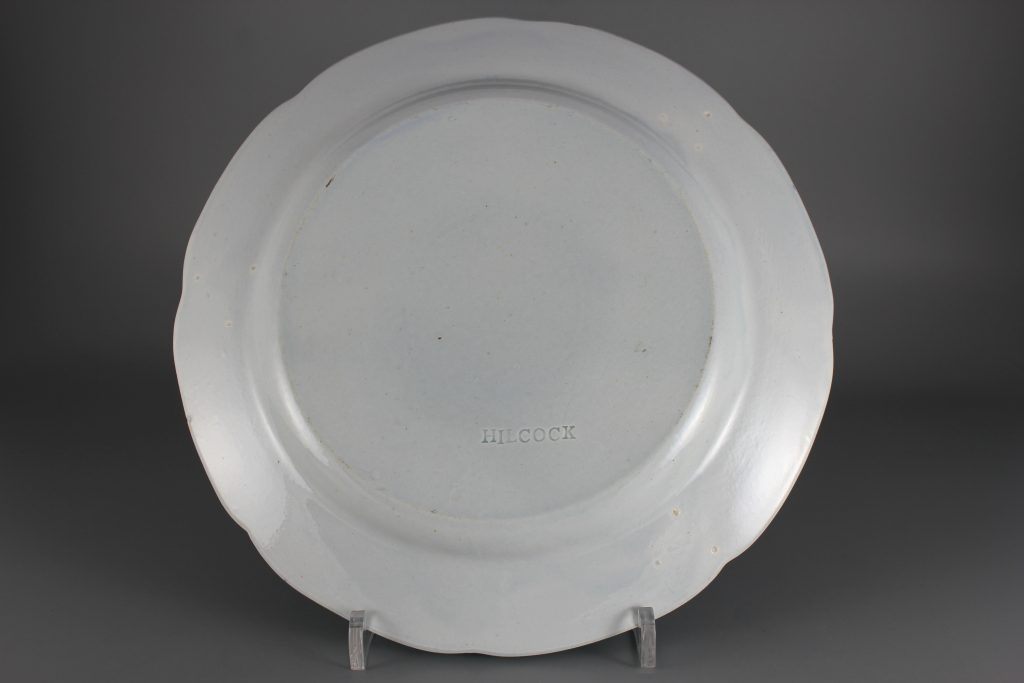
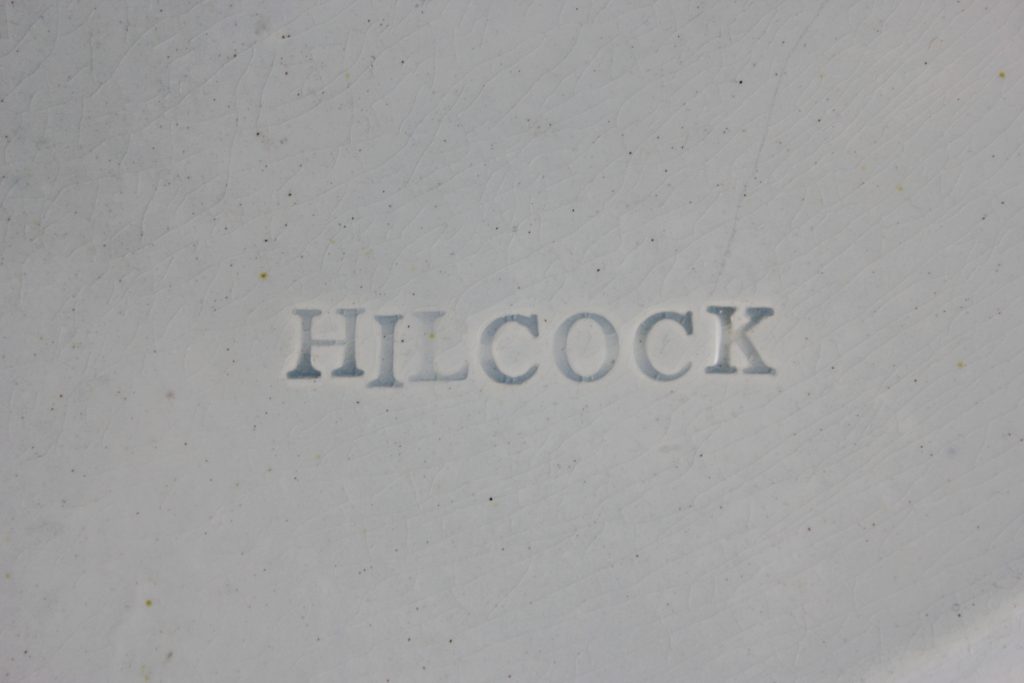
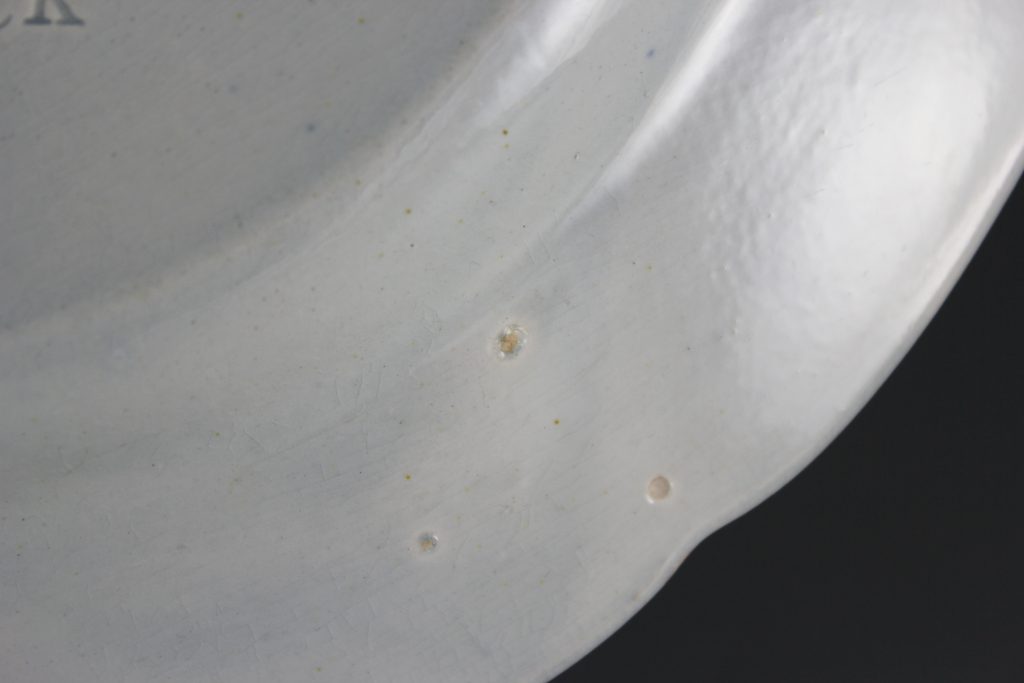
Impressed HILCOCK (sic) mark, the letters applied individually to the soft clay.
First recorded as a London ‘China and Glassman’ in 1772, Robert Hillcock initially operated from 35 Bishopsgate Without. He moved his premises to 57 Cheapside in 1783, building a substantial stock that was insured for £3,000 by 1788. In 1799, the business expanded to include his son (see Hildyard). A handful of blue transfer-printed plates are known from the 19th century with printed marks for ‘Hillcock and Walton’, but the plate shown here is the only example I have seen with just an impressed mark for Hillcock.
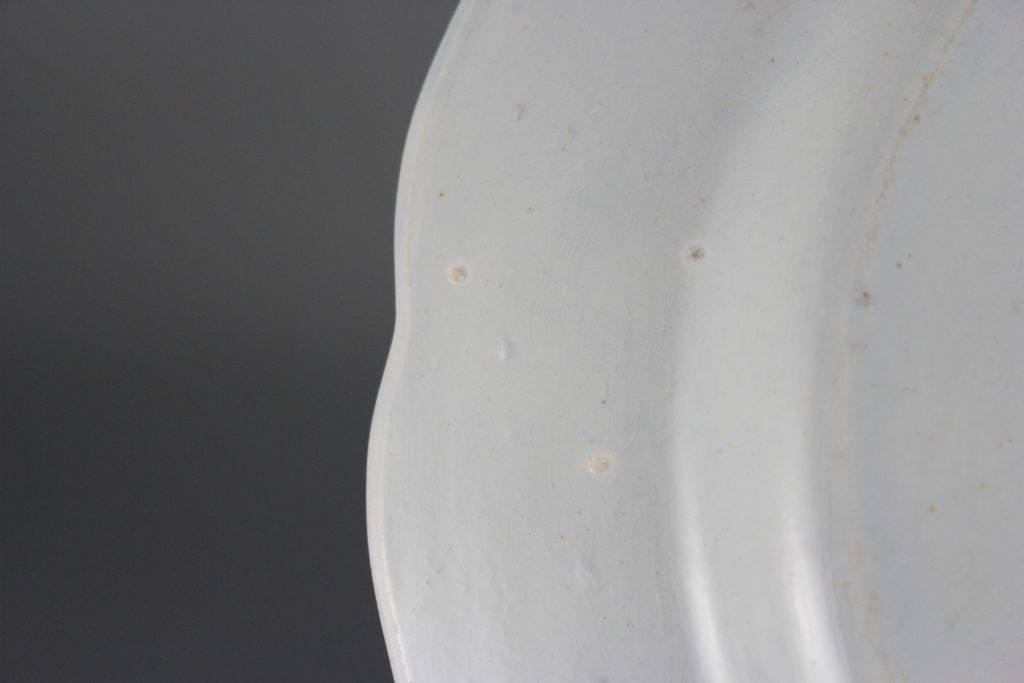
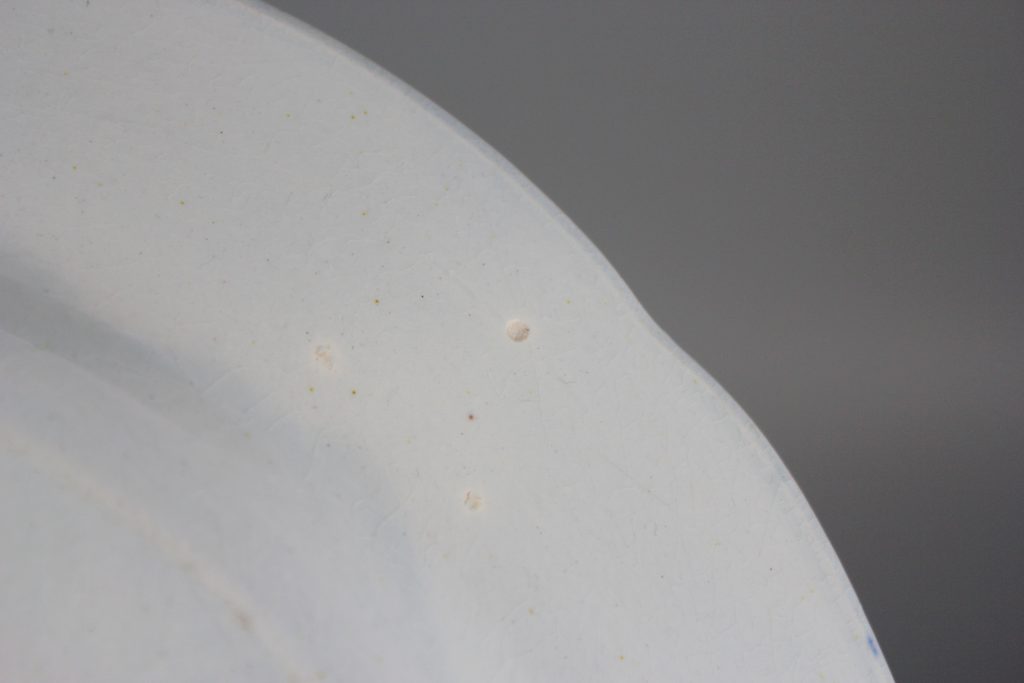
There are three, three-pointed stilt marks equally spaced on the underside edge, and three single spurs on the front. These marks show how the plates were stacked in the kiln during firing.
The Long Bridge pattern was produced by a number of manufacturers, including the Cambrian Pottery of Swansea, Leeds Pottery, and various Staffordshire potters.
Dimensions: Diameter 24 cm.
Condition: No damage or restoration, just typical light crazing to the pearl glaze, and minor glazing, potting and firing anomalies.
Dealers, compiled by Robin Hildyard FSA and available to view and download on the Northern Ceramic Society website https://www.northernceramicsociety.org/dealers-list/
Price: £95.