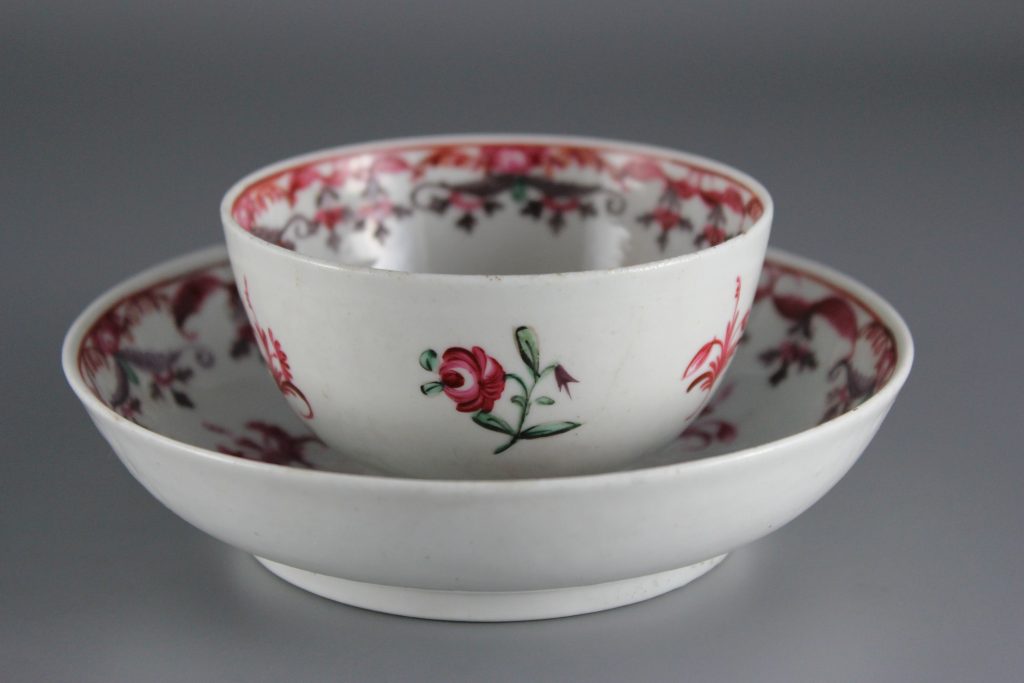
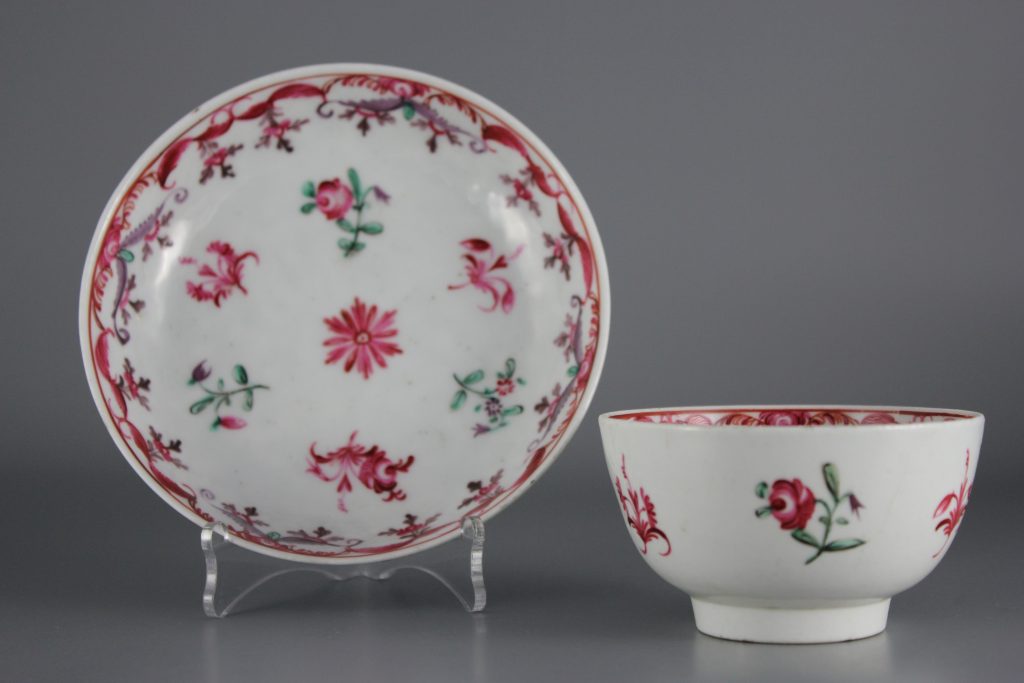
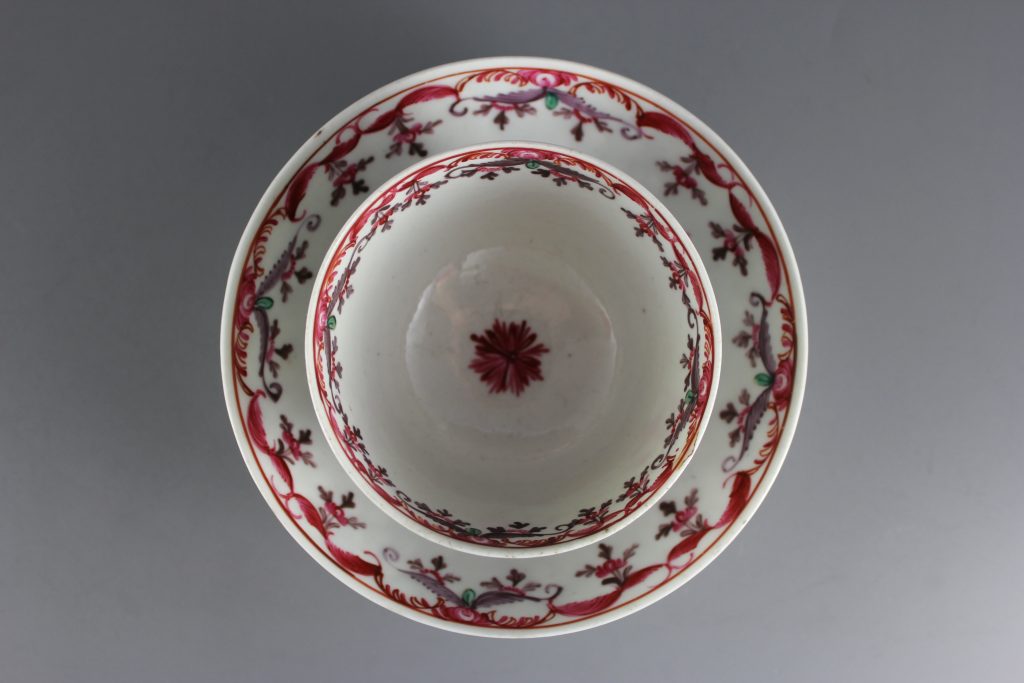
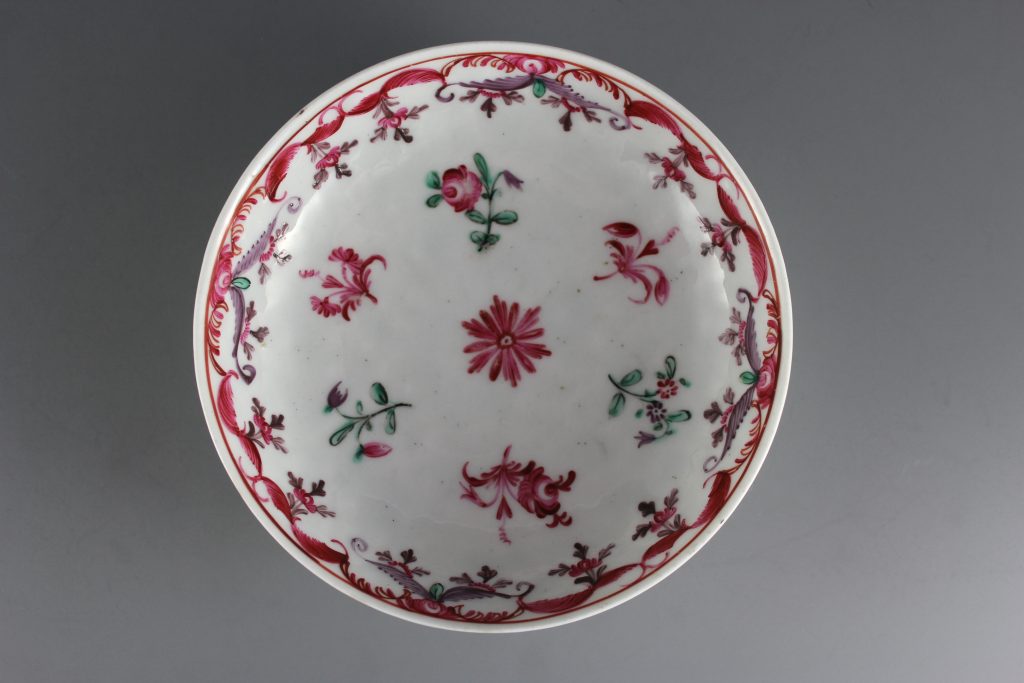
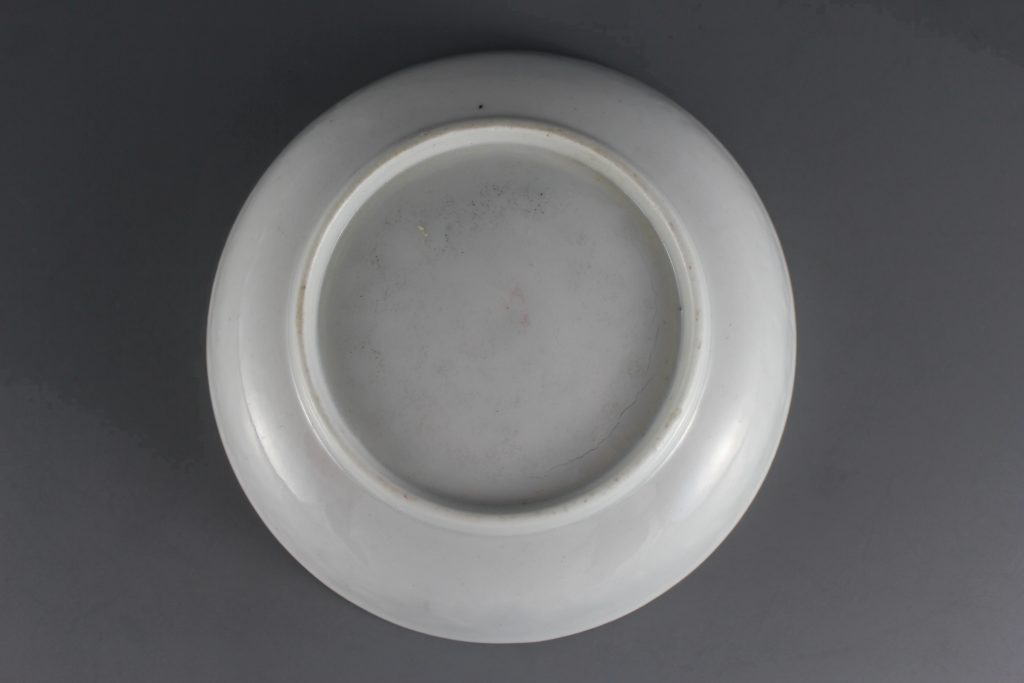
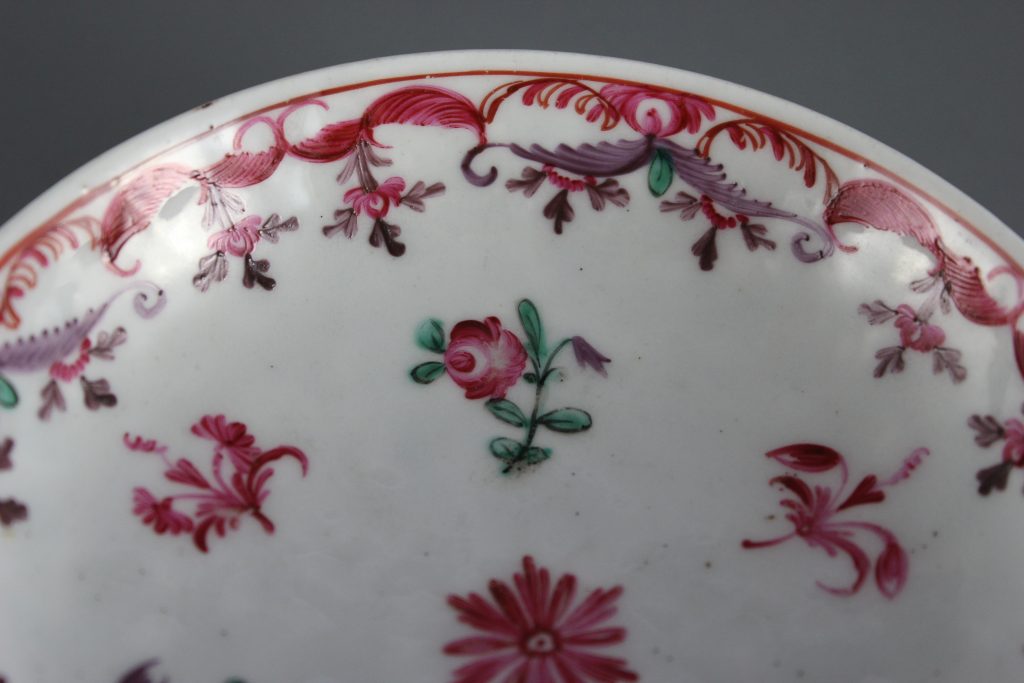
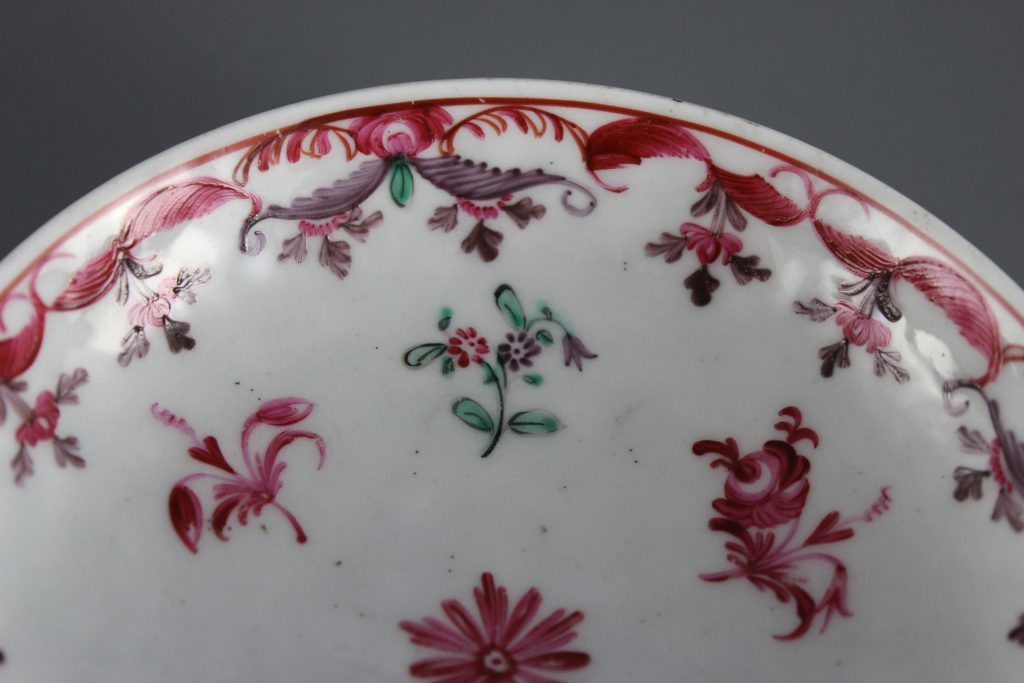
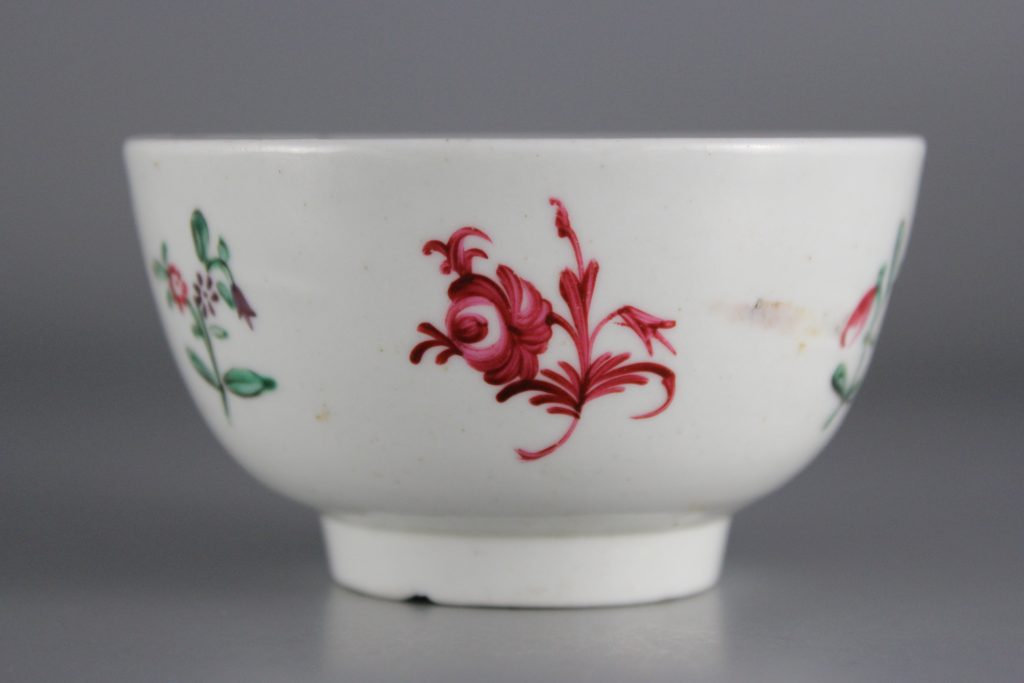
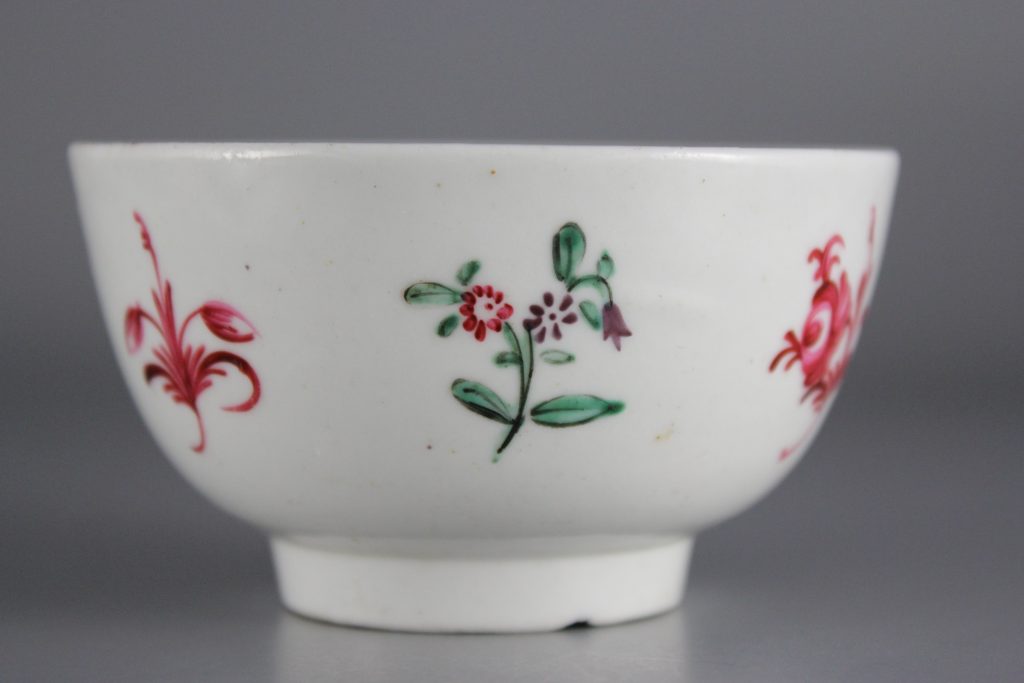
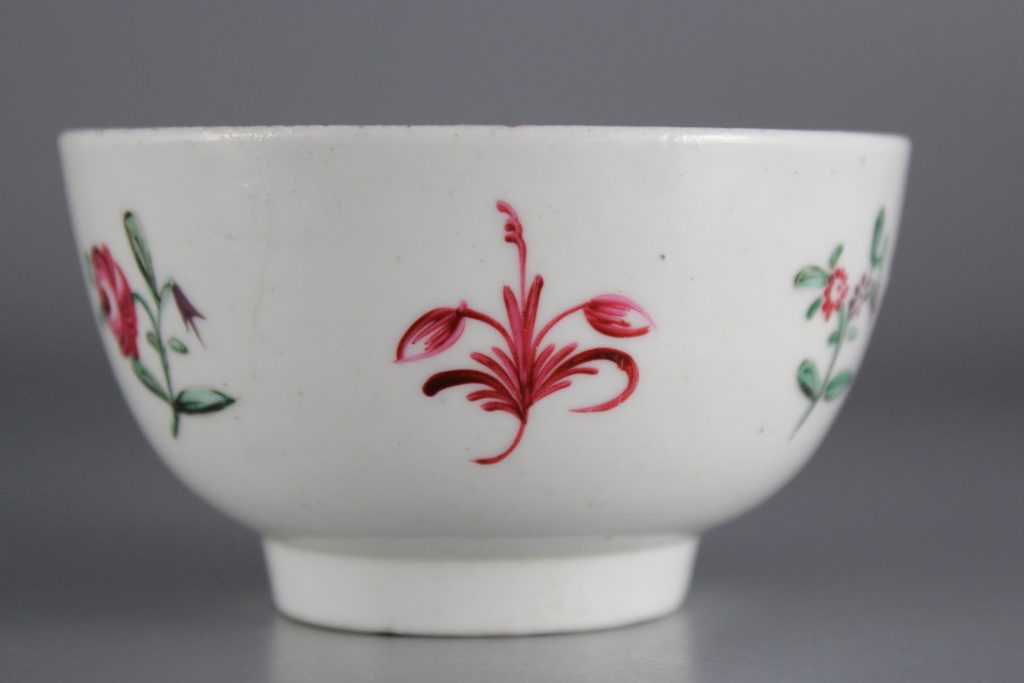
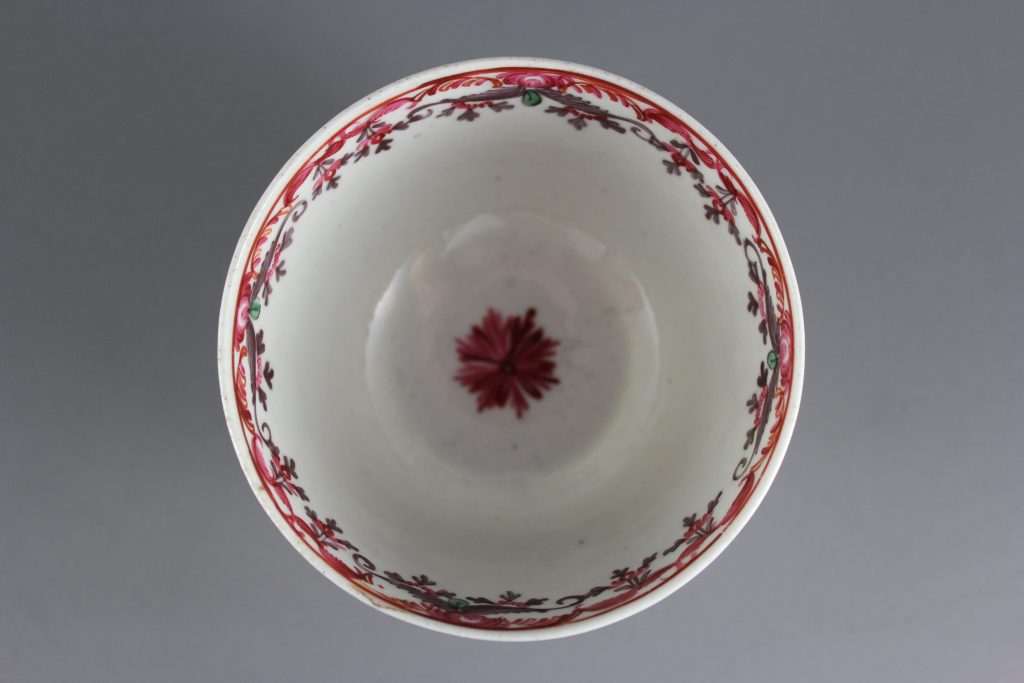
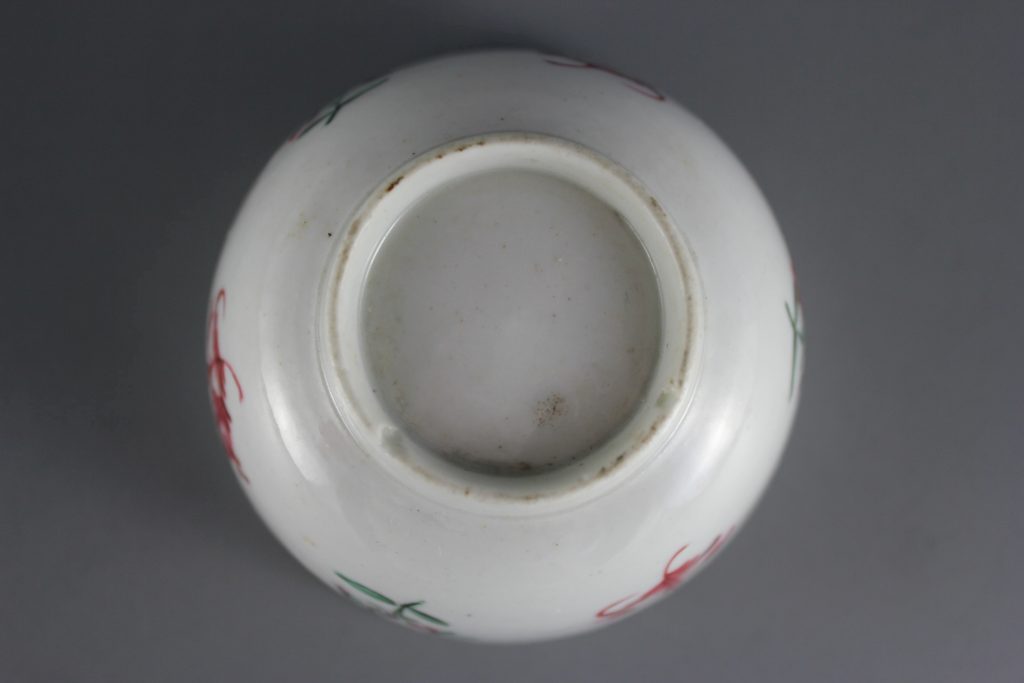
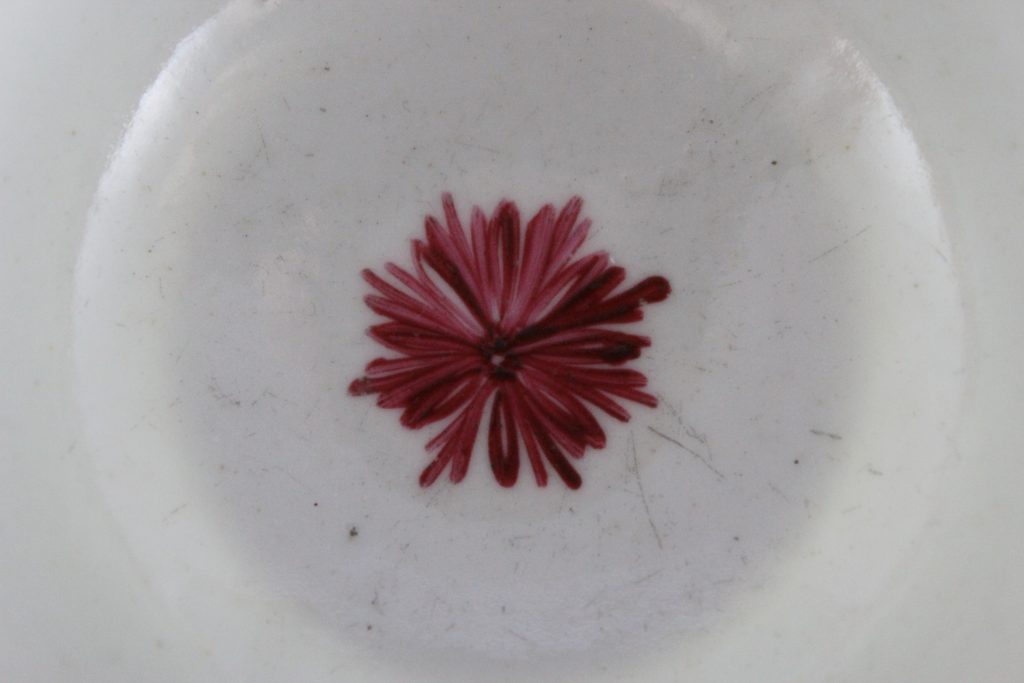
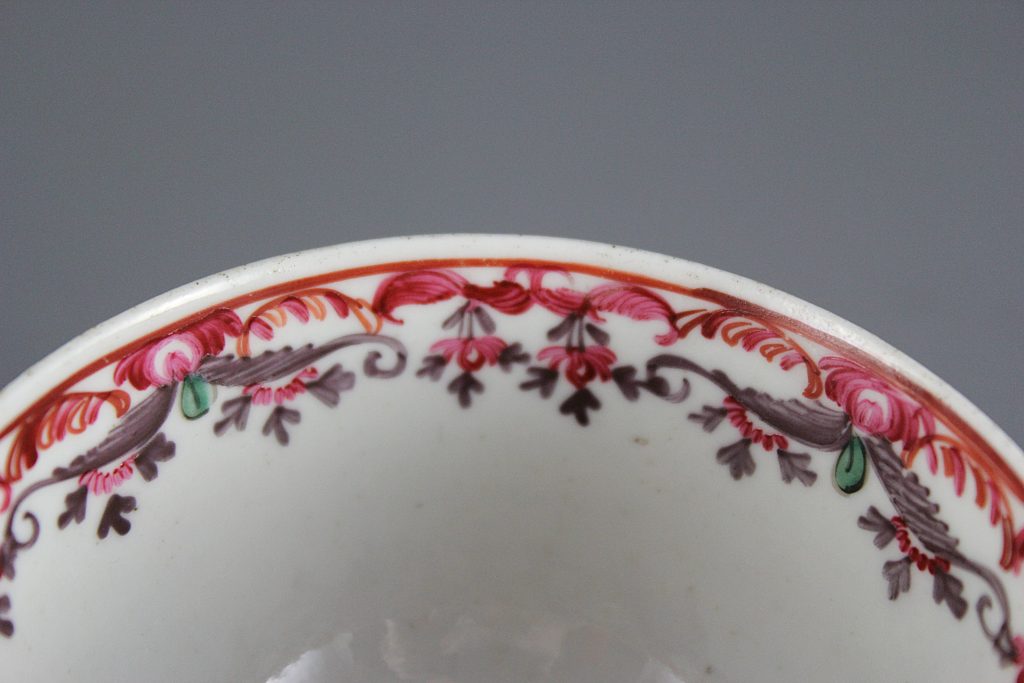
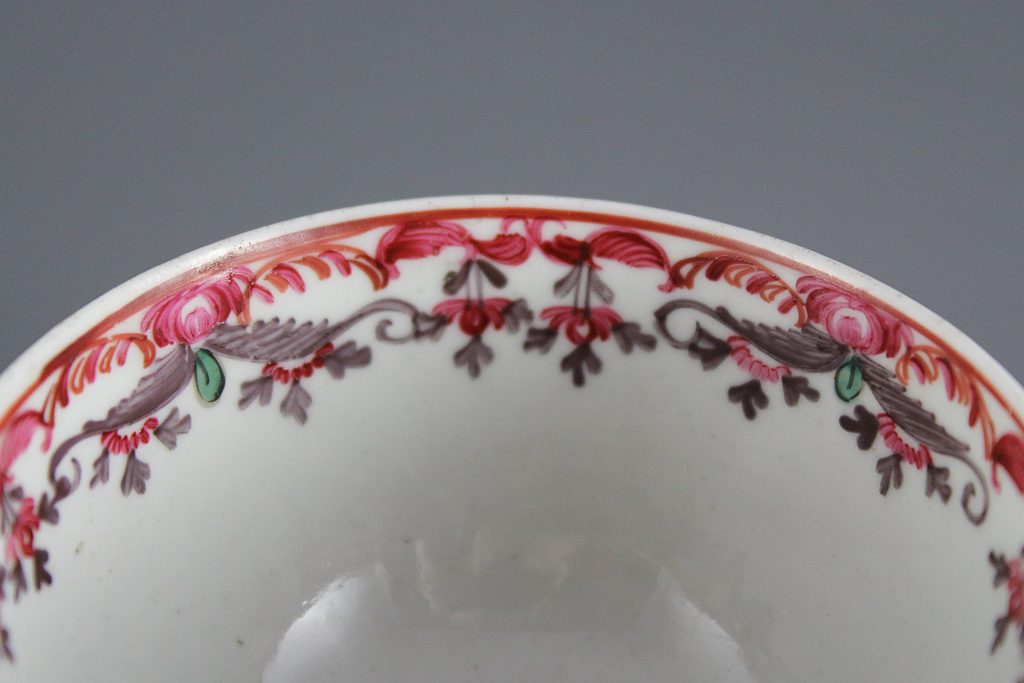
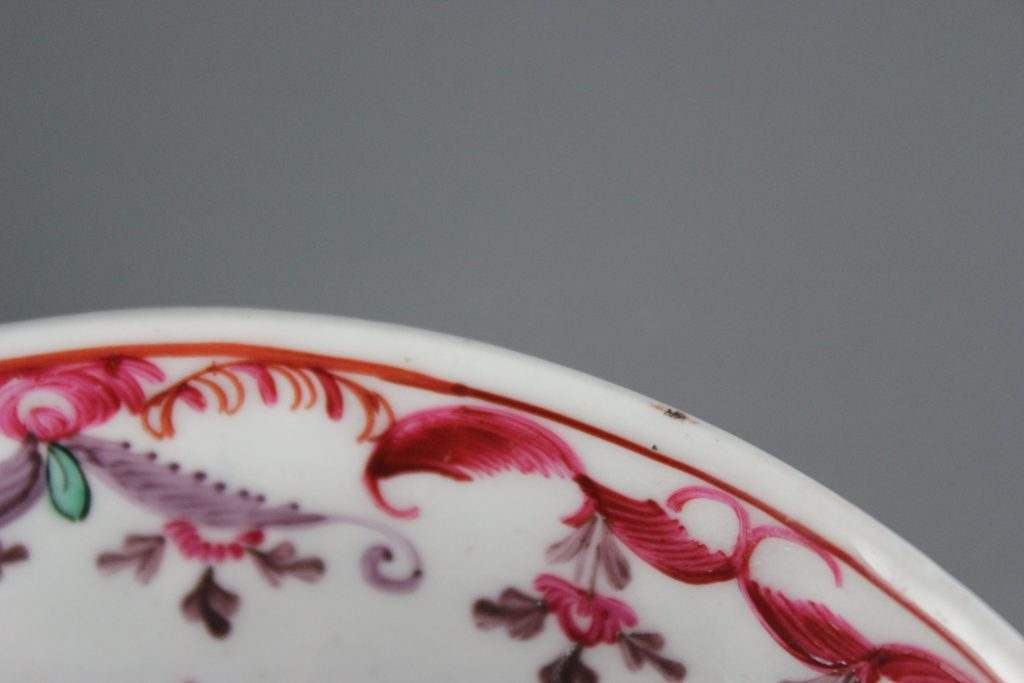
A Baddeley-Littler Tea Bowl and Saucer, circa 1777-85
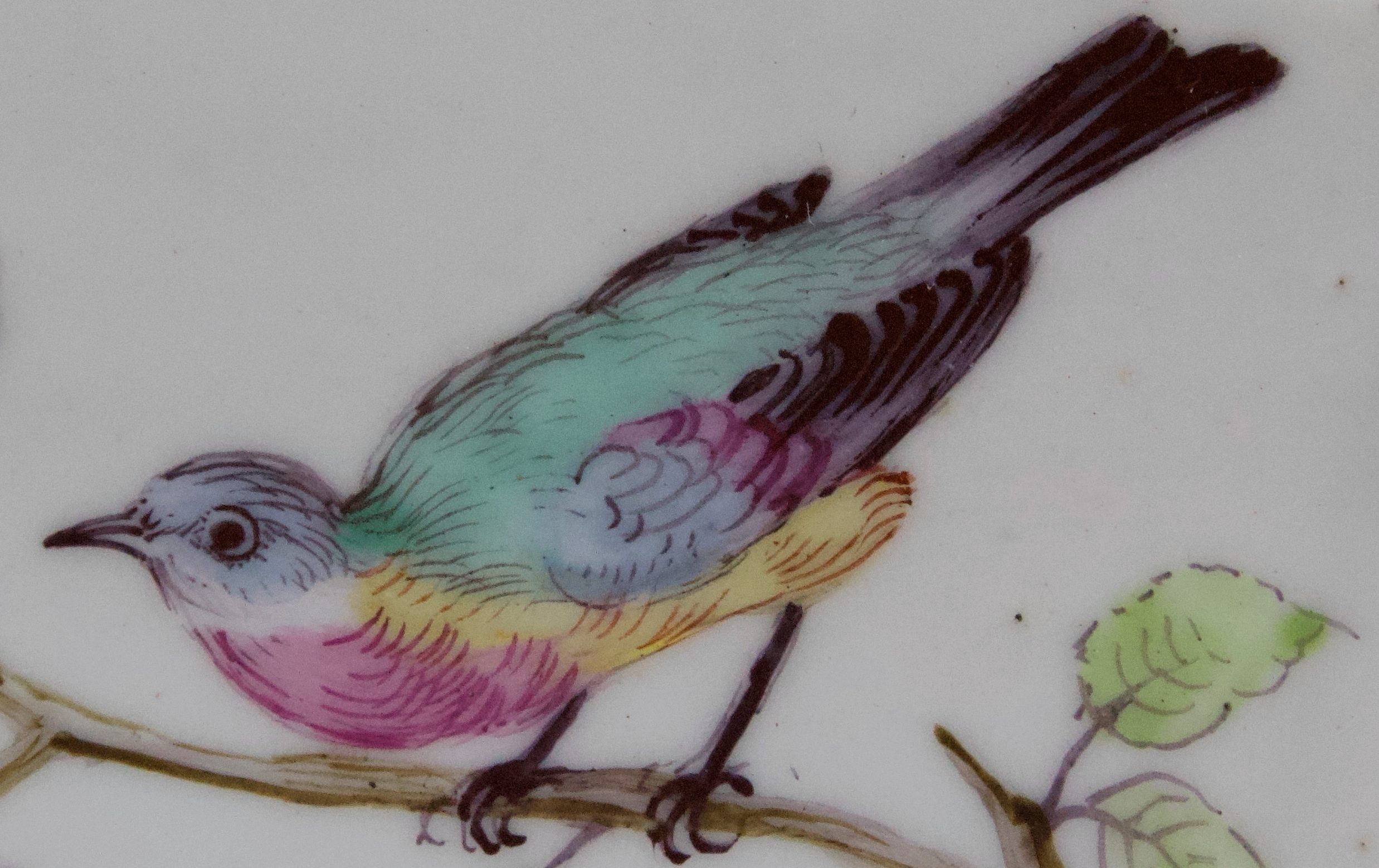
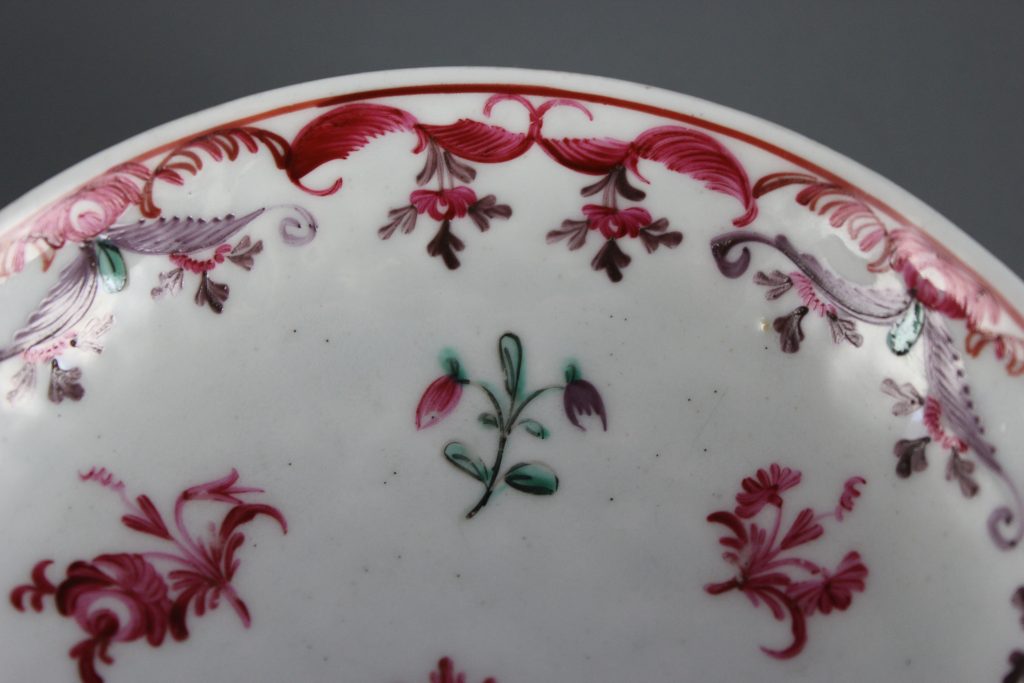
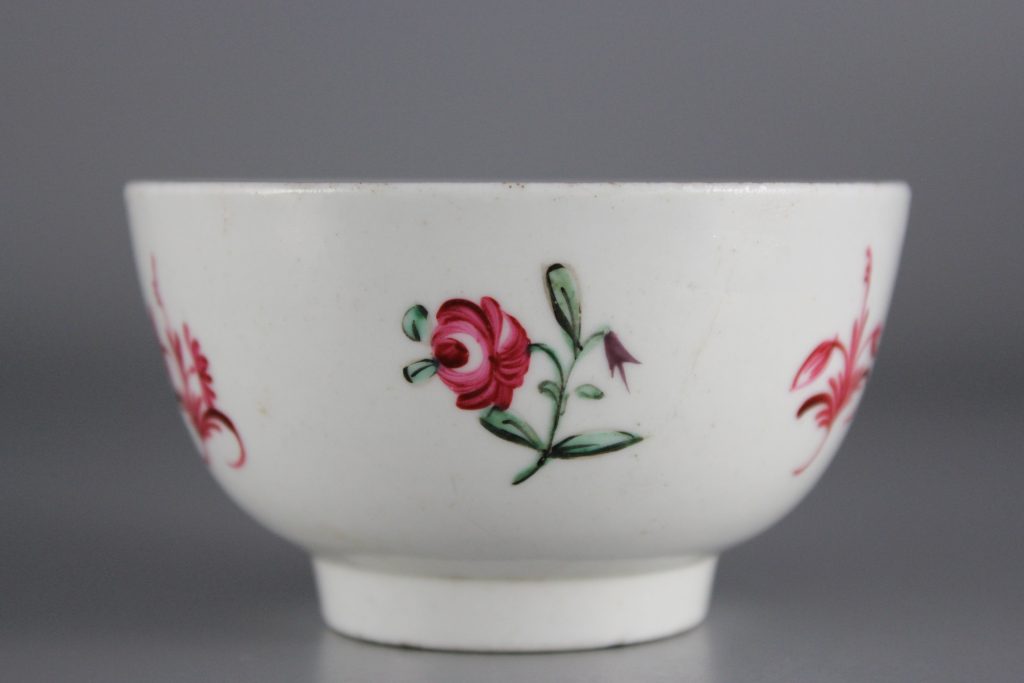
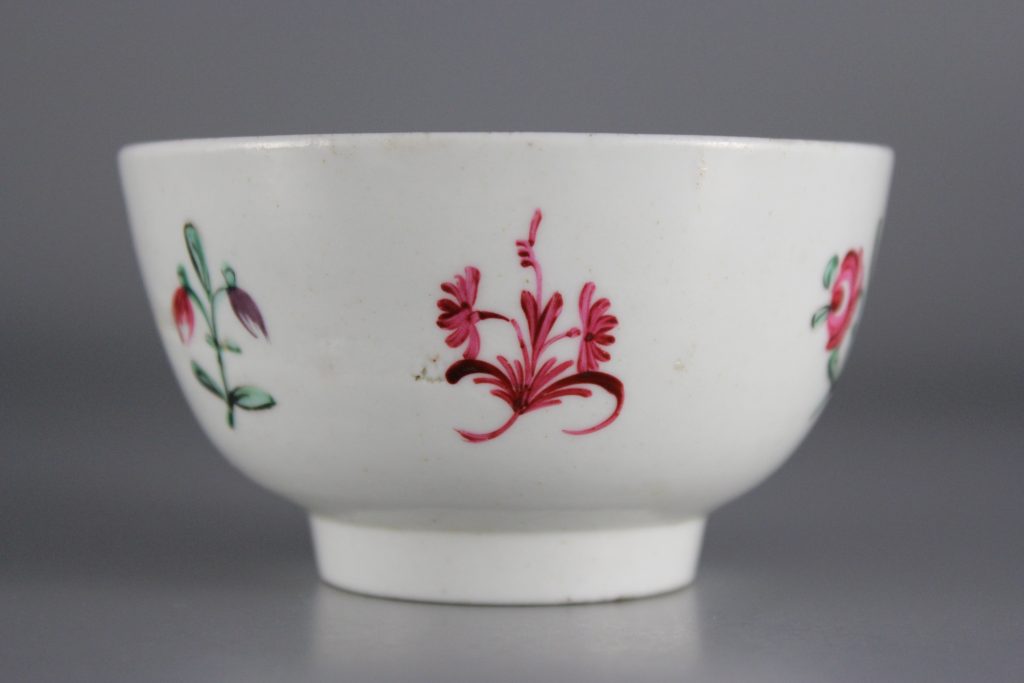
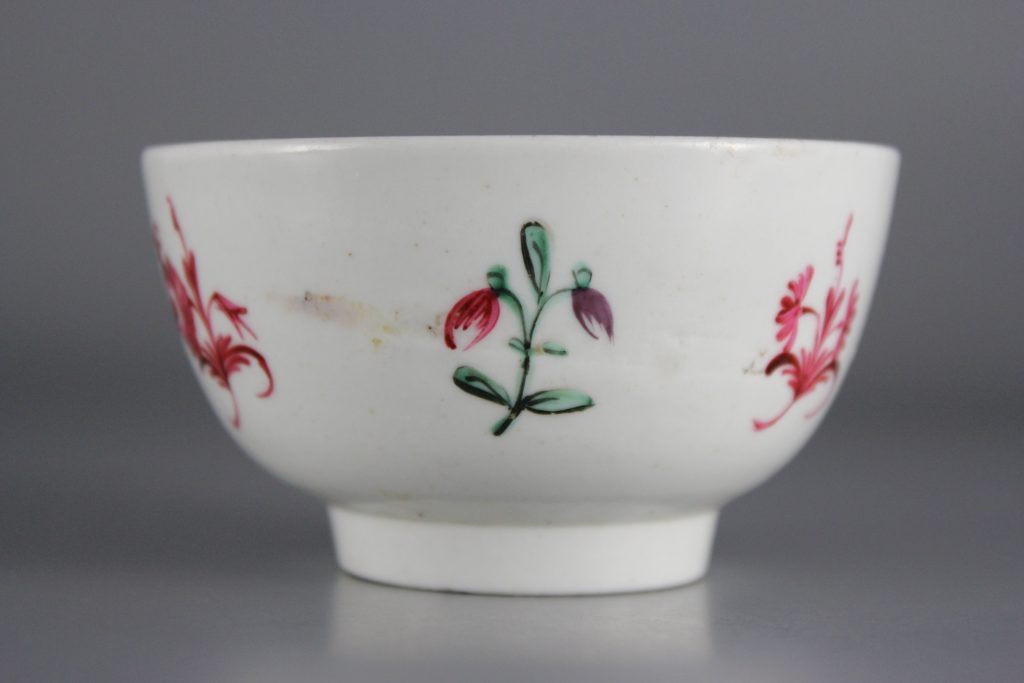
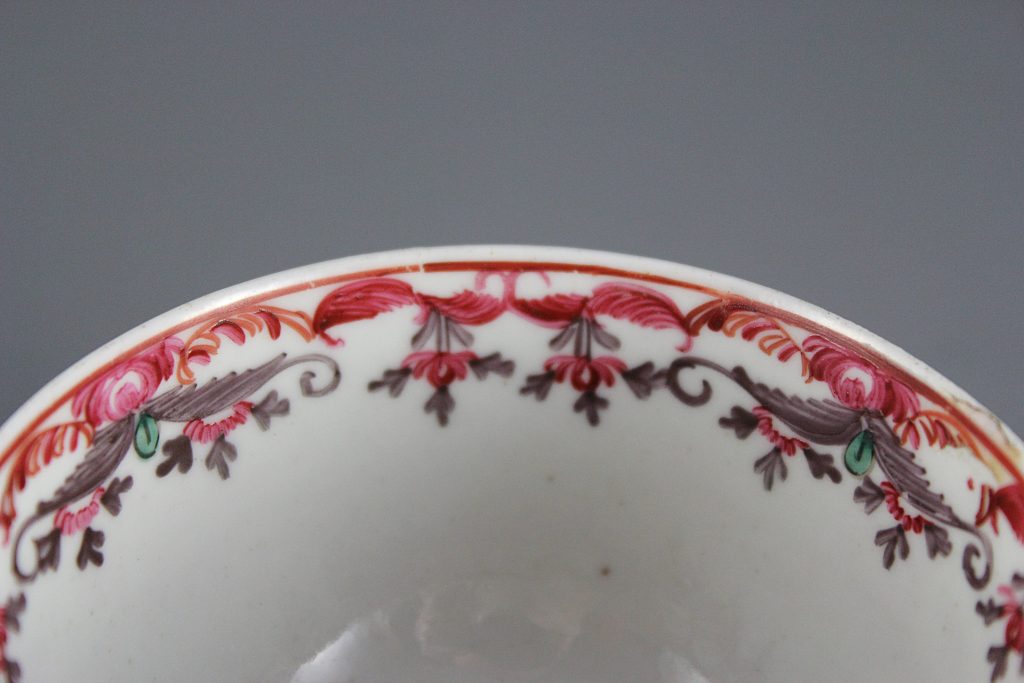
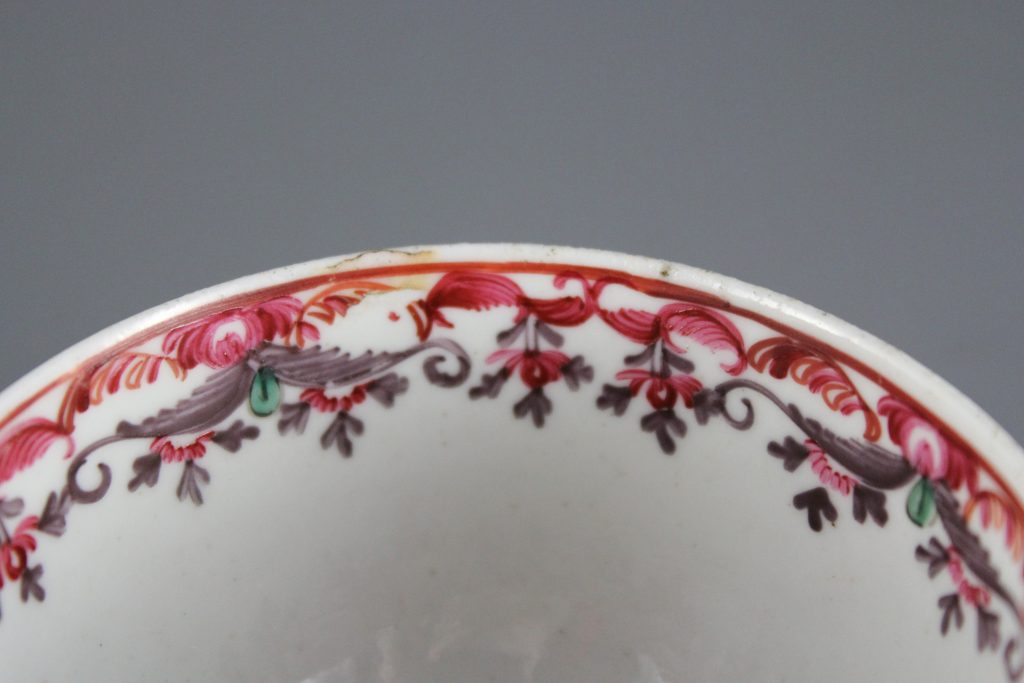
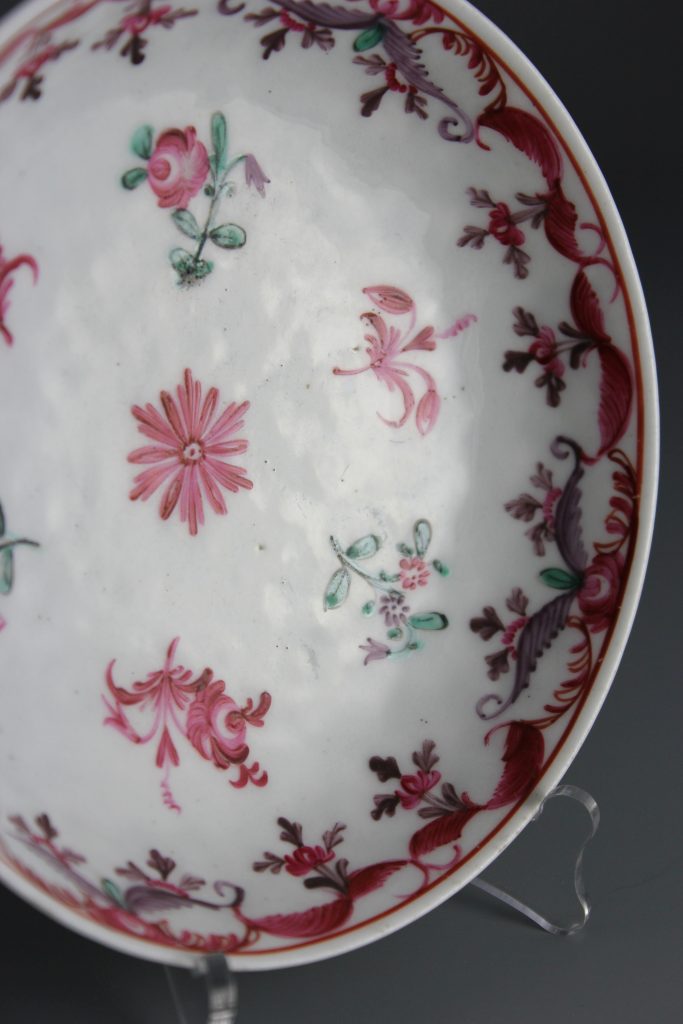
Manufactured in Shelton, North Staffordshire, this Baddeley-Littler porcelain tea bowl and saucer are decorated with a Chinese export style pattern, using purple, puce and green enamels. Both pieces are painted with a border of feathery scrolls and stylised flowers surrounding a starburst design.
William Littler was connected with the Longton Hall manufactory in Staffordshire from 1750-60, before going on to produce porcelain at West Pans, near Musselburgh in Scotland. After 1777, it is likely that Littler returned to Staffordshire where he began to produce porcelain with Ralph Baddeley, although the enterprise was relatively short-lived.
Baddeley-Littler porcelains do not fit into the usual porcelain groups of the period as it is not of the hard paste type, nor does it have a soapstone or bone-ash body. It is a glassy soft paste frit porcelain with a high lead content, similar to that of the earlier Longton Hall wares.
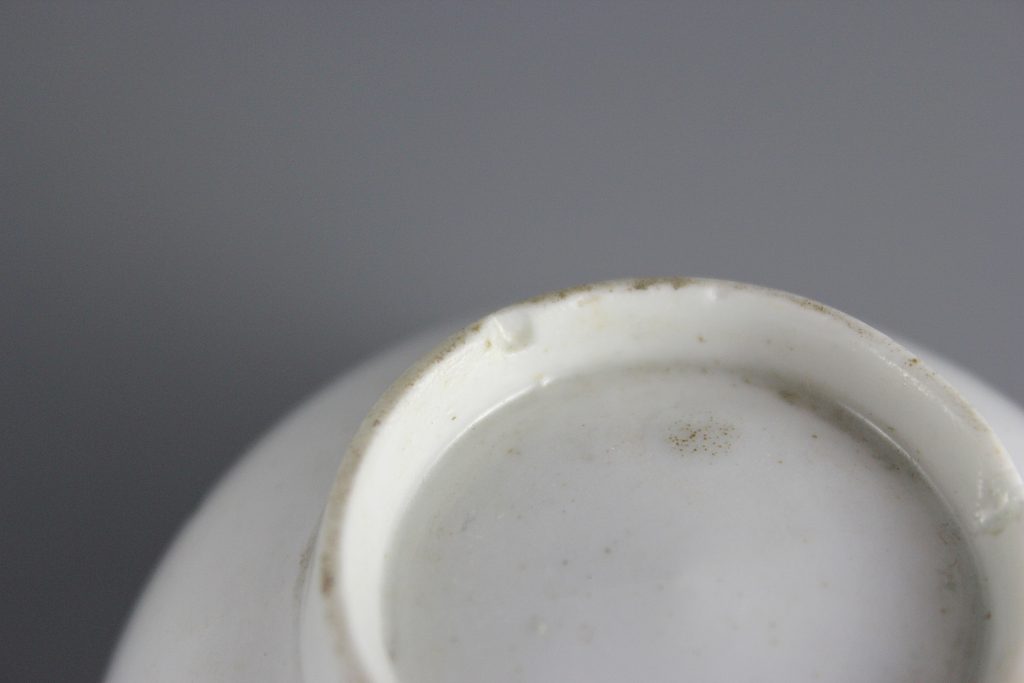
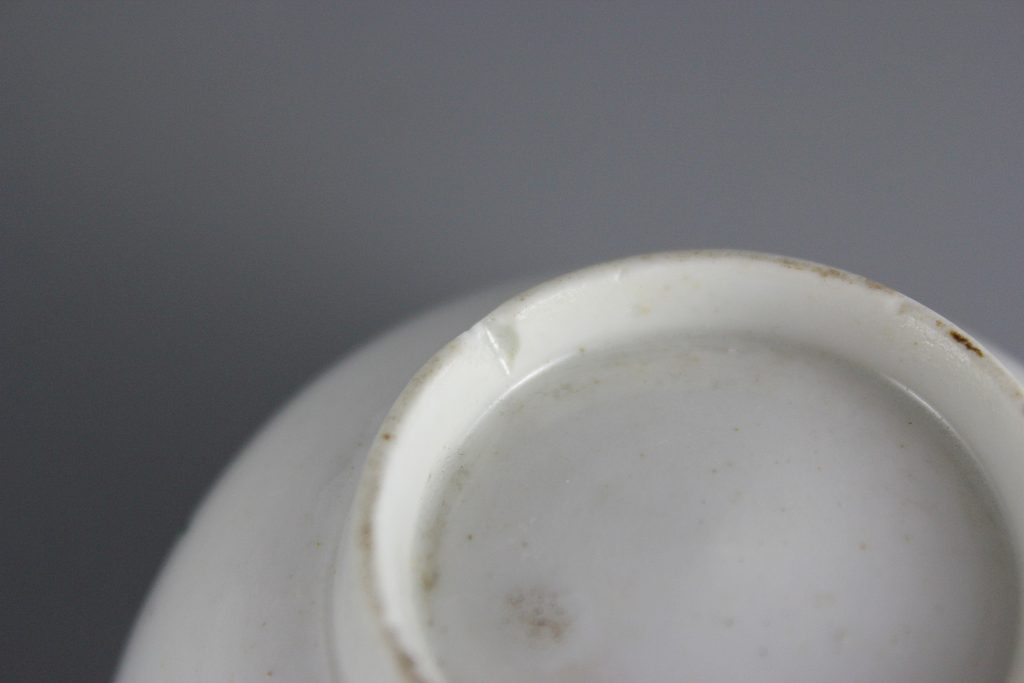
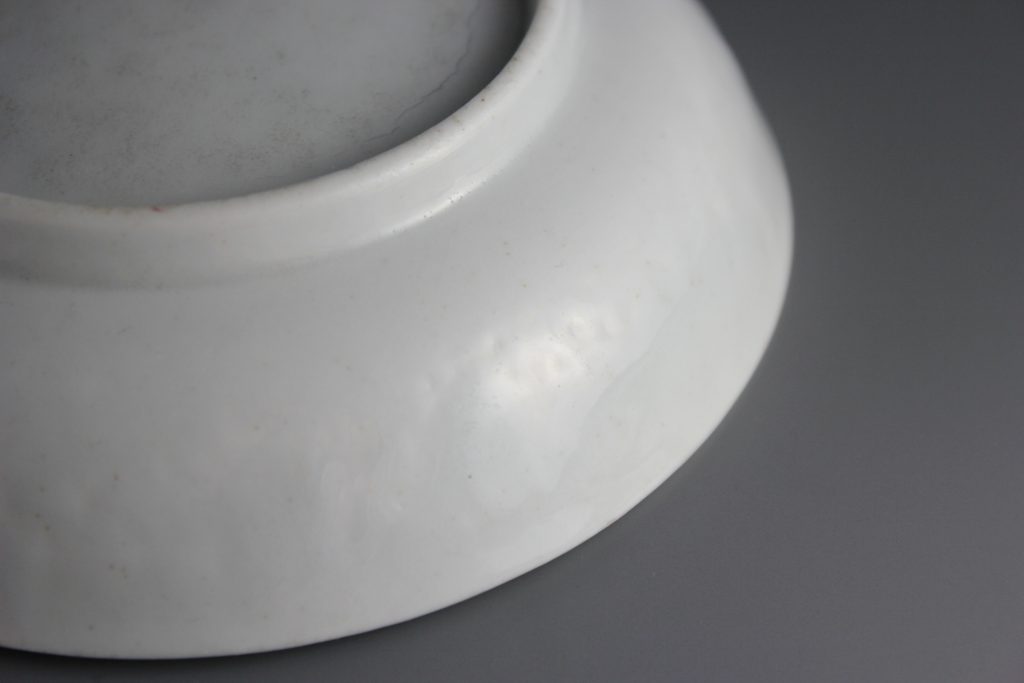
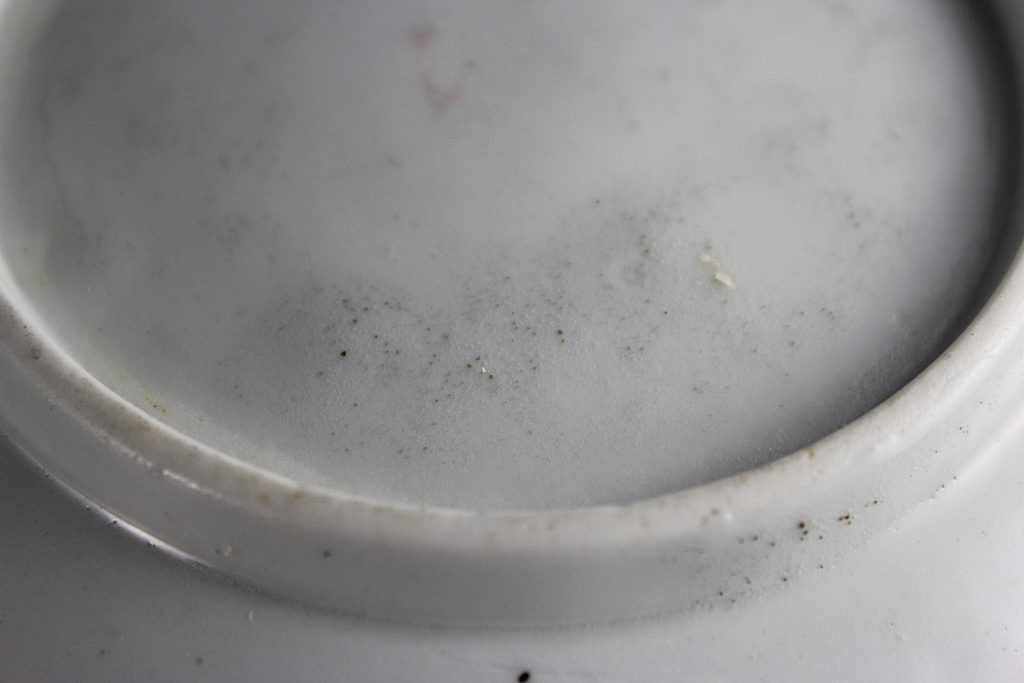
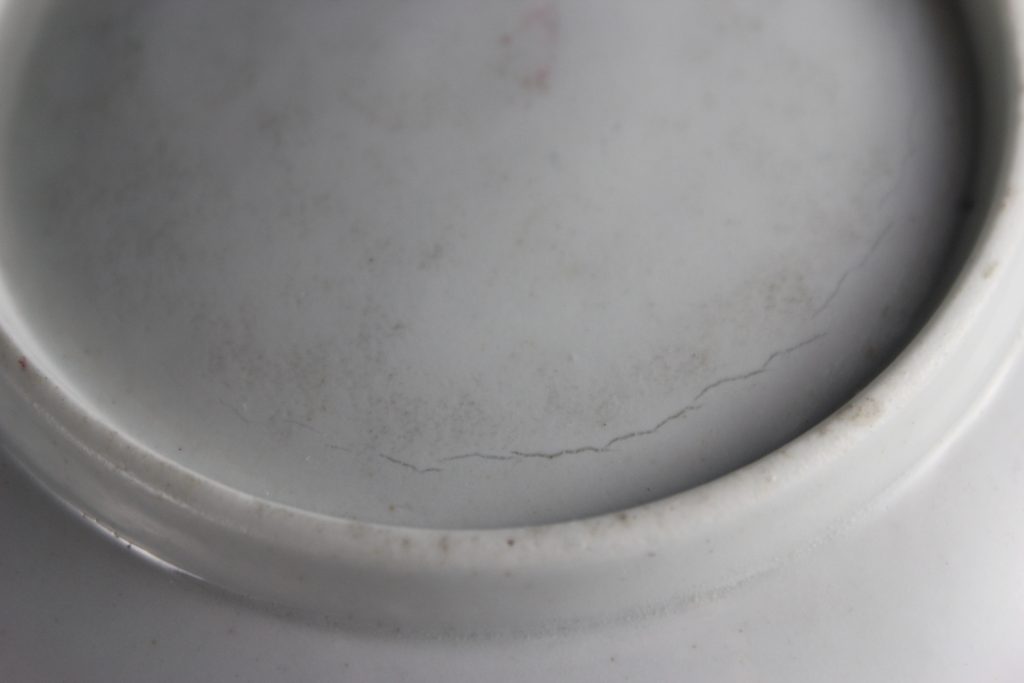
Condition: No damage or restoration, and both pieces are attractively painted. From manufacture there are potting, glazing and firing anomalies characteristic of Baddeley-Littler porcelain, and loved by collectors. These include a wheel-thrown flaw, and two fully-glazed chips to the tea bowl foot rim which occurred when the clay was in a leather-hard state, prior to its first biscuit firing. There is also a short firing crack / glaze flaw to the tea bowl rim. There is a faint scratch beside the rose on the tea bowl exterior, and scratches to the interior from use. The saucer has a tiny stilt mark on the rim and a clay tear to the base. The glaze has rippled and pooled on the underside, revealing how saucers were fired upside down in the kiln. Both pieces have typical kiln dust / speckling in the glaze. The often misfired glaze led to these wares being known as the ‘Dirty Bottom Class’ before they were identified as Baddeley-Littler.
Dimensions: Saucer – Diameter 12.5 cm
Staffordshire Porcelain, Geoffrey Godden, Ed. (Granada, 1983).