
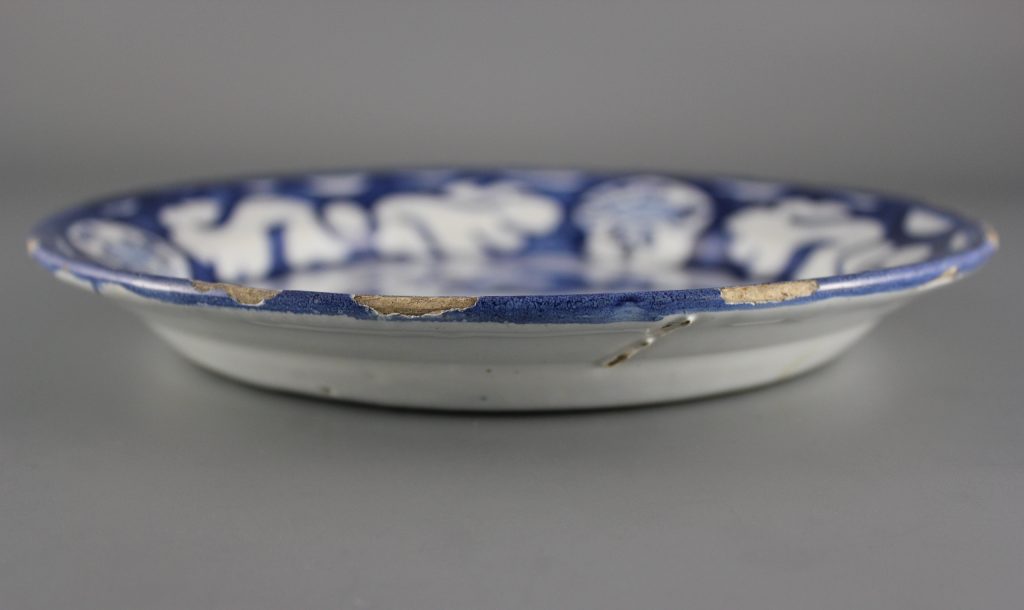
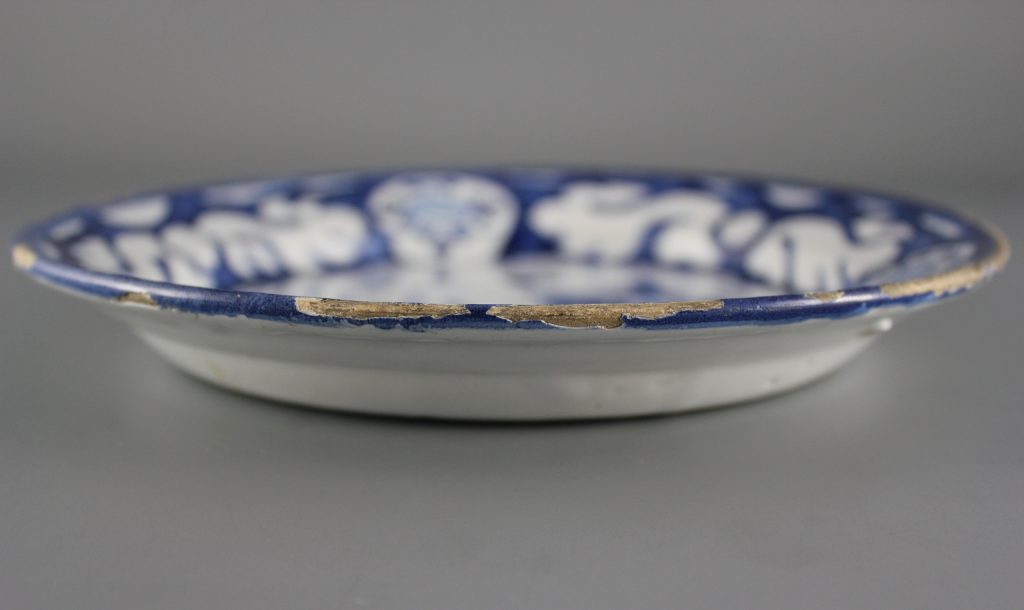
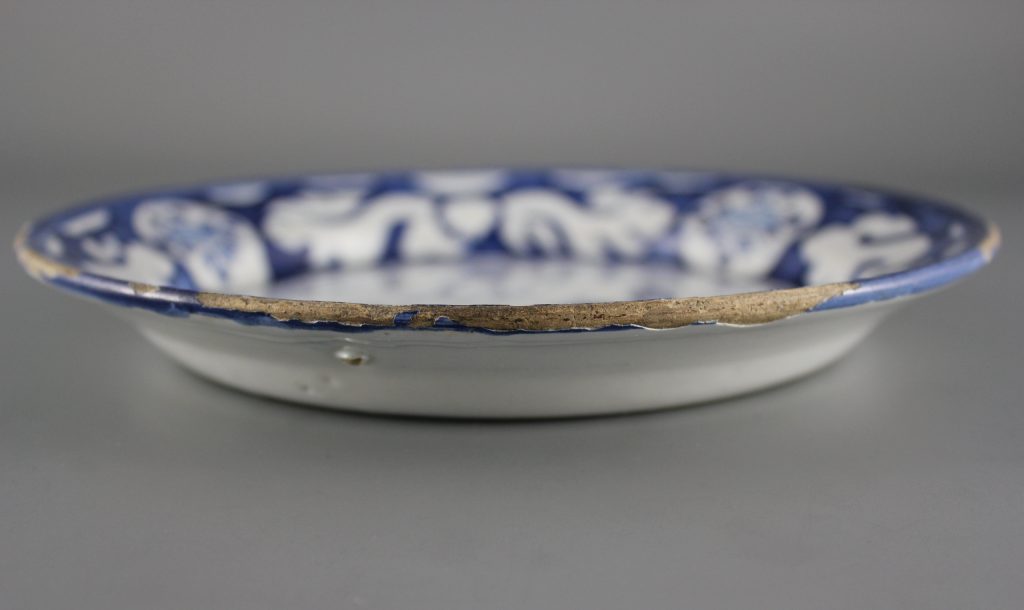
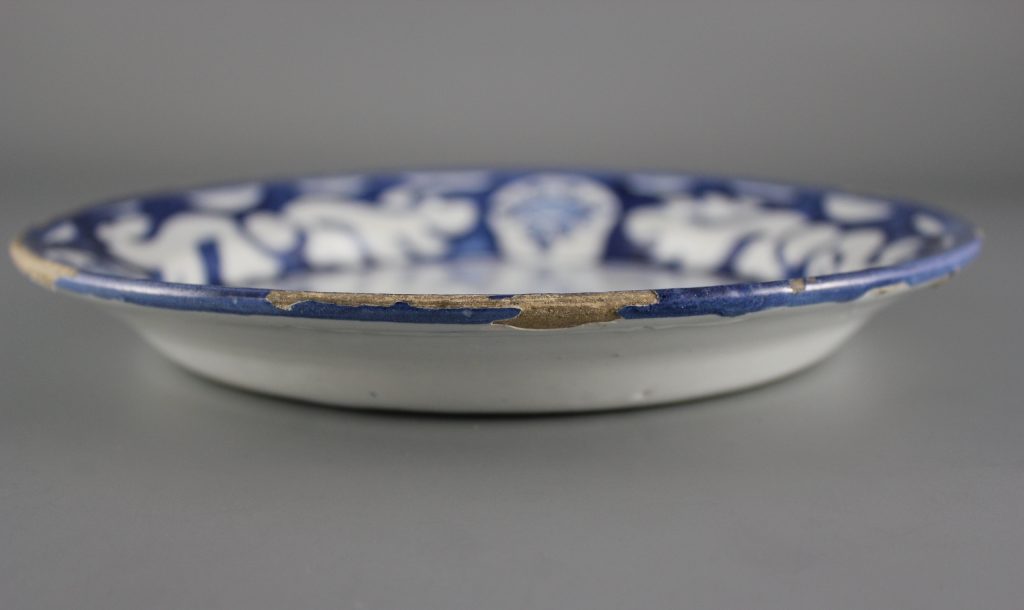
A delftware Plate, probably Bristol, circa 1740
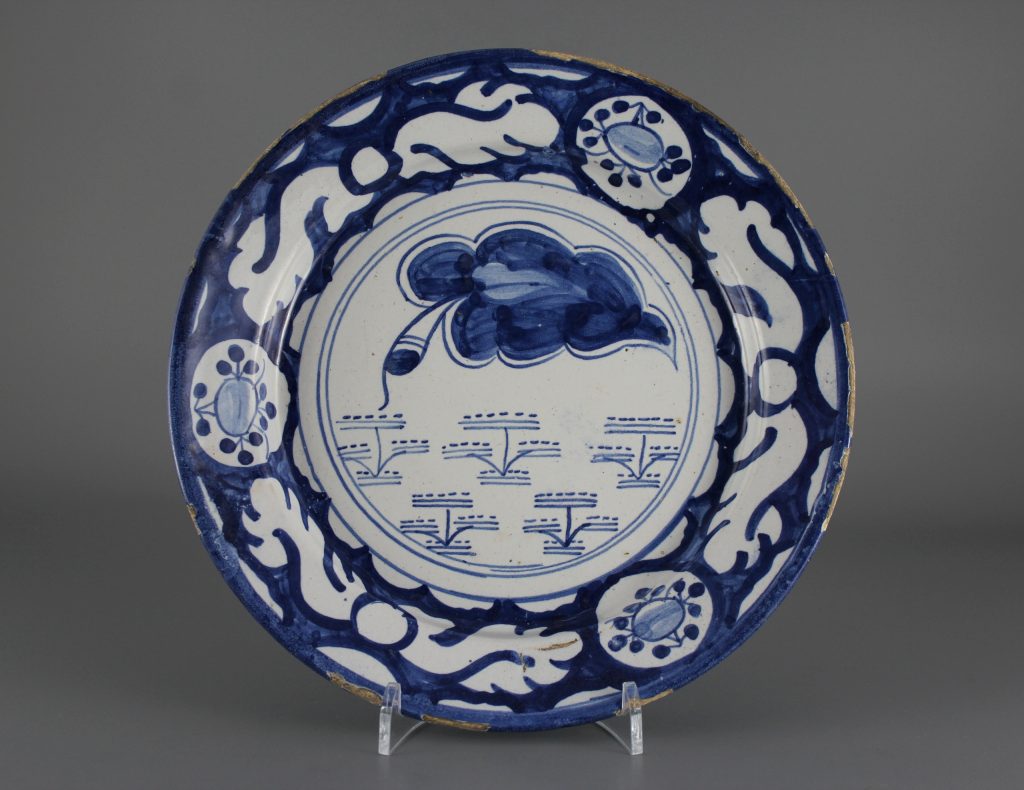
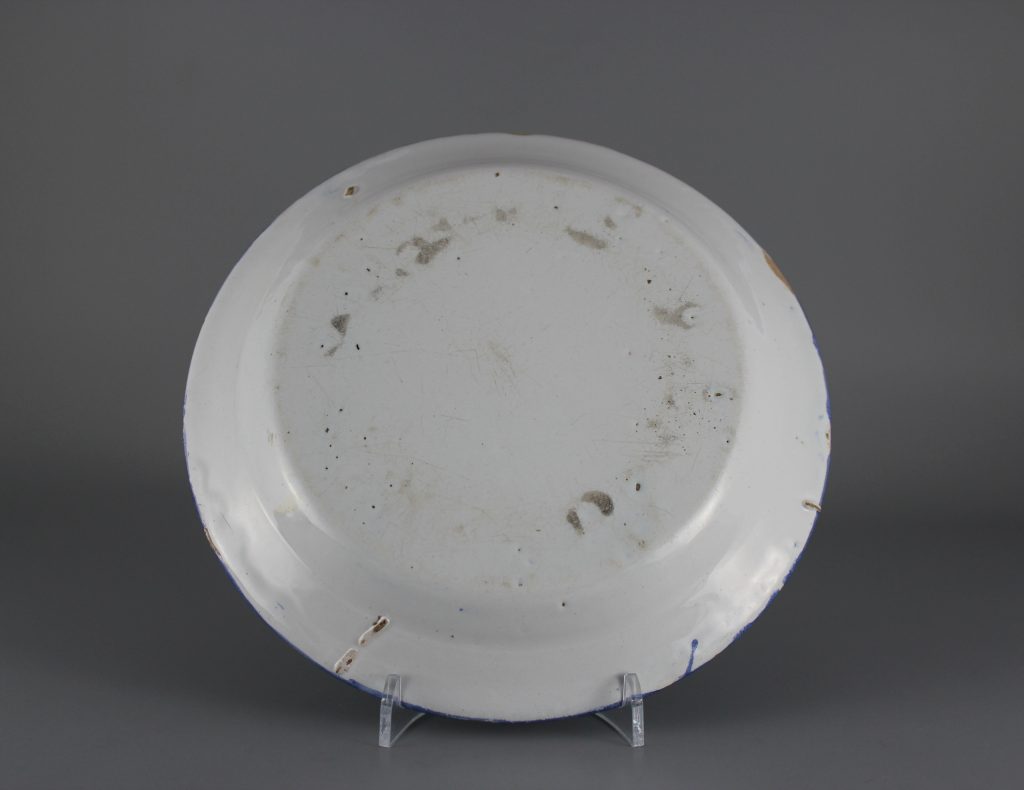
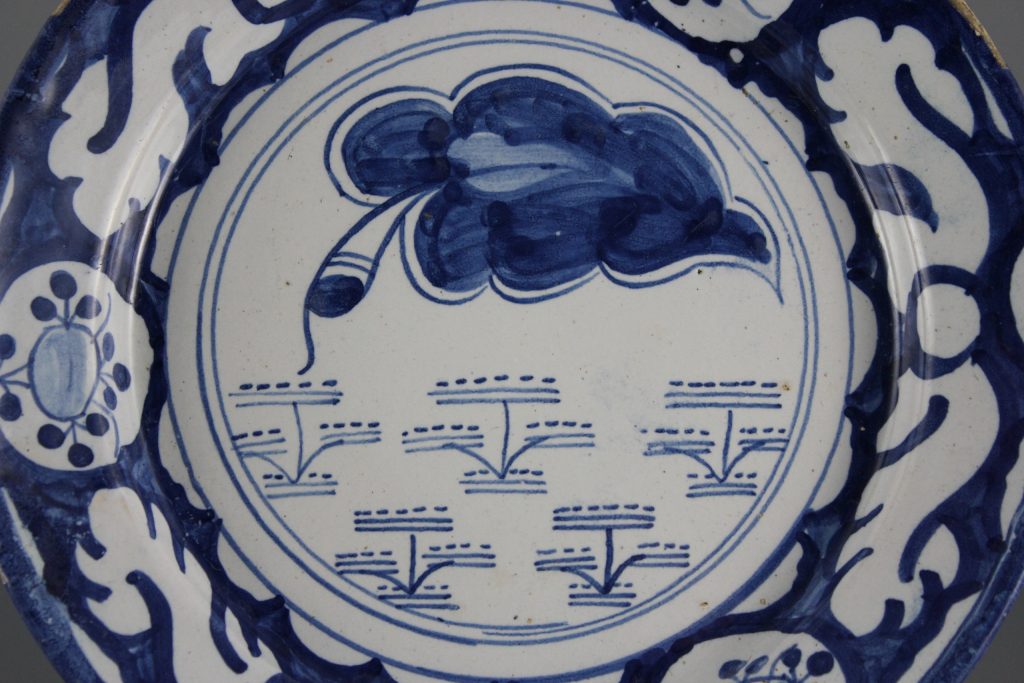
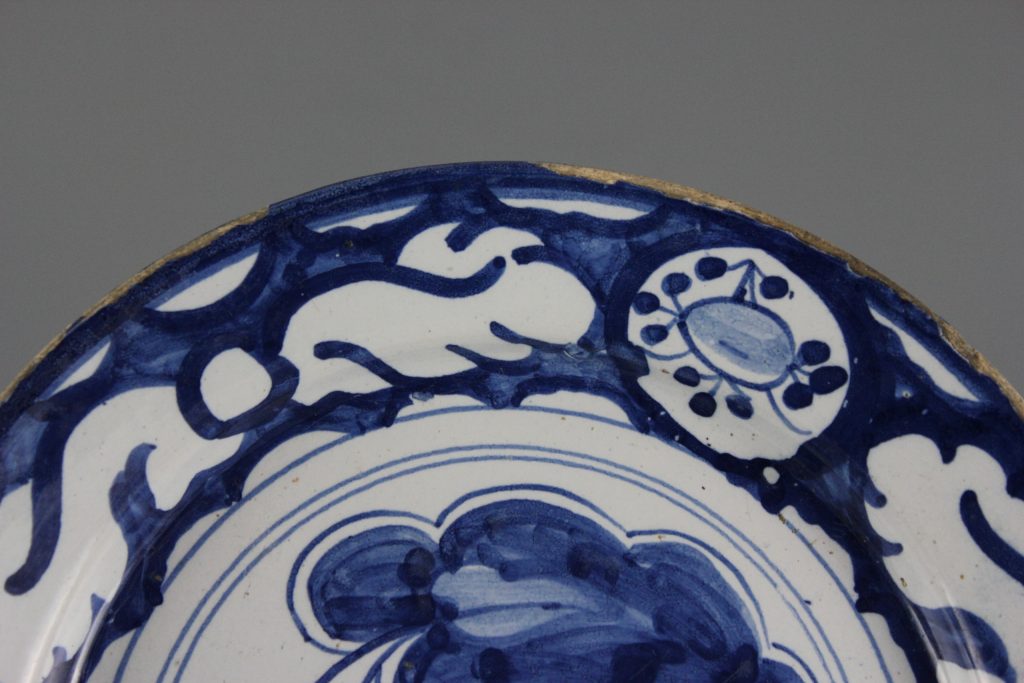
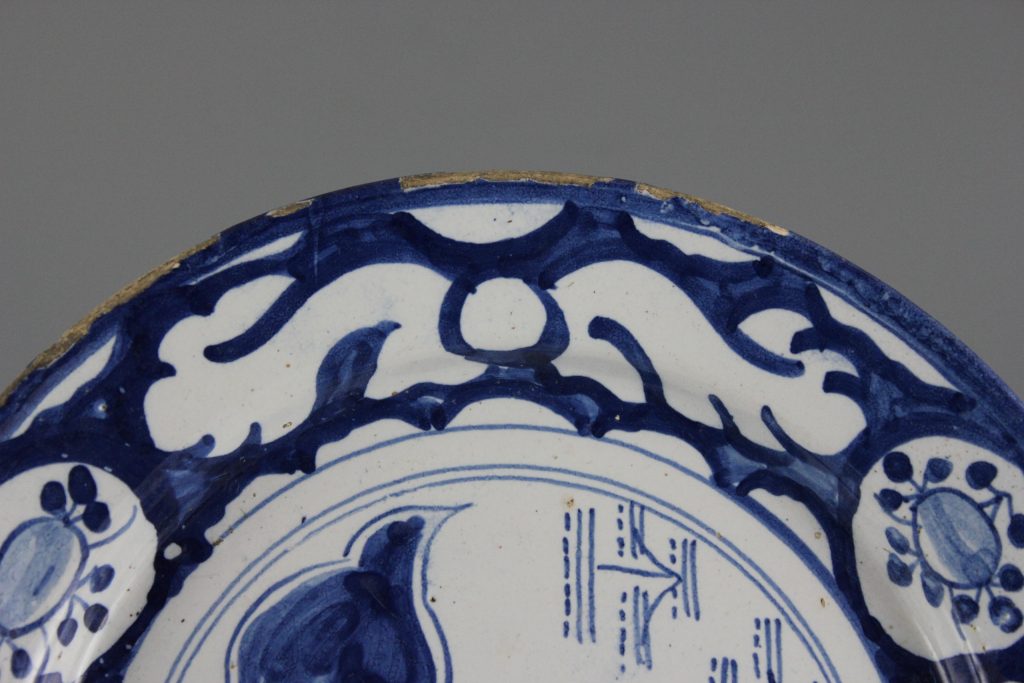
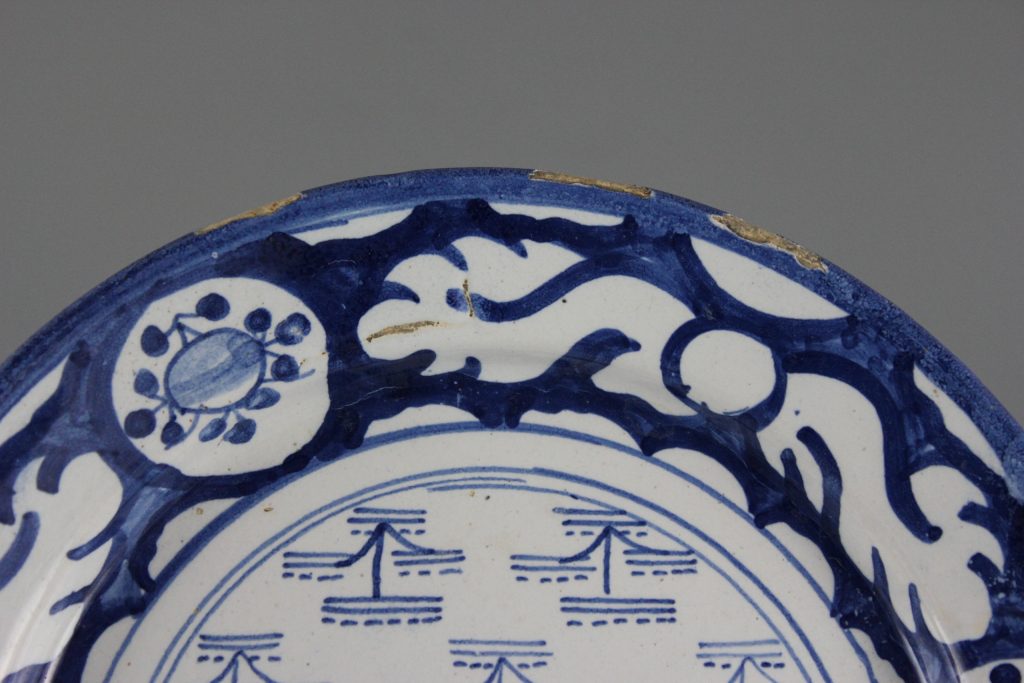
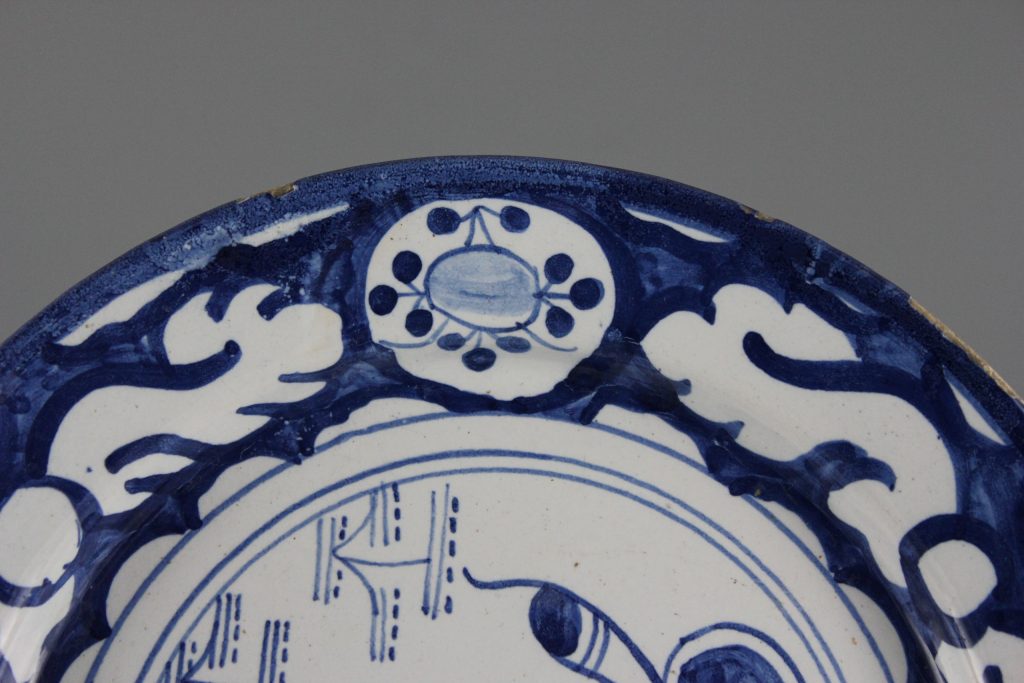
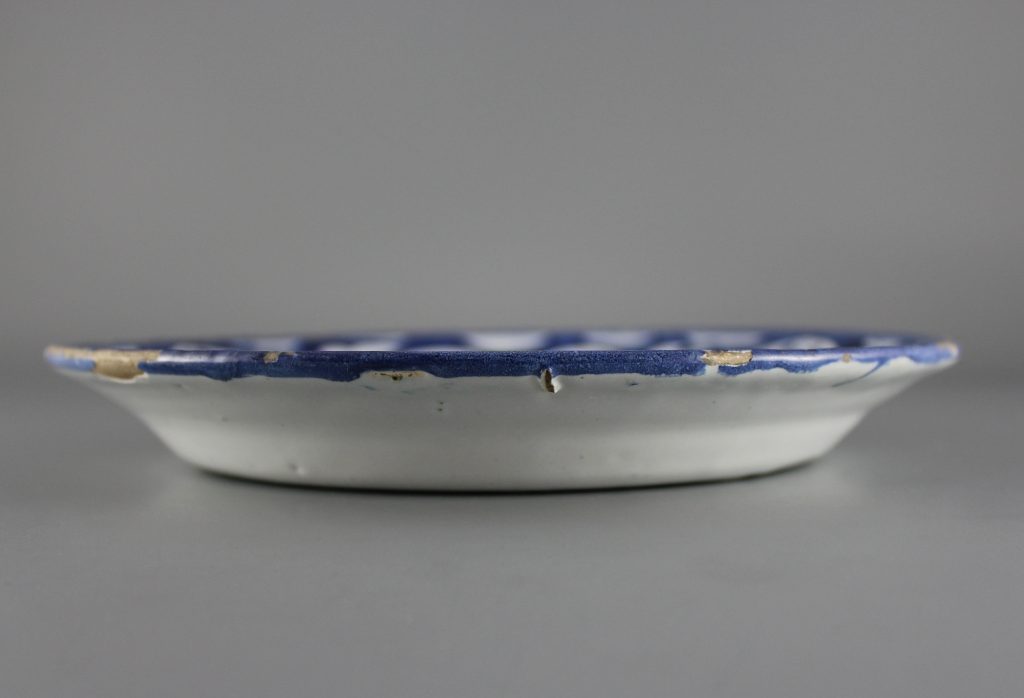
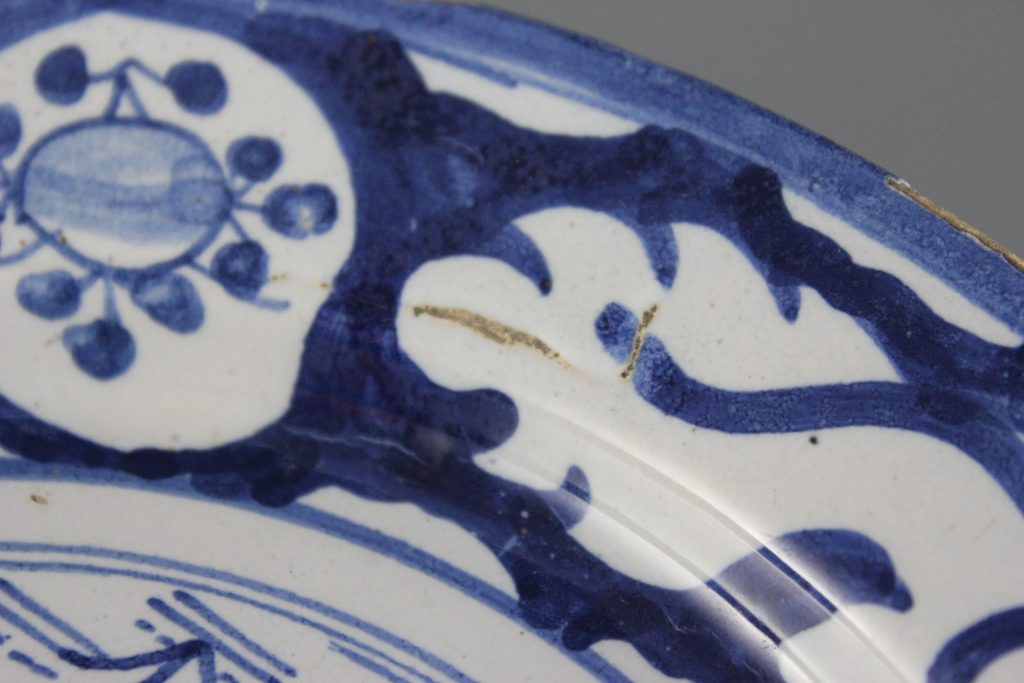
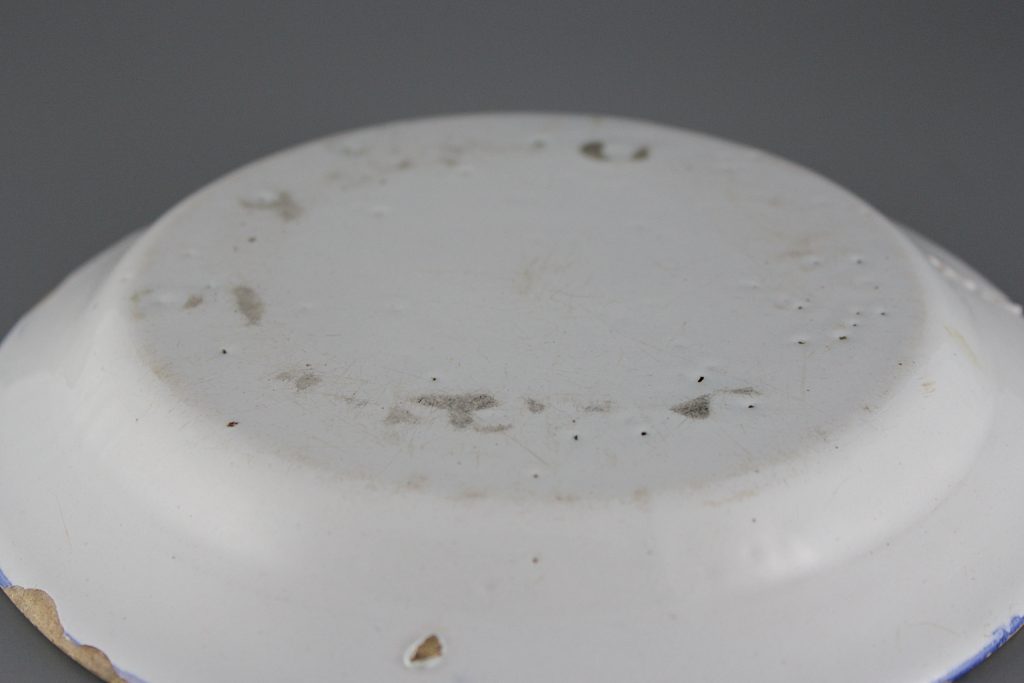
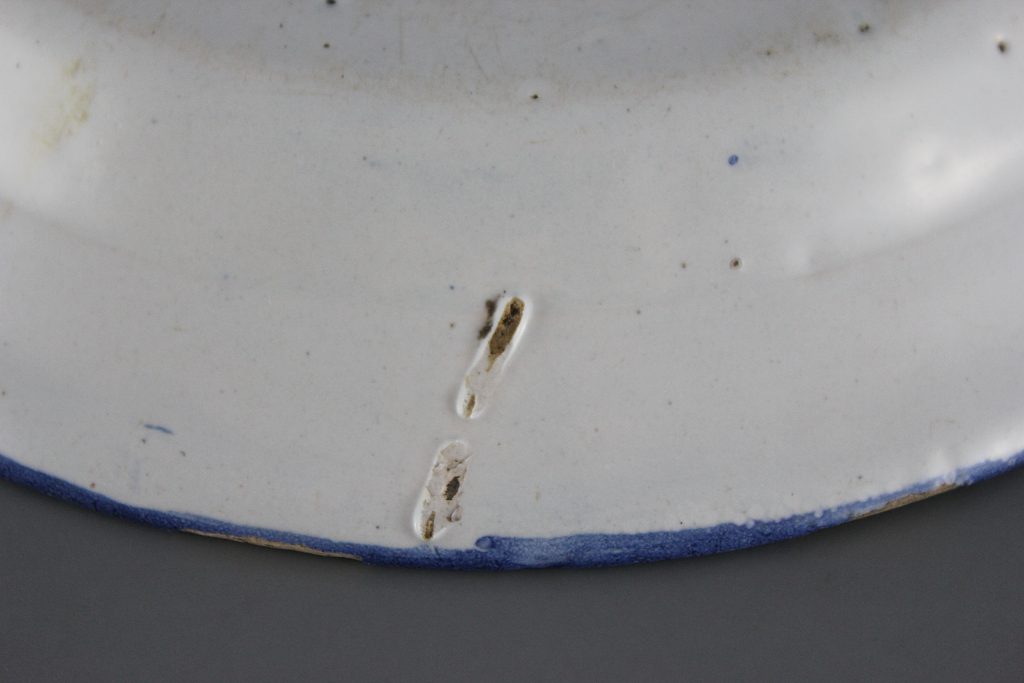
Of simple pancake form, this plate is painted in blue with a large artemisia leaf and five aquatic plants, enclosed by concentric rings. The border to the outer rim and cavetto is composed of alternate scrolling elements and three circular reserves containing a stylised flower or sprigs. There are three stilt or spur marks to the underside, showing how the plate was stacked in the kiln for firing.
The distinctive chinoiserie decoration is clearly inspired by designs found on Chinese blue and white porcelain, with the artemisia leaf being one of the traditional Eight Precious Things, a set of auspicious symbols of Daoism. The border design may represent scrolling clouds surrounding a pearl, a popular device in Chinese art.
A similar example from The Glaisher Bequest is held at The Fitzwilliam Museum, Cambridge, and Colonial Williamsburg, USA, holds four examples dated 1739.
Dimensions: Diameter 19.7 cm.
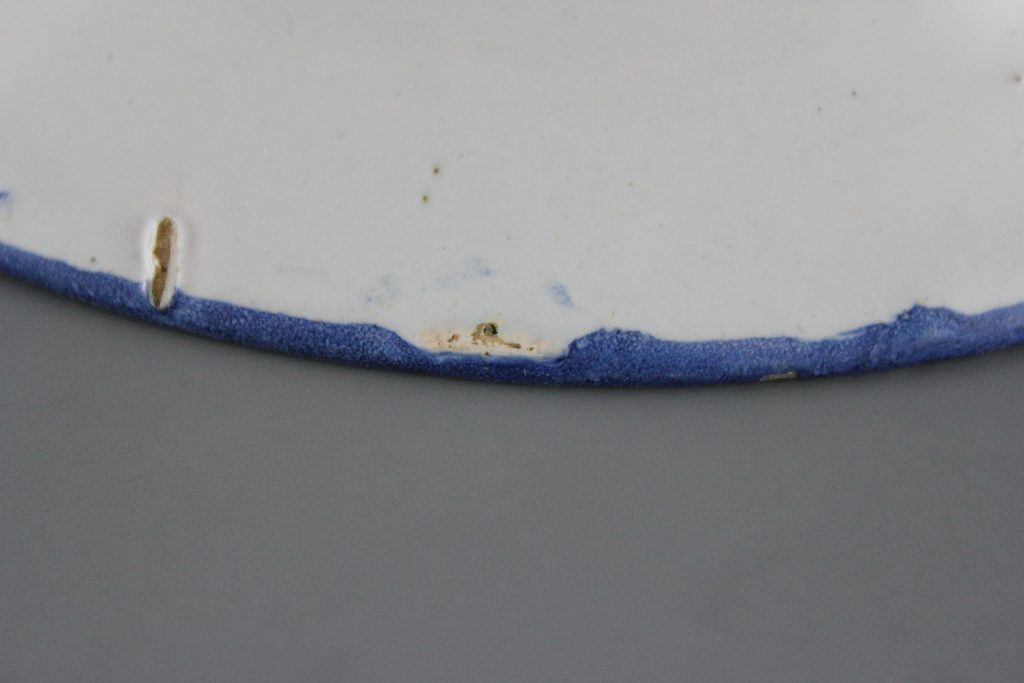
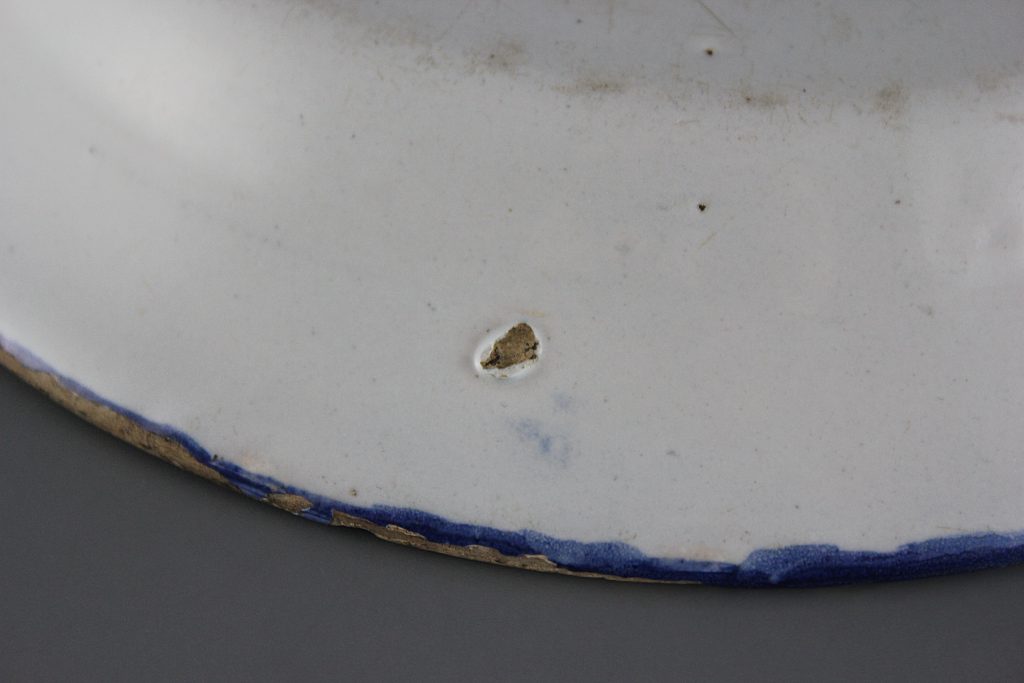
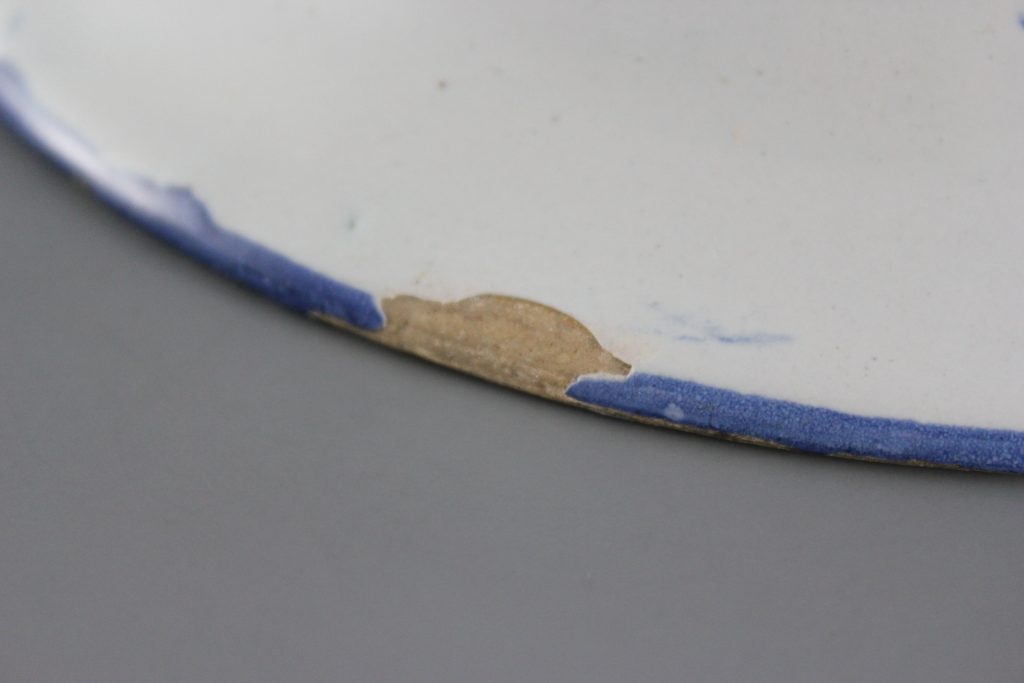
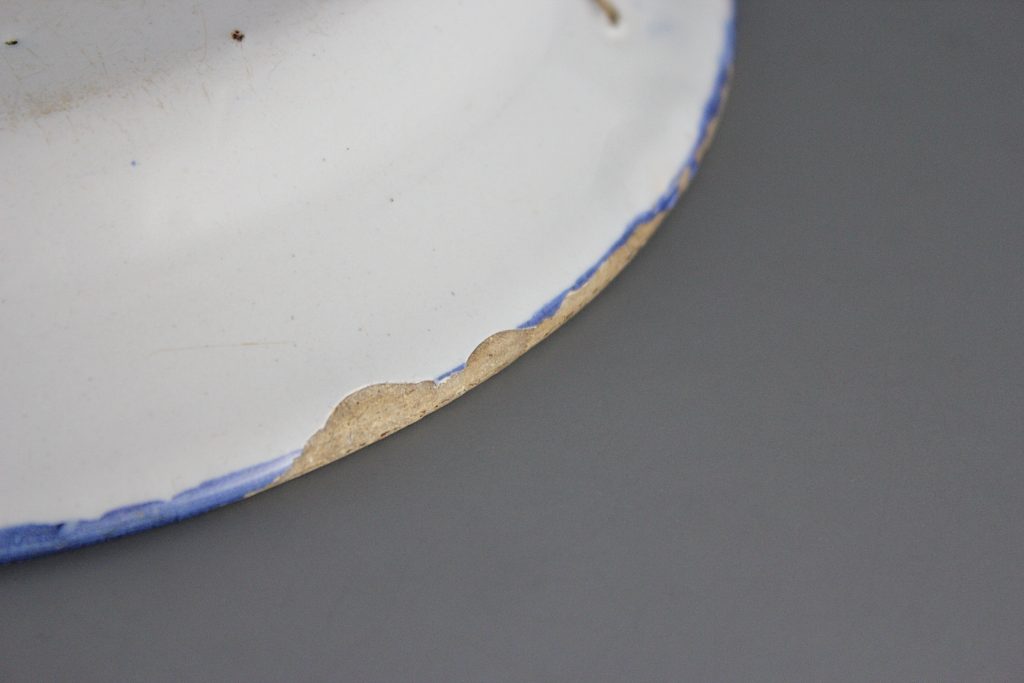
Condition: The glaze around the rim is worn in places, accompanied by small losses. The surface features manufacturing imperfections, including pinholes and glaze crawl. The bluish glaze on the reverse is lumpy, and there is wear to the base, typically seen on plates of this pancake form. No cracks or restoration.
Ref. Shape I (Alphabetic shape codes as used in appendix to Archer, Delftware, 1997).
British Delft at Williamsburg, John Austin (The Colonial Williamsburg Foundation, Williamsburg, Va. in association with Jonathon Horne Publications, London, 1994) p.151, ill.223.
Dated English Delftware: Tin-glazed earthenware, 1600-1800, Louis L. Lipski and Michael Archer (Sotheby Publications, 1984) p.103, ill.448.
Delftware: The Tin-glazed Earthenware of the British Isles, Michael Archer (V&A/HMSO, 1997).
English Delftware, F.H. Garner and Michael Archer (Faber & Faber, 1972).
SOLD