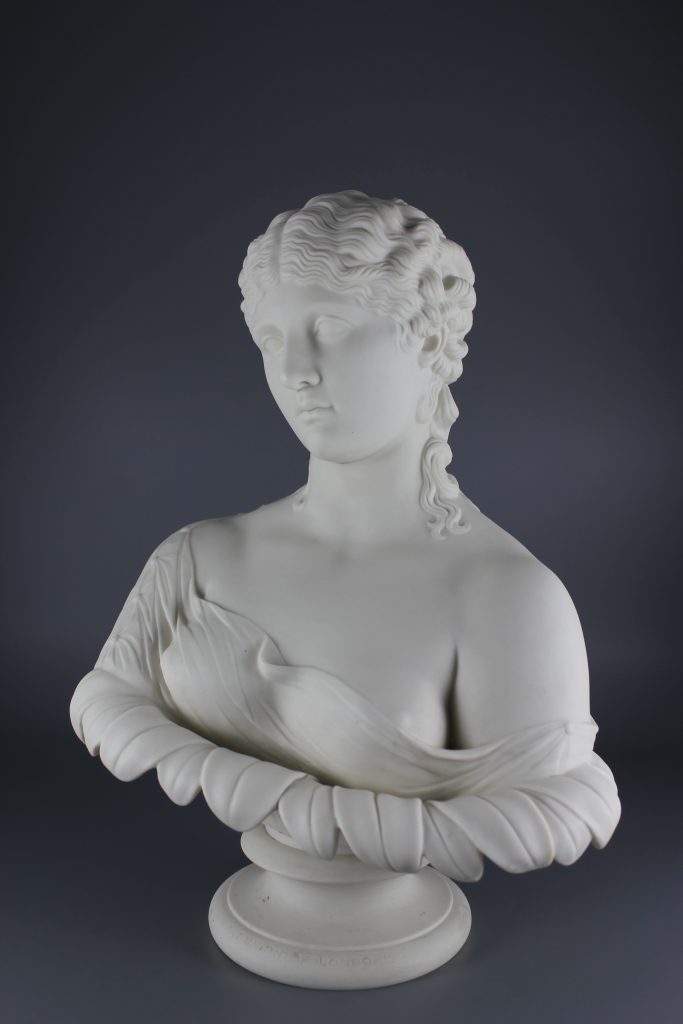
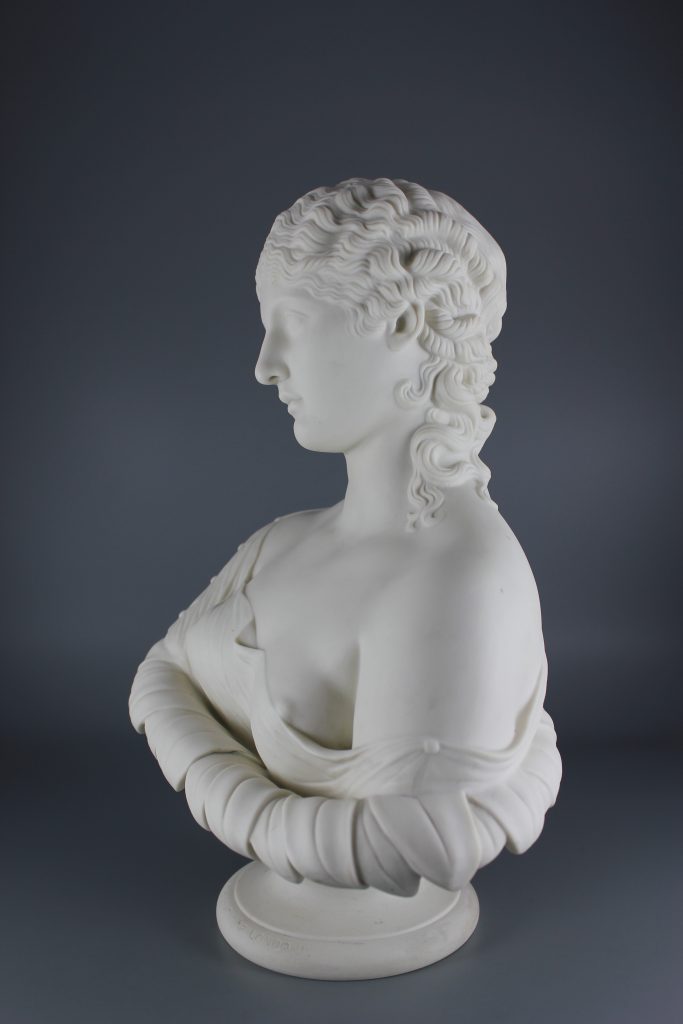
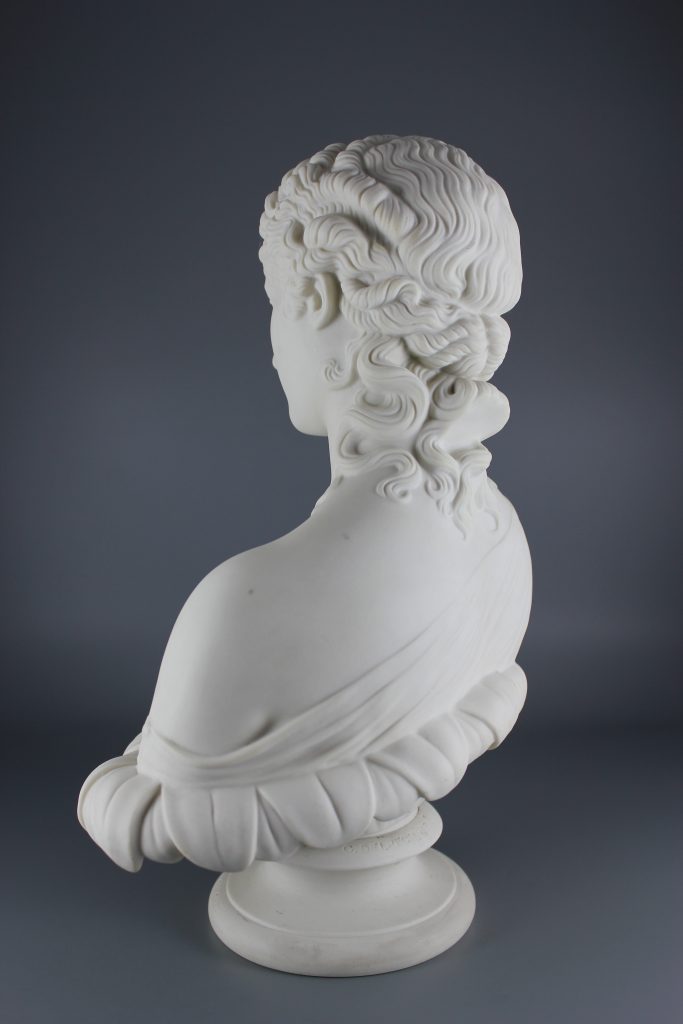
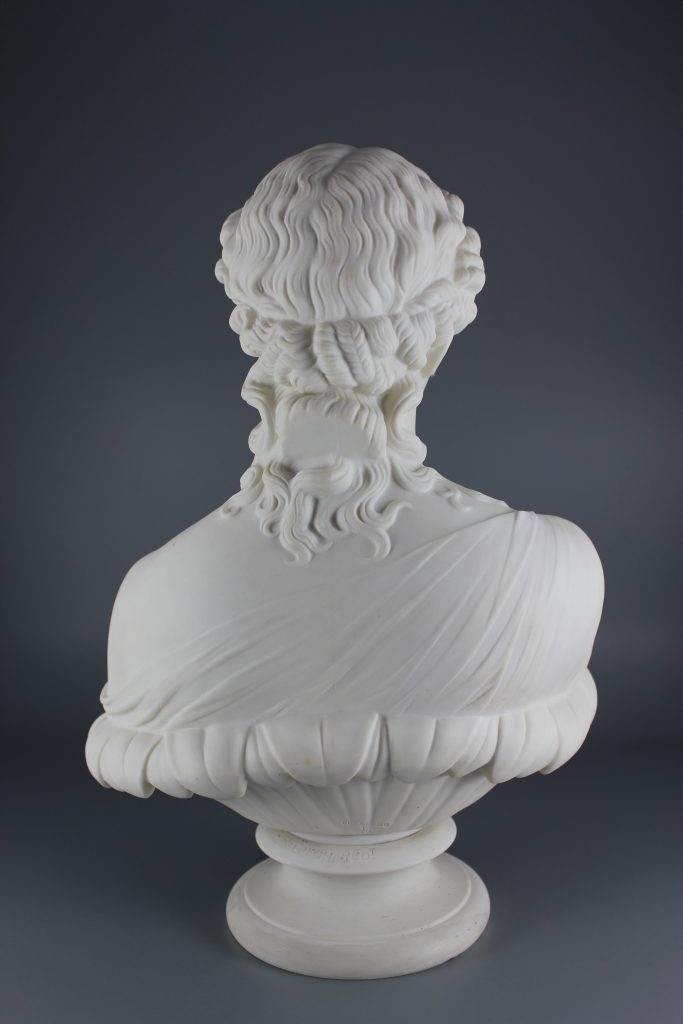
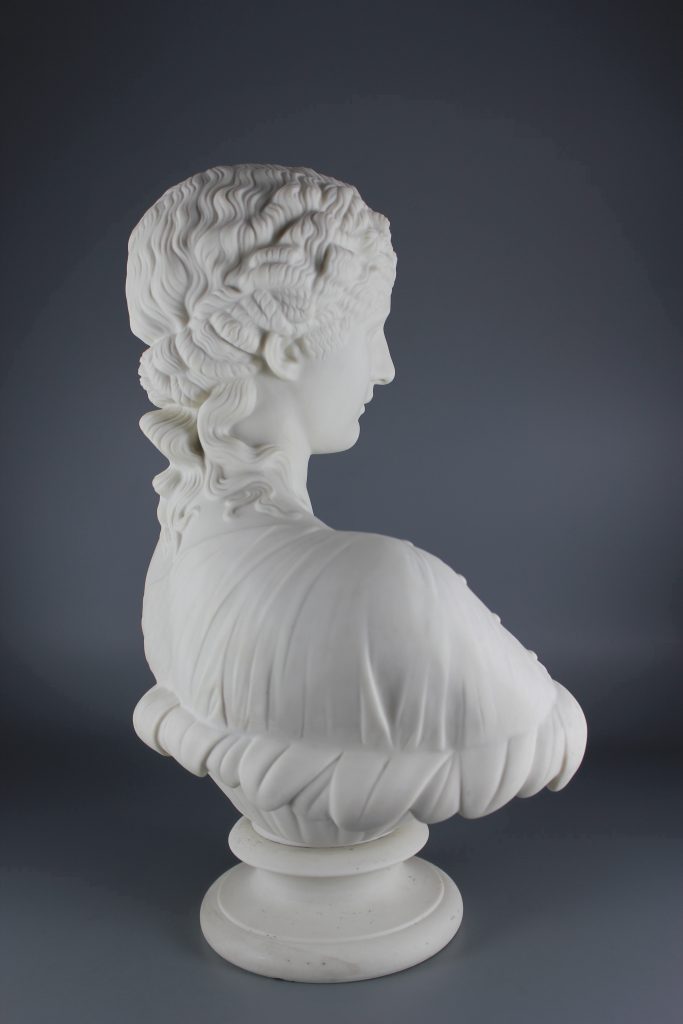
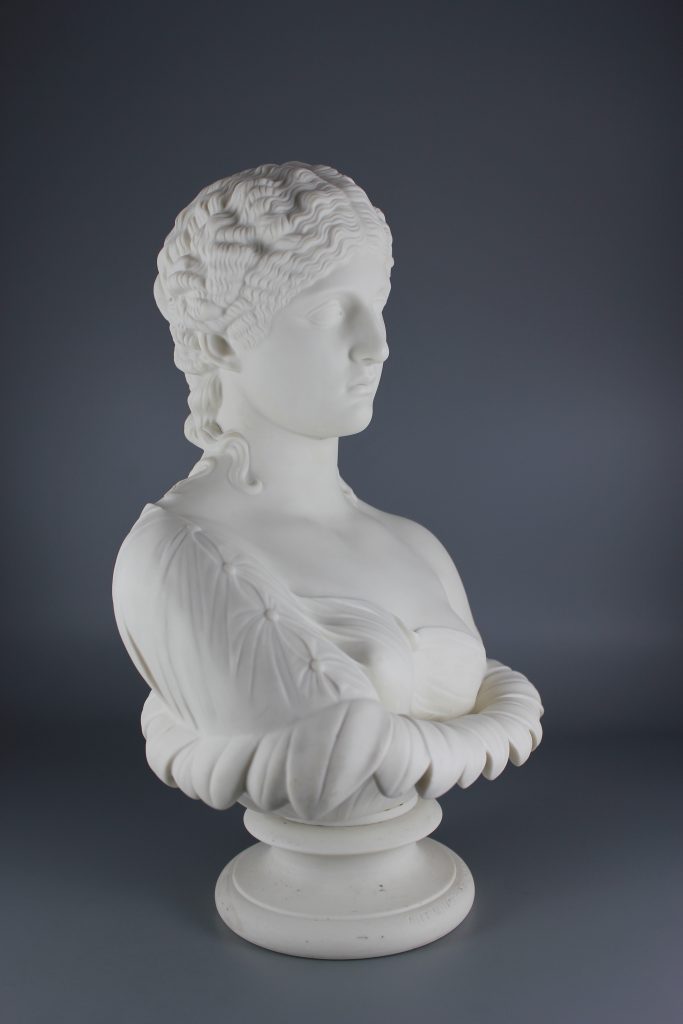
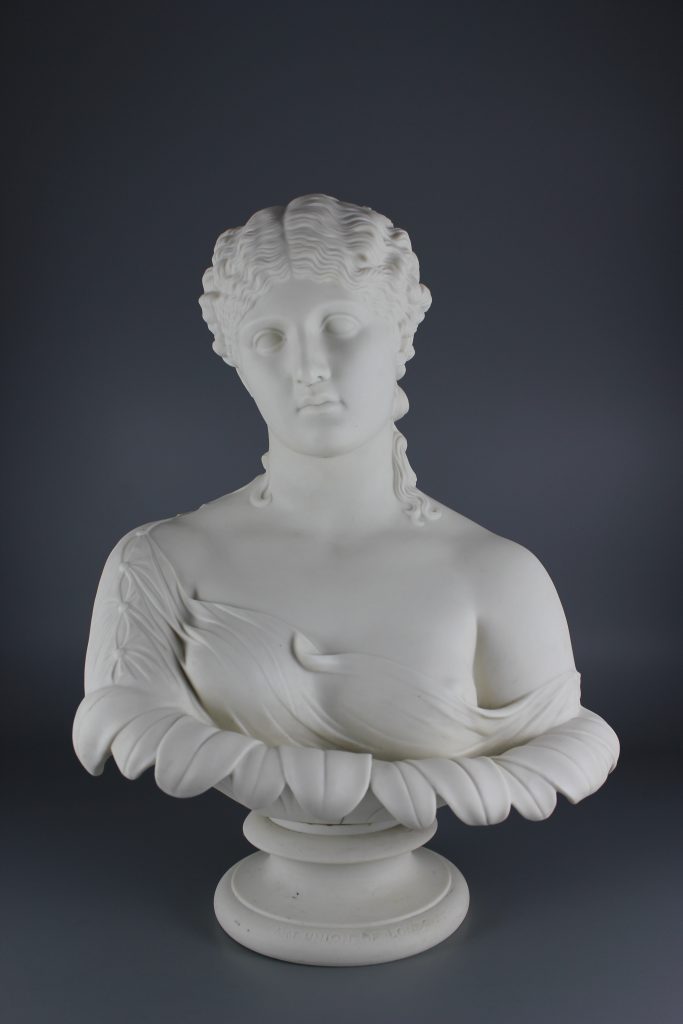
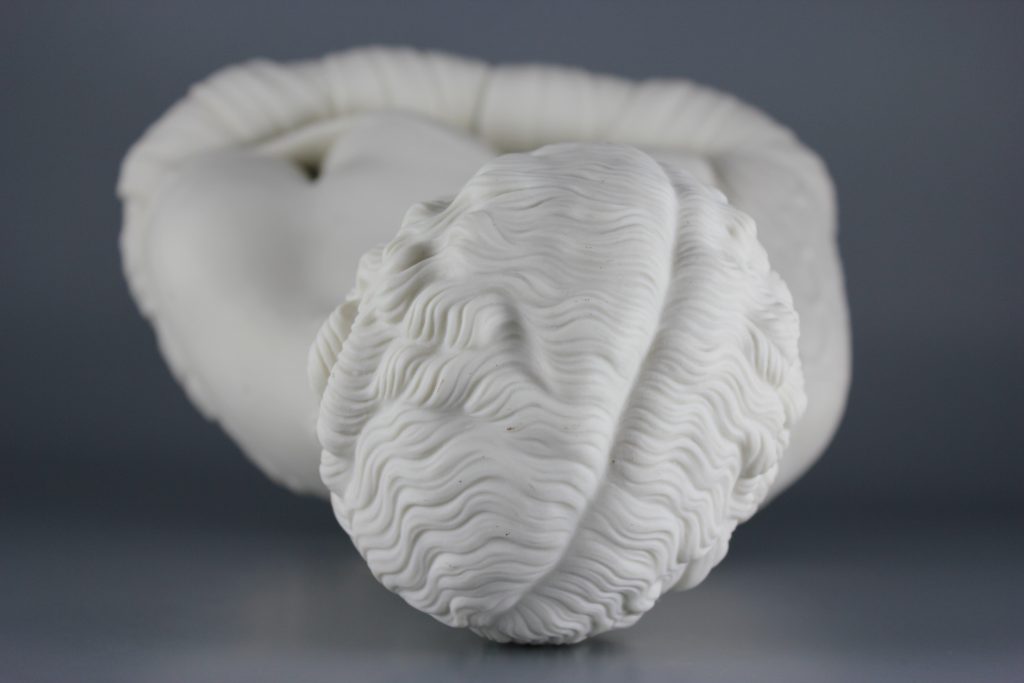
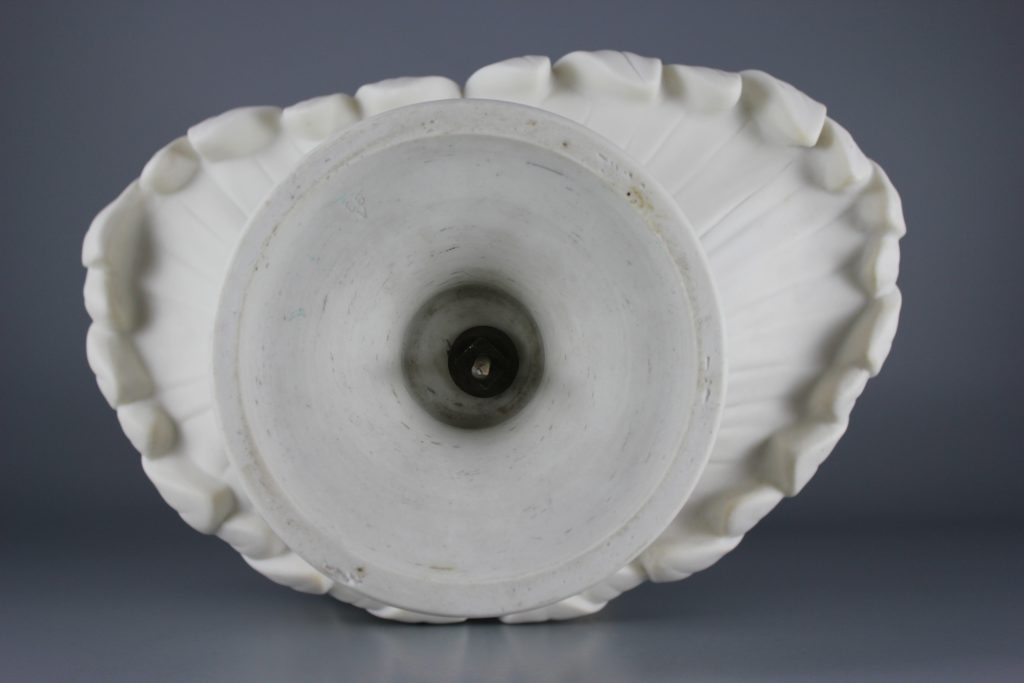
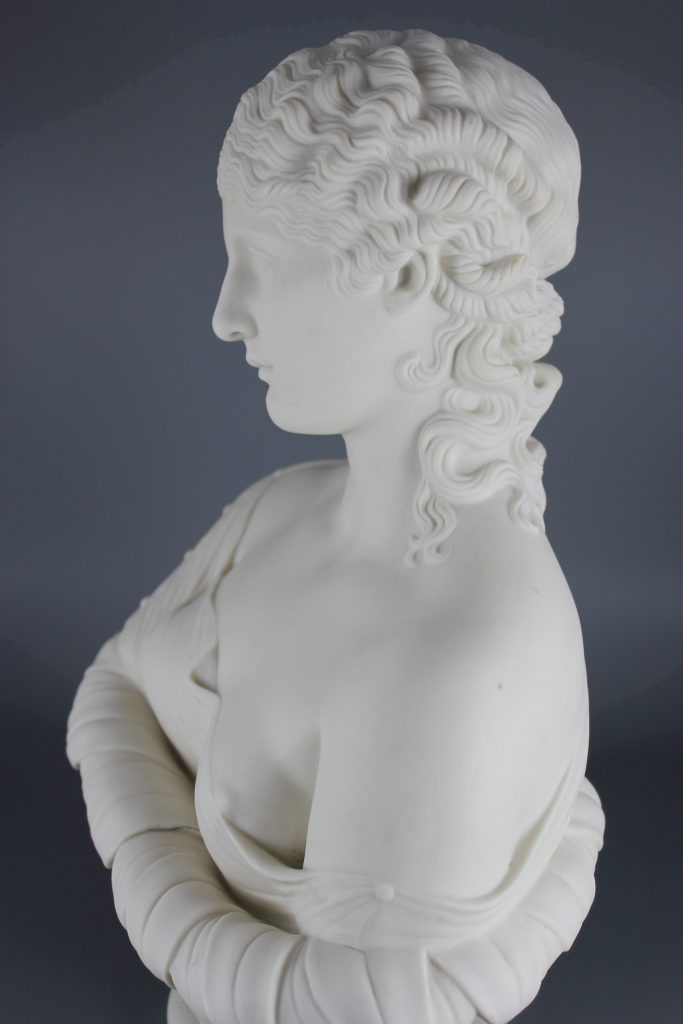
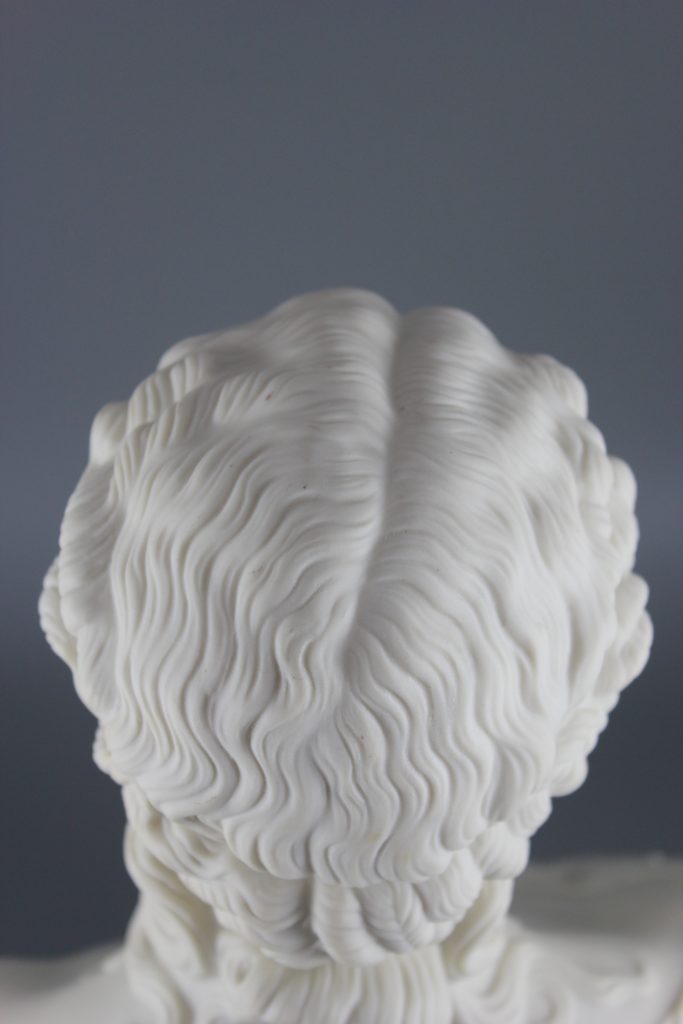
A Copeland Parian Bust of Clytie, porcelain, Staffordshire, 1883
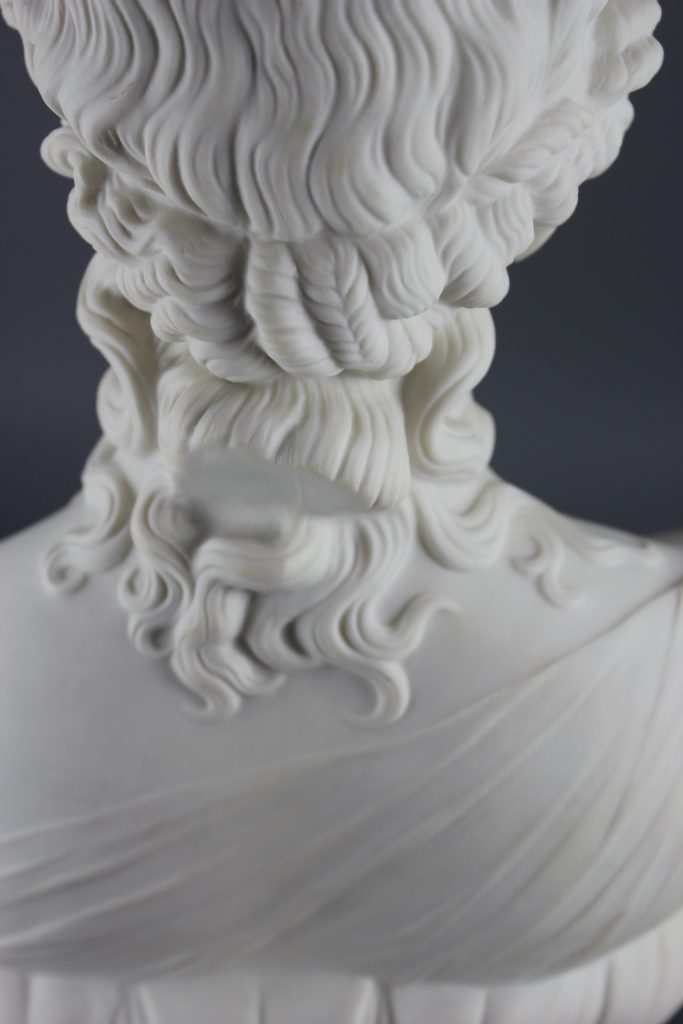
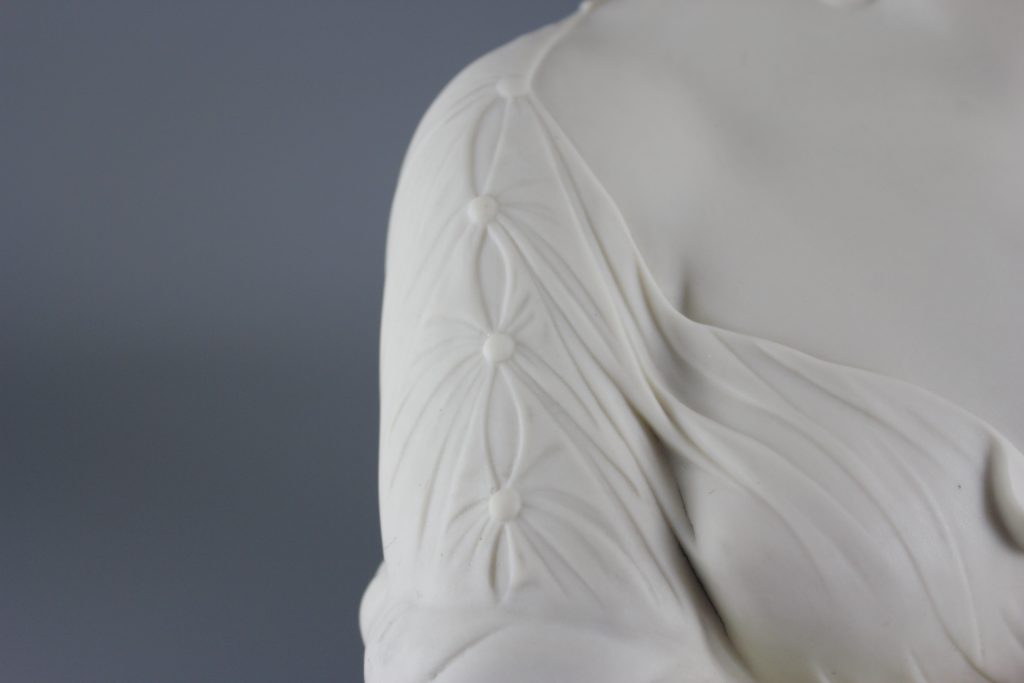
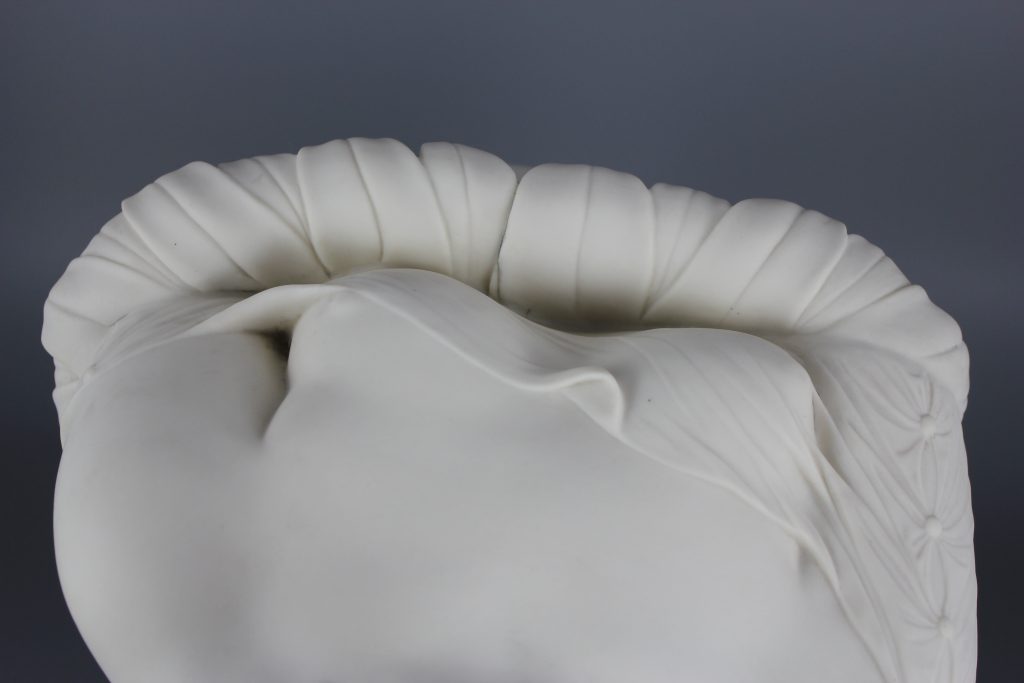
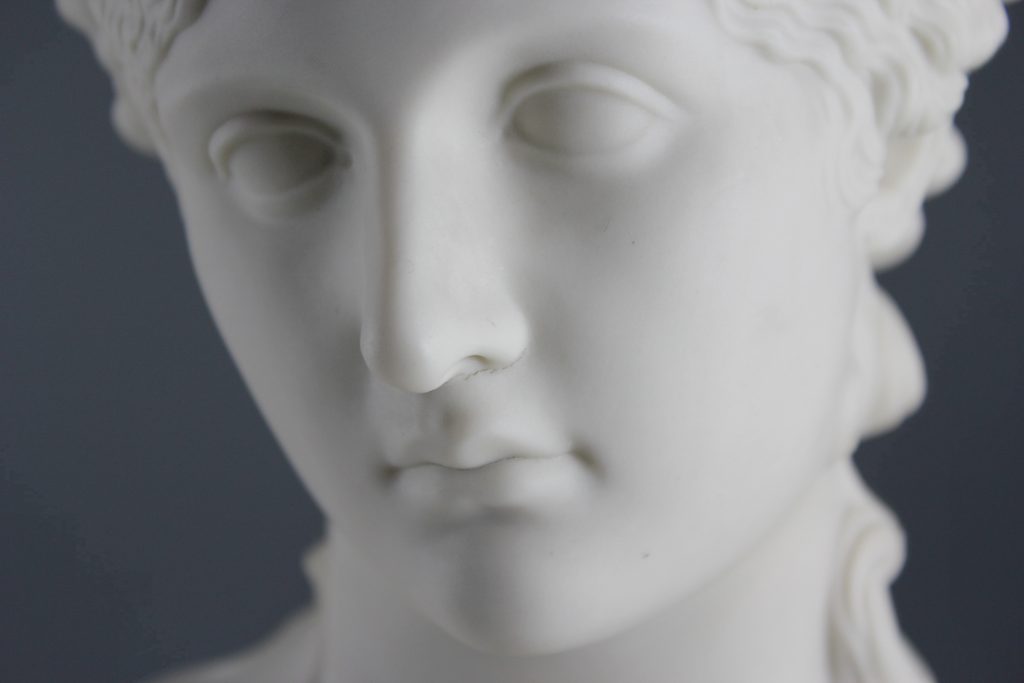
This Parian porcelain bust is modelled as a classical young woman with wavy, coiled hair, her head tilted, delicate drapery slipping from her left shoulder as she emerges from a flower.
In Greek mythology, Clytie was a water nymph and the daughter of the Titans Oceanus and Tethys. She fell deeply in love with the sun god, Helios, but her affection was unrequited. Under Aphrodite’s influence, Helios abandoned Clytie for another woman named Leucothoe. Consumed by jealousy, Clytie exposed the affair to Leucothoe’s father, a betrayal that ultimately led to her rival’s tragic death. Still unable to win back Helios’s heart, a devastated Clytie spent the rest of her days gazing longingly at him as he moved across the sky. Eventually, she transformed into a heliotrope – a violet flower that eternally turns its face to follow the sun.
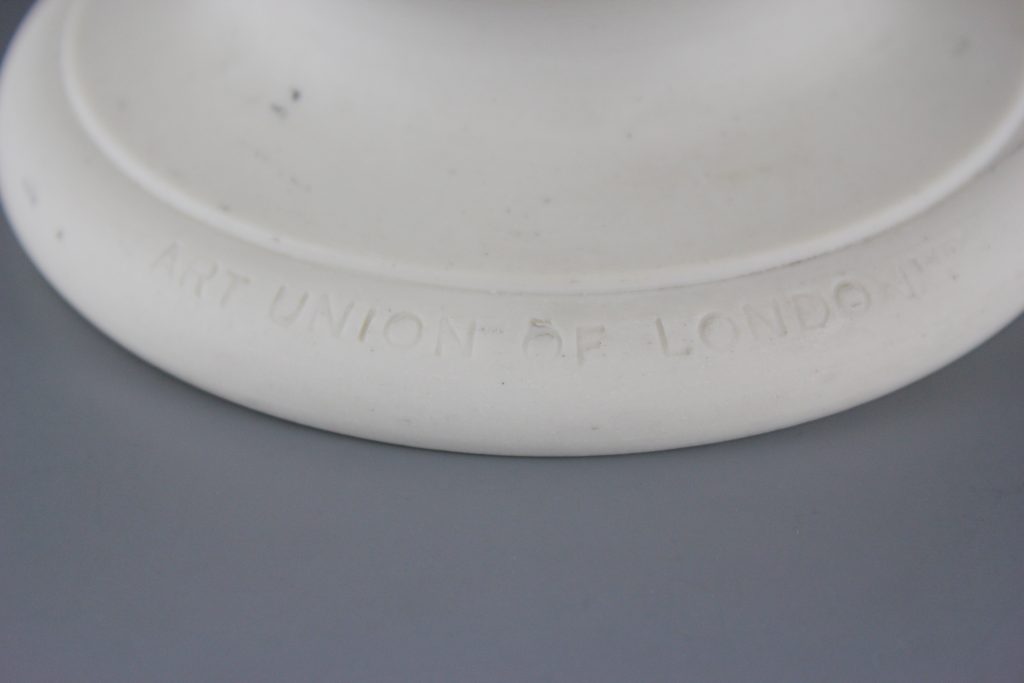
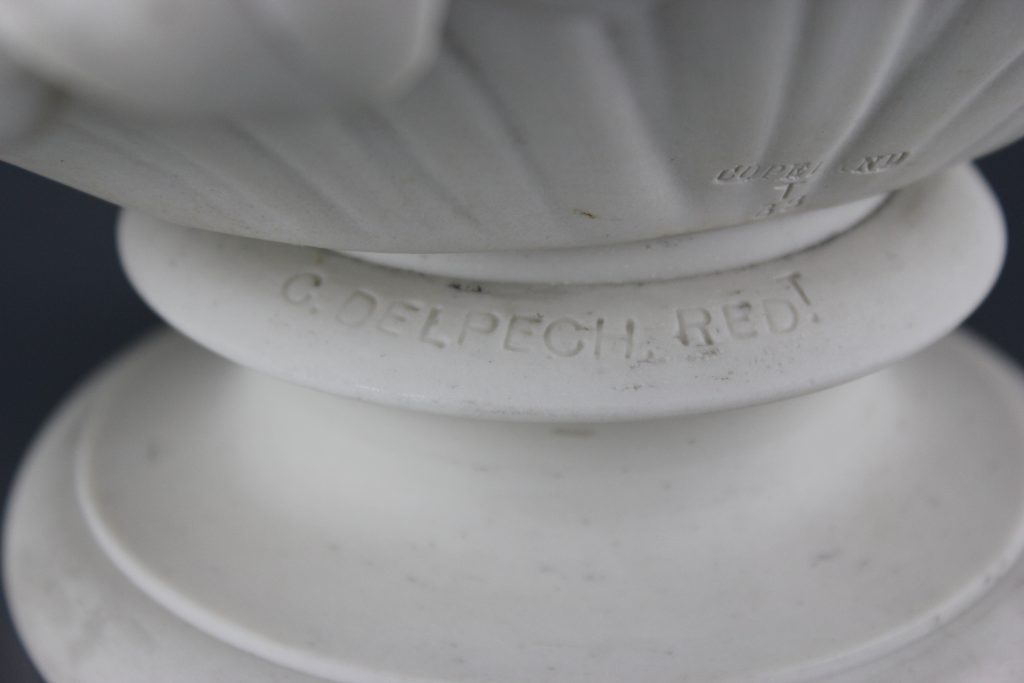
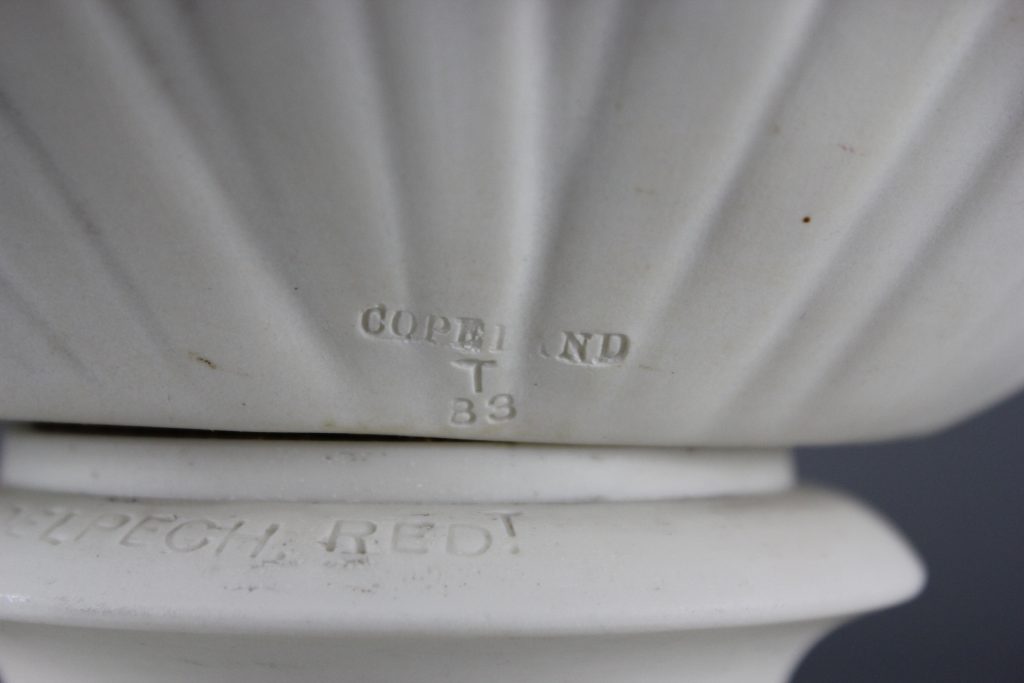
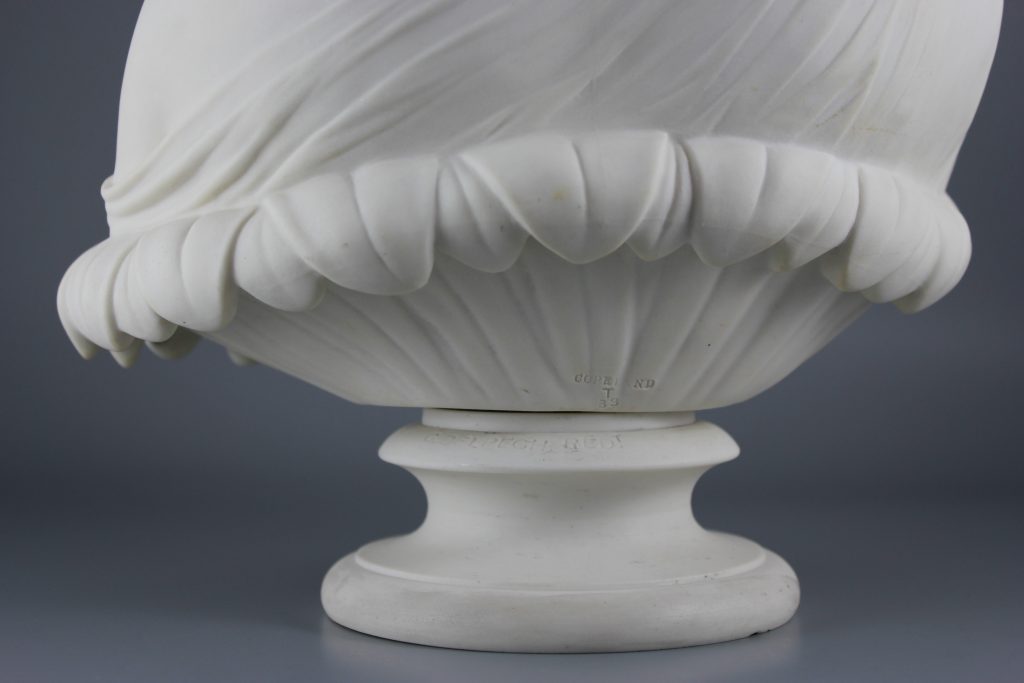
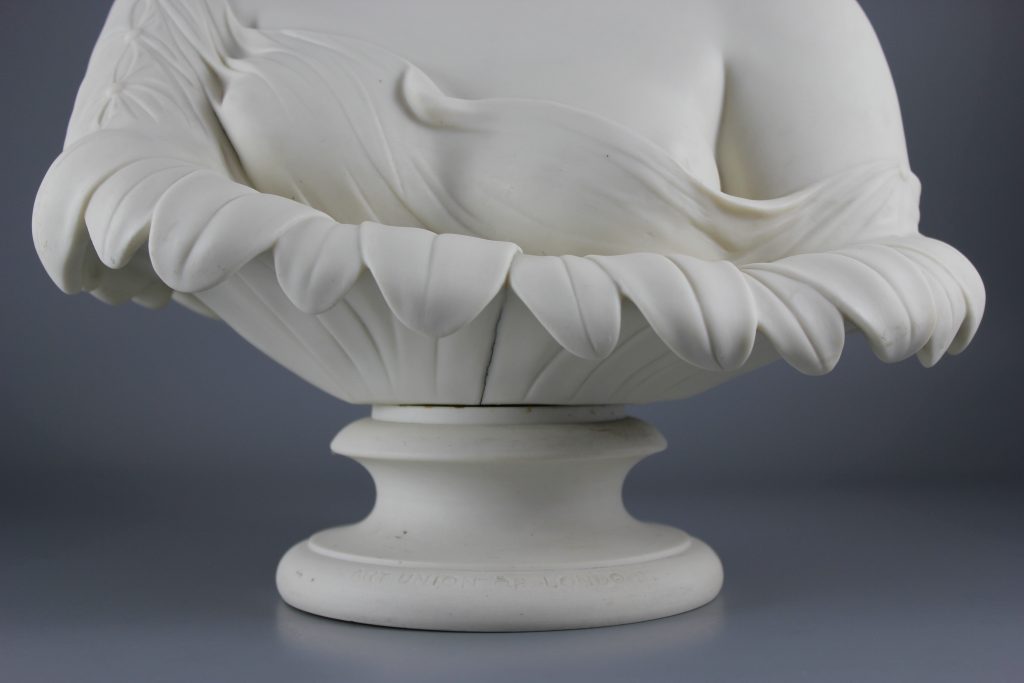
The socle base is impressed C. DELPECH REDT 1863 / ART UNION OF LONDON; the rear of the bust is impressed COPELAND T83.
The bust is based on a Roman marble sculpture dating to around AD 40-50. Believed to have been excavated in Naples during the 18th century, it was purchased in 1772 from the Principe di Laurenzano by the English collector Charles Townley for £100. It quickly became his most prized possession; famously, it was the only marble sculpture he took with him when fleeing his home during the Gordon Riots of 1780.
By 1781, the figure was identified as Ovid’s Clytie, though Townley frequently changed his mind over the years. He alternatively described her as ‘Agrippina ending in a Sun flower’, a ‘female Bacchus’, and ‘Isis in the flower of the Lotus’. Today, many scholars believe the bust actually depicts Antonia Minor (36 BC-AD 38), the daughter of Mark Antony and the mother of Emperor Claudius.
The original piece is likely carved from ancient Parian marble. Because these specific underground quarries were inactive until the 19th century, the material supports its ancient origins—though some scholars have controversially argued it might actually be an 18th-century rococo creation crafted for wealthy aristocrats on their Grand Tour.
The British Museum purchased the Townley sculpture in 1805 (Museum Number 1805,0703.79).
The sculpture’s popularity soared in the 19th century, largely thanks to the French-born sculptor Charles Delpech (b. 1822). Based in London by the 1850s, Delpech specialised as a ‘reducer’, skillfully scaling down famous sculptures for Art Unions and pottery manufacturers.
Starting in 1855, the Copeland factory produced Delpech’s scaled-down models of the Clytie bust as prizes for the Art Union of London. Copeland kept a stock of socle bases to pair later with the busts. This practice explains why the dates on the bust and the base tend not to match – such as a piece held in the British Museum, which features an 1881 bust mounted on an 1863 base (Museum Number 1991,0612.1).
While several manufacturers, including Belleek, produced their own versions of Clytie, the Delpech-modelled Copeland bust is widely celebrated by collectors as the finest example ever made.
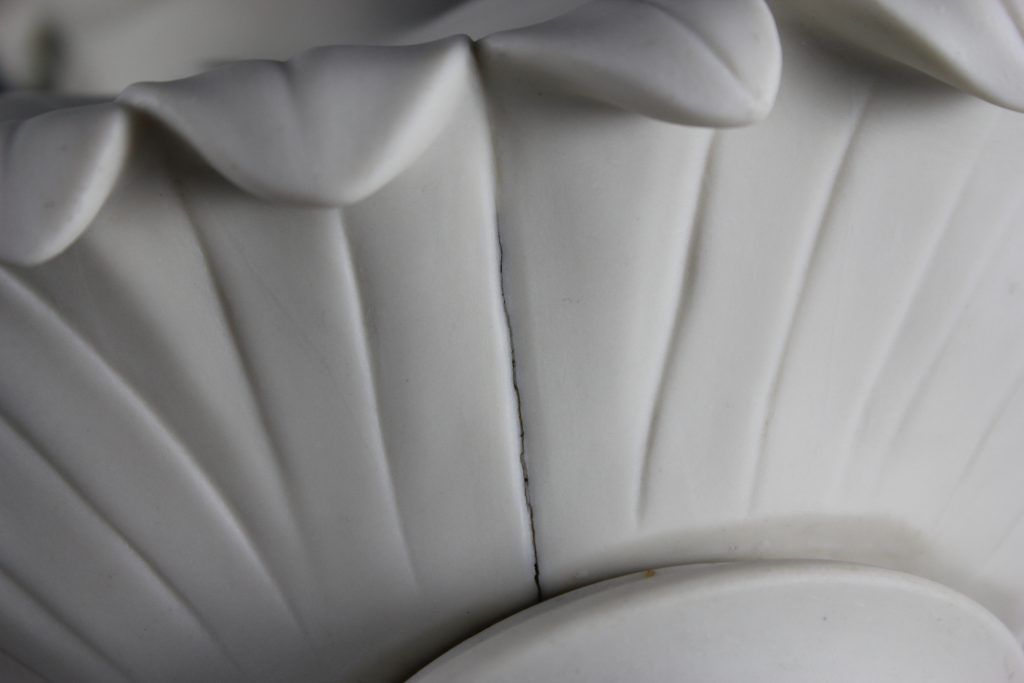
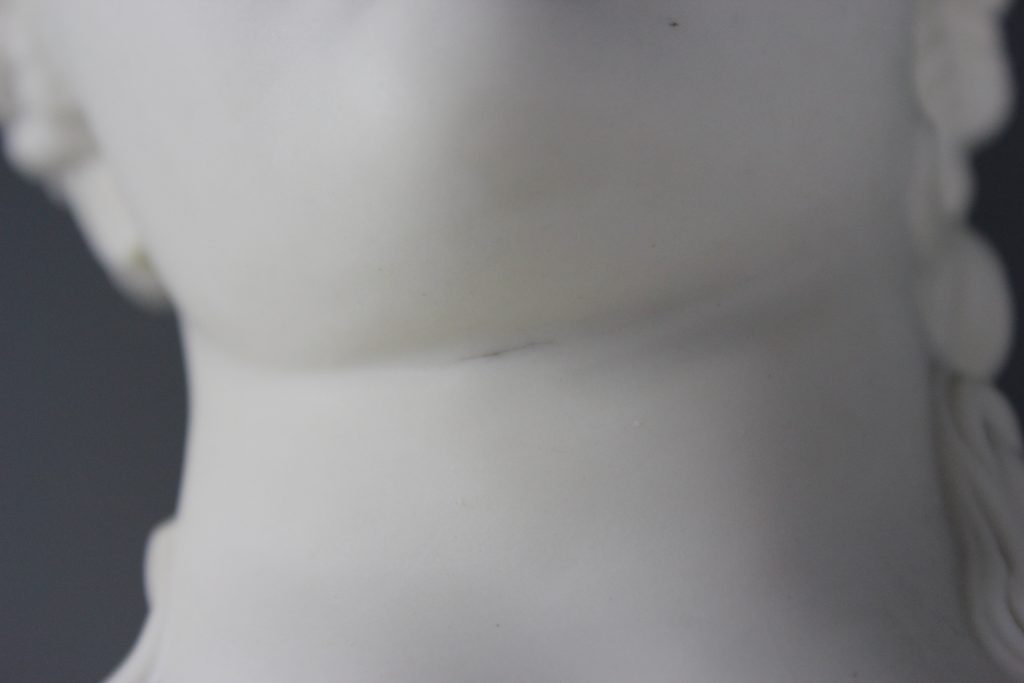
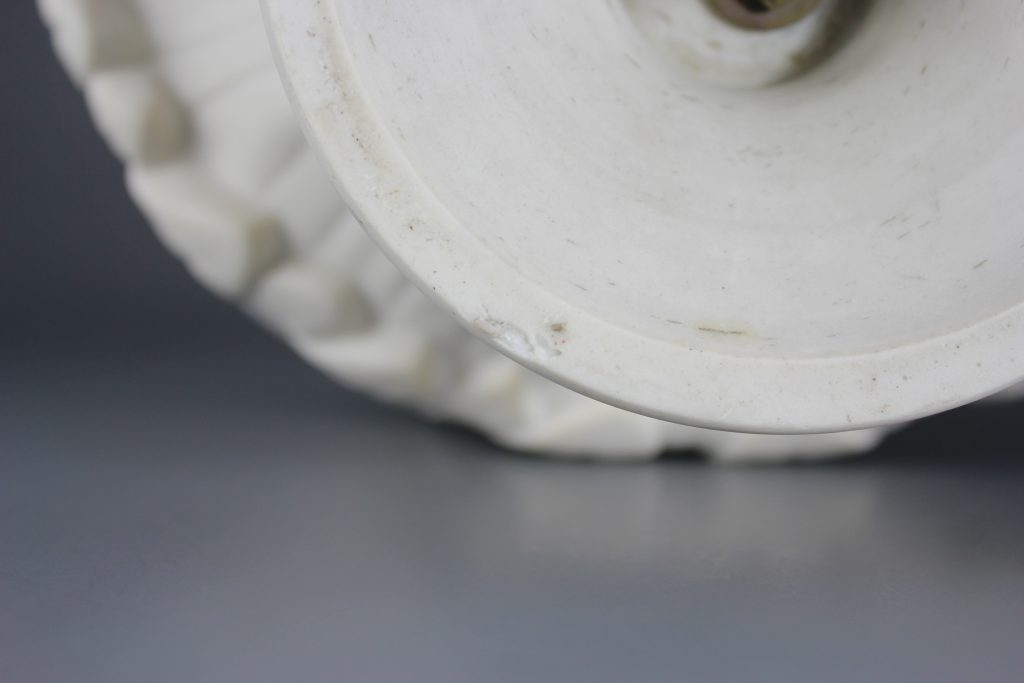
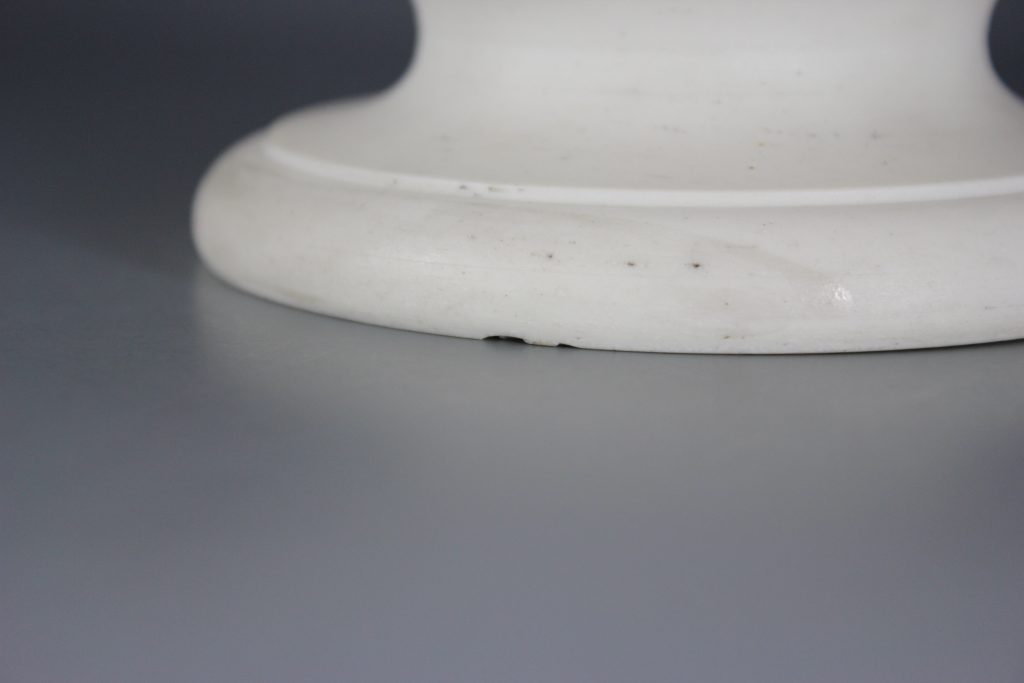
Condition: The detail on the bust is exceptionally good, with very fine attention paid to the hair and the drapery. Parian porcelain was much admired for its similarity to marble, and typically takes on a patination over the many years. From manufacture, there is a firing crack to the centre of the flower, and a fine clay tear beneath the nose and the chin. There is a very small flat chip to the underside of the foot rim. No other damage and no restoration. The bust can be turned so that either the artist’s name or the Art Union inscription can appear at the front of the socle base.
Dimensions: Height (including the base) 35 cm; Width 24.5 cm